

More news on this day
Travelers across Mexico faced fresh disruption on Monday as more than a dozen flights were abruptly cancelled, affecting busy routes linking Cancun, Monterrey, Mexico City, Montreal, Tijuana, and other destinations at the tail end of the winter high season.
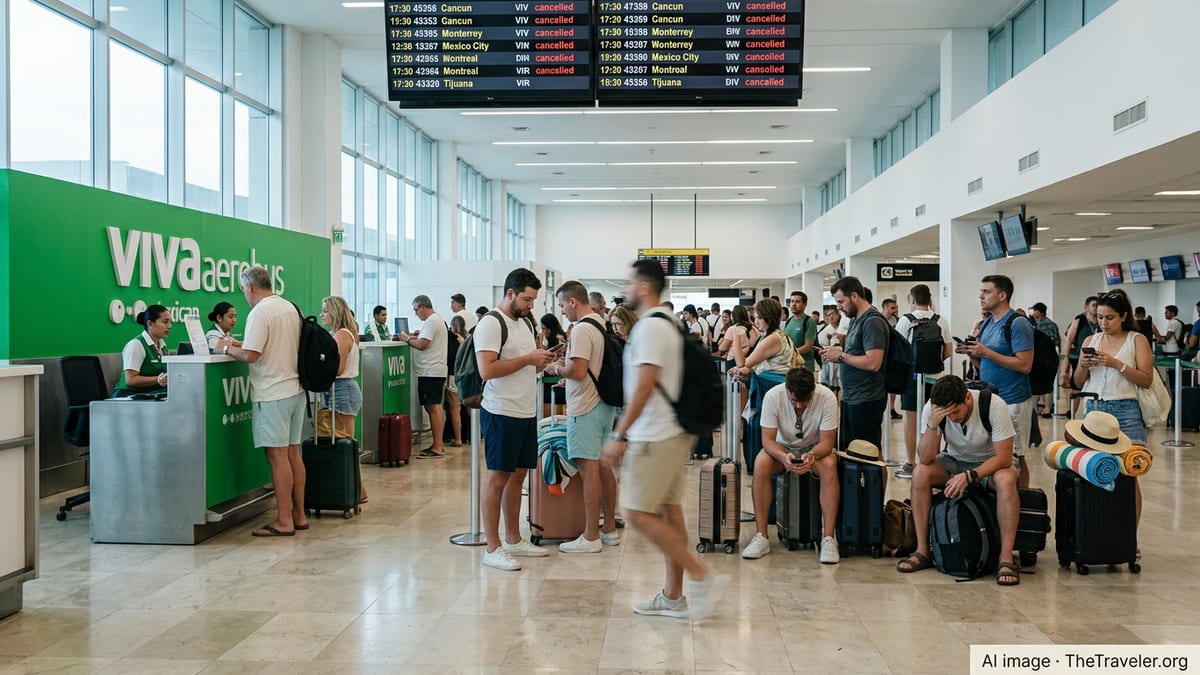
Multiple Cancellations Hit Key Mexican Hubs
Air passengers reported scattered but significant cancellations on domestic and international services, particularly involving low cost carrier VivaAerobus, which trades under the code VIV, and flights touching the coastal resort of Acapulco, whose airport uses the code ACA. While Mexico’s major airports remained open and operating, travelers on several popular leisure and visiting‑friends‑and‑relatives routes woke to emails and app notifications informing them that their flights had been pulled from the schedule.
The disruption comes as Mexican carriers continue to rebuild capacity and reshape networks following a turbulent winter marked by severe weather across North America and bouts of cartel-related unrest that have periodically affected surface access to airports. In recent weeks, authorities and airlines have been at pains to emphasize that airports such as Cancun, Mexico City and Tijuana are operating normally, yet Monday’s cancellations underscore how quickly localized operational, staffing or security constraints can ripple through the wider network.
At Cancun, one of Latin America’s busiest beach gateways, travelers reported cancelled departures to Monterrey and Mexico City, along with knock‑on delays to connecting services. At the northern industrial hub of Monterrey, some passengers bound for Tijuana and Acapulco saw their journeys scrapped or rerouted, while a limited number of transborder services, including flights involving Montreal, also appeared among the day’s cancellations.
None of the affected airports reported full closures, and core operations continued. Nonetheless, the combination of targeted cancellations and rolling delays left hundreds of passengers rebooking itineraries, queuing at customer service desks or scrambling for last‑minute hotel rooms in already busy resort cities.
Lingering Strain After a Turbulent Winter Season
The latest wave of cancellations lands on a system still recovering from a bruising winter. In late January, a powerful North American winter storm forced the cancellation of thousands of flights across the United States, Canada and northern Mexico, including dozens of services to and from Cancun and other Mexican resorts. That disruption was followed in February by security incidents and roadblocks in several Mexican states, briefly impacting access to airports such as Guadalajara and Puerto Vallarta and prompting travel waivers from multiple international airlines.
Although most carriers restored their schedules by early March, winter’s cascading effects are still being felt. Aircraft and crew rotations remain tight, particularly at low cost airlines that operate high utilization patterns with limited spare capacity. When a single flight is delayed or grounded, the impact can quickly propagate, especially on trunk routes like Cancun–Monterrey, Mexico City–Tijuana and cross‑border links to Canadian cities.
Industry analysts note that airlines are simultaneously managing strong leisure demand and elevated operational risk. Resorts from Cancun and the Riviera Maya to Los Cabos and Puerto Vallarta are in peak season, with planes running near full and little slack to absorb irregular operations. In that context, a cluster of cancellations affecting more than a dozen flights in one day can be enough to unsettle travel plans across multiple cities even without a single, headline‑grabbing incident.
Carriers have also been adjusting capacity on certain routes as new airports and services come online, including the continued ramp‑up of Mexico City’s secondary and regional gateways, as well as recent growth in flights linking northern border cities such as Tijuana with interior hubs like Monterrey. These network shifts can leave some routes more vulnerable to disruption during schedule transitions.
Passengers Face Rebooking Challenges and Limited Alternatives
For many travelers caught in Monday’s disruption, the most immediate challenge was securing an alternative seat. With flights between major Mexican cities and popular international points like Montreal running near capacity, rebooking often meant accepting departures a day or more later, or connecting through a different airport than originally planned.
At Cancun and Monterrey, passengers described long lines at check‑in counters and customer service desks as airline agents attempted to re‑accommodate groups and families on remaining services. Those flying with low cost carriers reported that same‑day options were in short supply, particularly on routes such as Monterrey–Tijuana and Cancun–Mexico City, where demand is consistently strong and spare seats are rare in high season.
Some travelers turned to rival airlines or split itineraries, pairing an available domestic leg with a separate international ticket, while others opted to travel overland between nearby cities to access alternative airports. In resort areas where occupancy remains high, finding last‑minute hotel rooms added another layer of stress and expense for stranded visitors forced to extend their stays unexpectedly.
Travel agents and consumer advocates reiterated the importance of understanding each airline’s policies on cancellations, vouchers and refunds. Conditions vary not only between carriers but also depending on whether a disruption is classified as within the airline’s control, such as technical or staffing issues, or linked to weather and security factors where compensation rules may be more limited.
Advice for Travelers Heading to Mexican Destinations
With more disruptions possible in the weeks ahead, especially on heavily trafficked leisure routes, travel experts are urging passengers bound for Mexico to build additional resilience into their plans. That starts with monitoring flight status closely in the 24 to 48 hours before departure and again on the day of travel, using both airline apps and airport information boards, as same‑day schedule changes have become more common.
Flyers are also being encouraged to allow extra connection time when planning itineraries through hubs such as Mexico City, Monterrey and Cancun, particularly when onward legs involve separate tickets or international connections to cities like Montreal. Choosing earlier departures where possible can provide a buffer if an initial flight is cancelled, increasing the odds of finding a same‑day rebooking option.
For those traveling during school breaks or major events, purchasing flexible or changeable fares and ensuring accommodation bookings can be modified without heavy penalties may reduce the financial impact of cancellations. Keeping essential items and a change of clothes in carry‑on luggage is another practical step in case checked bags become temporarily misaligned during rebooked journeys.
Finally, industry observers say travelers should be prepared for communication to lag behind operational decisions at times. Gate agents and customer service staff often receive updates before official notifications hit email inboxes or apps, so physically approaching the airline’s desk at the airport can still be one of the fastest ways to confirm options when a flight disappears from the departure board.
Outlook for Operations as Spring Approaches
Despite Monday’s cancellations, aviation officials and airport operators in Mexico insist that the overall trajectory for air travel remains positive heading into spring, with capacity on many domestic and regional routes exceeding pre‑pandemic levels. Recent statements from airport groups highlight strong demand, particularly at tourist gateways, and an expectation that schedule reliability will improve as winter weather risks recede.
Airlines, including VivaAerobus and other Mexican carriers, are continuing to tweak schedules, add frequencies on high demand routes and adjust aircraft types to better match seasonal peaks. Increased use of larger narrow‑body and, in some cases, wide‑body jets on select leisure routes is intended to create more slack in the system, helping to absorb shocks when individual flights are cancelled or delayed.
Nonetheless, analysts caution that Mexico’s aviation sector will remain exposed to external shocks ranging from severe weather and infrastructure constraints to security incidents and airspace restrictions elsewhere in North America. For passengers, that means staying flexible and informed will remain essential when flying between cities like Cancun, Monterrey, Mexico City, Tijuana, Montreal and other key nodes in the region’s air network.
For now, Monday’s cluster of cancellations serves as a reminder that even in an otherwise normal operating environment, routine travel across Mexico can still be upended with little warning, leaving travelers reliant on quick decisions, informed planning and, often, a measure of patience as airlines work to get them moving again.