

More news on this day
Passengers traveling through Oman and the wider Gulf are facing fresh disruption as Gulf Air, Qatar Airways and IndiGo cancel or curtail nearly a dozen services, affecting key routes to Doha, Kochi, Muscat, Salalah and several other regional hubs amid ongoing airspace constraints and capacity pressures.
Get the latest news straight to your inbox!
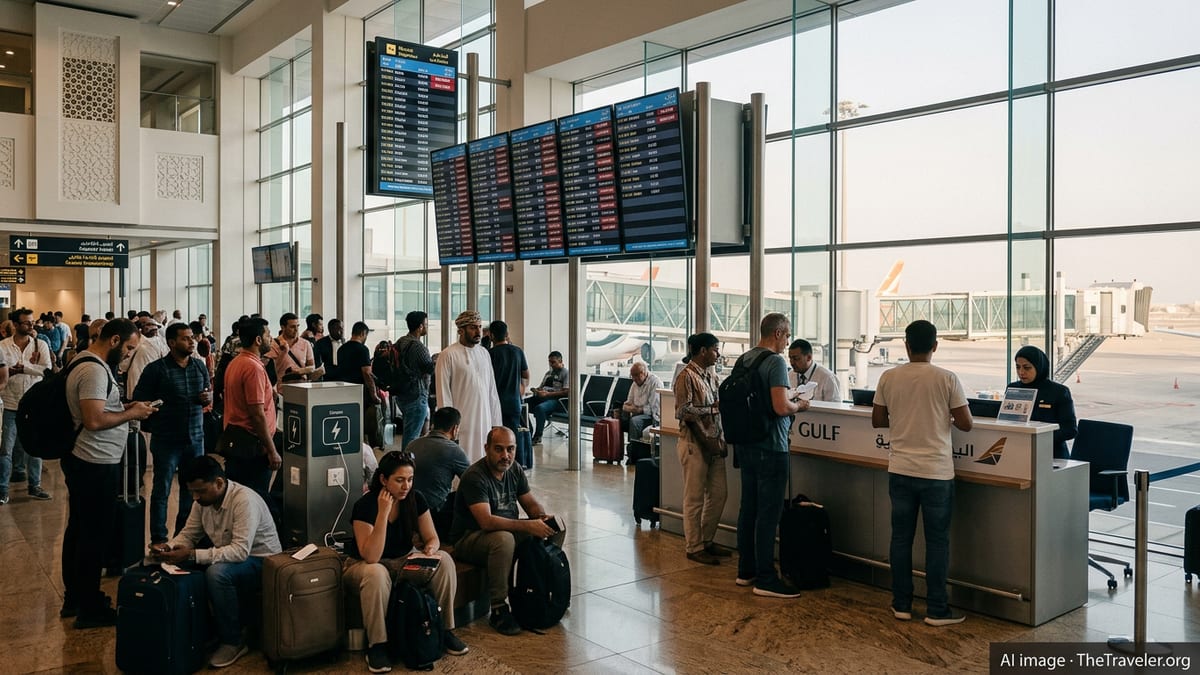
Regional Airspace Crisis Ripples Into Oman
Oman has become a critical pressure point in the Gulf’s aviation network as regional airspace closures and restrictions continue to reshape flight paths. While Omani skies remain open, the country’s airports, particularly Muscat and Salalah, are absorbing heavy spillover from rerouted services, diversions and late schedule changes triggered by the crisis centered on Qatar and neighboring states.
In recent days, Gulf-based carriers have repeatedly adjusted their plans as they navigate a patchwork of temporary operating corridors and no-fly zones. Airlines that normally depend on Doha and other Gulf hubs for east–west connectivity have been forced to cancel or consolidate flights, and in some cases use Oman as an alternate stopover or staging point.
These shifting patterns have created an unstable environment for passengers traveling between Oman, India and wider international destinations. Travellers report sudden cancellations, overnight delays and last-minute rebookings, even as airlines issue rolling updates that aim to restore some predictability to their schedules.
Authorities and carriers stress that safety remains the overriding concern. But for passengers, particularly those on time-critical journeys or with onward connections, the immediate reality is one of uncertainty, with Oman’s airports functioning both as lifelines and bottlenecks in a strained regional system.
Qatar Airways Trims Doha Links While Adding Limited Relief Flights
Qatar Airways has been at the heart of the disruption, forced to sharply reduce its normally dense schedule to and from Doha after the closure and subsequent partial reopening of Qatari airspace. The airline has shifted to a limited, day-by-day operation, announcing short-term flight lists intended primarily to clear backlogs and reconnect stranded travelers.
Recent updates show carefully targeted services linking Doha with cities such as Kochi and Muscat, underscoring how vital these routes are to the flow of passengers between South Asia, the Gulf and onward long-haul destinations. But the number of frequencies remains far below normal, and several planned rotations have been withdrawn at short notice as operating permissions and crew availability evolve.
For passengers in Oman, the impact is twofold. Those starting journeys in Muscat or Salalah and connecting via Doha face a higher risk of disruption, while travellers already overseas are experiencing diversions into Omani airports when Doha becomes temporarily inaccessible. Some of these passengers have endured extended ground holds in Muscat while they wait for new itineraries that avoid constrained airspace.
Qatar Airways has offered flexible rebooking and refund options on tickets covering the peak disruption window, but the practical challenge for many customers is finding alternative seats on already crowded flights across the region. Travel agents in Oman report heavy demand for any remaining capacity on services that bypass Doha entirely.
Gulf Air Cancellations Hit Bahrain–Oman and Beyond
Gulf Air, the flag carrier of Bahrain, has also cut back services that touch Oman, as it confronts the same regional airspace squeeze and congestion at key hubs. The airline has temporarily withdrawn or combined several rotations linking Bahrain with Muscat and other Gulf gateways, contributing to an overall reduction in seat availability for Oman-bound travellers.
Passengers holding Gulf Air tickets for travel between late February and mid-March have been granted extended waivers, including options to rebook onto later flights or request refunds. However, the practical impact in Oman is a thinning of direct connectivity to Bahrain and, by extension, to Gulf Air’s broader network into Europe and South Asia.
These cuts are particularly disruptive for business travellers and expatriates who rely on the Bahrain–Oman corridor for fast, same-day connections. Some are now forced to route via alternative hubs such as Riyadh or Kuwait, adding hours to journeys and raising the risk of further knock-on delays if schedules shift again.
As with other regional carriers, Gulf Air has emphasized that its cancellations are tied to factors beyond its control, including route closures and capacity constraints on the remaining open corridors. For Omani passengers, however, that provides little comfort when flights vanish from departure boards with minimal lead time.
IndiGo’s Measured Cuts Strain India–Oman Travel
India’s low-cost giant IndiGo has adopted what it describes as a measured approach to the crisis, selectively cancelling or rescheduling flights on Gulf routes while keeping other services intact. Nevertheless, travelers between Indian cities and Oman report growing disruption as the airline responds to the fast-changing situation.
Some IndiGo passengers have seen departures to or from Muscat shifted by several days, with the airline citing operational constraints linked to airspace restrictions and congestion in the wider Gulf. This has proven especially challenging for short-term visitors and migrant workers who often travel on tight schedules and limited budgets, with little flexibility to absorb lengthy delays.
In addition to Muscat, routes that typically connect Indian hubs with Doha and other Gulf cities have faced cancellations, compressing demand onto the remaining flights operated by IndiGo and rival carriers. The result is higher load factors and limited last-minute availability, which can make rebooking difficult even when airlines waive change fees.
IndiGo has urged customers to monitor flight status closely and arrive at the airport only after confirming that services are operating as planned. For passengers in Oman, this has effectively become a daily ritual, with many checking apps and call centers repeatedly in the hours leading up to departure.
What Passengers in Oman Should Expect in the Coming Days
Travel experts in the region caution that while some additional operating corridors have opened and more flights are being added back each day, the situation around Oman is unlikely to normalize immediately. Airlines are still working through backlogs of stranded passengers and juggling aircraft and crew placements across a disrupted network.
For travelers in Muscat and Salalah, the near-term outlook is one of gradual improvement but continued volatility. Qatar Airways is expected to maintain a limited schedule, including select services to Kochi and Muscat, while Gulf Air and IndiGo adjust their own operations in response to changing restrictions and demand. Day-by-day announcements are likely to remain the norm.
Passengers with imminent travel plans are being advised to prioritize flexibility. That includes allowing extra time for connections, considering alternative routings that do not rely on heavily constrained hubs, and remaining prepared for last-minute gate changes or overnight stays if flights are cancelled after check-in.
Ultimately, Oman’s role as both a destination and an emergency diversion point has placed it at the center of one of the most complex regional aviation disruptions in recent years. Until airspace restrictions ease more broadly and airlines can confidently restore full schedules, travelers on routes touching Doha, Kochi, Muscat, Salalah and other key destinations will need to brace for continued uncertainty alongside slowly expanding options.