

More news on this day
Air travel across the United Arab Emirates faced fresh disruption on April 6 as a cluster of cancellations and rolling delays involving FlyDubai, Air Arabia, BeOnd, IndiGo, Etihad Airways and Airblue left travellers scrambling to adjust plans at Dubai, Sharjah and Abu Dhabi airports.
Get the latest news straight to your inbox!
Cluster of Cancellations Hits Key UAE Gateways
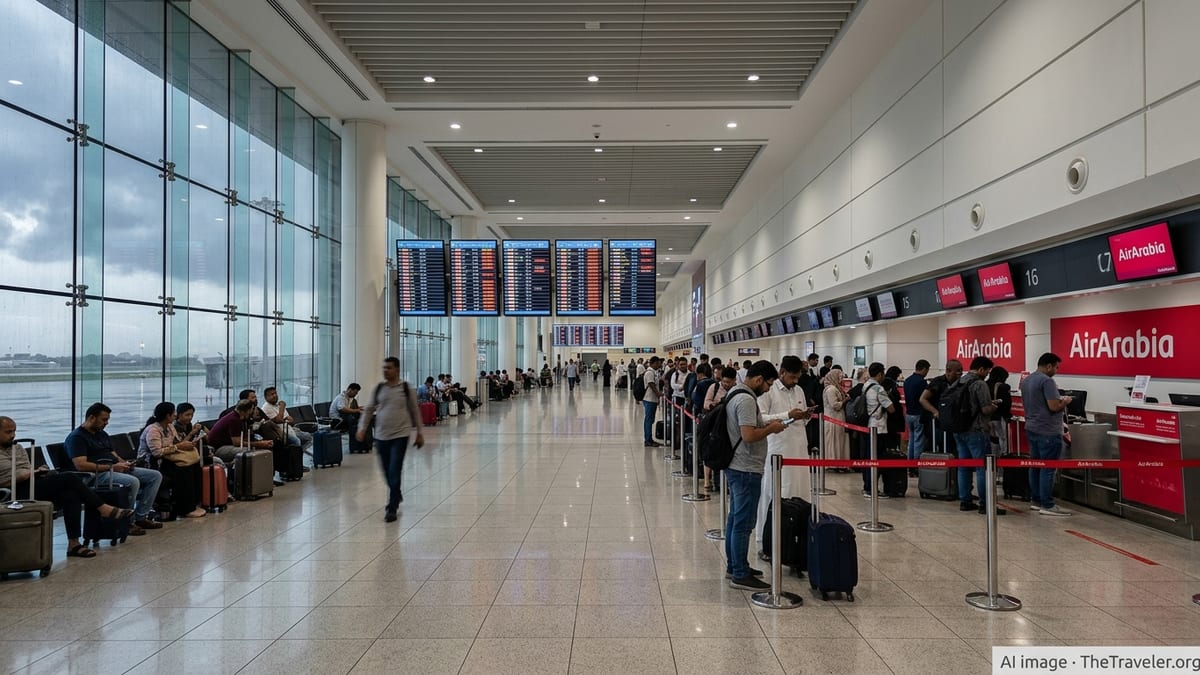
Reports from aviation trackers and regional travel coverage for April 6 indicate that at least 15 flights operated by FlyDubai, Air Arabia, BeOnd, IndiGo, Etihad Airways and Airblue were grounded across the UAE’s three main gateways of Dubai International, Sharjah International and Abu Dhabi’s Zayed International Airport. The cancellations were accompanied by a wider pattern of delays, creating queues at check in, transfer desks and security lanes.
Dubai International, the region’s busiest long haul hub, saw multiple FlyDubai departures withdrawn from the schedule as carriers continued to work around constrained routings and short notice airspace changes over parts of the Middle East. Publicly available departure boards showed gaps in short haul services to South Asia and the Gulf, with some flights marked cancelled while others were reassigned later departure times.
In Sharjah, low cost operations were also affected, with Air Arabia and Airblue grounding selected flights serving high demand routes to India and Pakistan. Passengers reported extended waits in terminal seating areas as they awaited revised boarding times or confirmation of rebooking options, adding pressure to an airport that has become a key alternative to Dubai for budget conscious travellers.
At Abu Dhabi’s Zayed International Airport, a smaller number of grounded services involving Etihad Airways and IndiGo added to an already reduced schedule that has been in place since the most recent phase of regional airspace turmoil. Limited departures continued to operate to selected destinations, but capacity remained well below normal for early April travel.
Regional Airspace Turmoil Continues to Ripple Through Schedules
The fresh wave of cancellations in the UAE comes on top of more than a month of rolling disruption across Middle Eastern air corridors following escalations in the conflict involving Iran and neighbouring states. Airspace closures and restrictions over parts of the Gulf and wider region in late February and early March prompted widespread cancellations, diversions and rerouting by airlines based in Dubai, Abu Dhabi and Sharjah.
Publicly available information from aviation industry outlets shows that carriers such as Emirates, Etihad, FlyDubai and Air Arabia had already been operating reduced or irregular schedules since the end of February, with many long haul and regional flights either suspended or converted to ad hoc services. Other airlines from Europe and Asia also cut frequencies or suspended operations into UAE hubs as they navigated changing risk assessments and insurance requirements.
Although some restrictions eased in late March, the network has not fully stabilised. Carriers have continued to adjust daily flying programmes in response to shifting overflight permissions, congestion on alternative routings and the need to manage crew duty time limits on longer detours. The decision by FlyDubai, Air Arabia, BeOnd, IndiGo, Etihad Airways and Airblue to ground 15 additional flights on April 6 fits into this broader pattern of incremental schedule changes rather than a single isolated incident.
Industry analysis published in recent days highlights the financial and operational strain on Middle Eastern airlines, with thousands of flights cancelled across the region since late February and a persistent backlog of passengers waiting to be reaccommodated. The UAE’s position as a connecting hub for traffic between Europe, Asia and Africa has amplified the knock on effect of each new round of cancellations.
Passengers Face Long Queues, Missed Connections and Rebooking Challenges
The immediate impact for travellers in Dubai, Sharjah and Abu Dhabi on April 6 was a familiar mix of missed connections, overnight stays and hurried itinerary changes. With 15 flights grounded and many more subject to rolling delays, passengers attempting to reach onward destinations in the Gulf, South Asia and East Africa encountered congested transfer desks and limited same day alternatives.
Reports from travellers and local media indicate that some FlyDubai and Air Arabia customers were shifted to later departures or routed via alternative Gulf hubs where seats were available, while others accepted credit vouchers or open tickets. For passengers flying with IndiGo, Etihad Airways and Airblue, options depended on whether partner airlines or ad hoc services could be used to bridge affected sectors.
Families travelling at the tail end of the spring break period were particularly exposed to disruption, with many itineraries involving multiple short haul legs through UAE hubs. Delays in one sector filtered quickly into others, resulting in missed onward flights and additional time spent queuing for rebooking. Travellers without flexible tickets or comprehensive travel insurance faced higher costs for last minute hotel stays and replacement tickets.
Airports across the UAE have been urging passengers through public channels and travel advisories to check their flight status before leaving home, arrive early where flights are confirmed, and ensure that contact details are up to date so airlines can issue last minute notifications by text or email. However, the pace of operational change has meant that some travellers still learned of cancellations only on arrival at the terminal.
Airline Responses and Limited Recovery Measures
In response to ongoing disruption, carriers operating in and out of the UAE have been gradually expanding rebooking waivers and flexible travel policies introduced when the regional crisis first intensified. According to published schedules and airline notices, many passengers holding tickets for the period from late February through early April have been offered the choice of moving travel to later dates without change fees or requesting refunds in cases of flight cancellation.
FlyDubai and Air Arabia have continued to prioritise truncated networks connecting key regional and South Asian cities, focusing on routes where demand remains strongest and alternative transport options are limited. Etihad Airways has maintained a limited schedule out of Abu Dhabi, adding back selected destinations as operational conditions allow, while at the same time cancelling or consolidating flights when airspace restrictions or crew availability pose challenges.
IndiGo and Airblue, both heavily reliant on Gulf routes from the Indian subcontinent and Pakistan, have adjusted programmes repeatedly in recent weeks, sometimes announcing new ad hoc flights to clear backlogs and at other times withdrawing planned services when overflight conditions shifted. BeOnd, a newer premium leisure carrier targeting Maldives bound traffic, has faced particular pressure, as its business model depends on seamless connections through Gulf and subcontinental gateways.
Despite these measures, capacity on many popular city pairs remains well below pre crisis levels. Travel industry analysts note that aircraft and crew are still out of position in some cases, leading to inefficiencies that will take time to unwind. Grounded aircraft also require ongoing maintenance and parking arrangements, adding further cost for airlines already coping with reduced revenue from ticket sales.
What Travellers Should Watch in the Coming Days
With the situation in regional airspace still fluid, aviation observers expect more short notice timetable changes at UAE airports in the days ahead, even if no formal closure of additional air corridors is announced. Airlines are likely to keep fine tuning daily schedules around crew availability, maintenance windows and the evolving security picture, which means further cancellations or consolidations similar in scale to April 6 cannot be ruled out.
Passengers planning to transit through Dubai, Sharjah or Abu Dhabi in the near term are being advised in publicly available guidance to build extra buffer time into itineraries, avoid tight connections where possible and consider flexible or refundable tickets for critical journeys. Those travelling on multi carrier itineraries should pay close attention to each segment, as disruptions to one airline in the chain can affect onward sectors operated by different partners.
Travel agents and online booking platforms have been updating clients on evolving conditions, with some recommending that leisure travellers defer non essential trips through the region until schedules stabilise. For those who must travel, monitoring flight status across multiple channels, keeping documentation handy for potential visa or transit issues and retaining receipts for expenses related to delays can help ease the process of seeking compensation or reimbursement later.
While flight operations across the UAE have not returned to the near standstill seen during the initial days of the airspace crisis in late February, the grounding of 15 flights by FlyDubai, Air Arabia, BeOnd, IndiGo, Etihad Airways and Airblue on April 6 underscores how sensitive the network remains to any renewed turbulence in regional conditions.