

More news on this day
Travelers across several continents are facing missed connections, overnight stays and rapidly changing itineraries as nearly 30 flights linked to Ben Gurion International Airport are cancelled and many more delayed, affecting routes operated by Air France, El Al and partner carriers through major hubs in Tel Aviv, Bangkok, Milan, Paris and Madrid.
Get the latest news straight to your inbox!
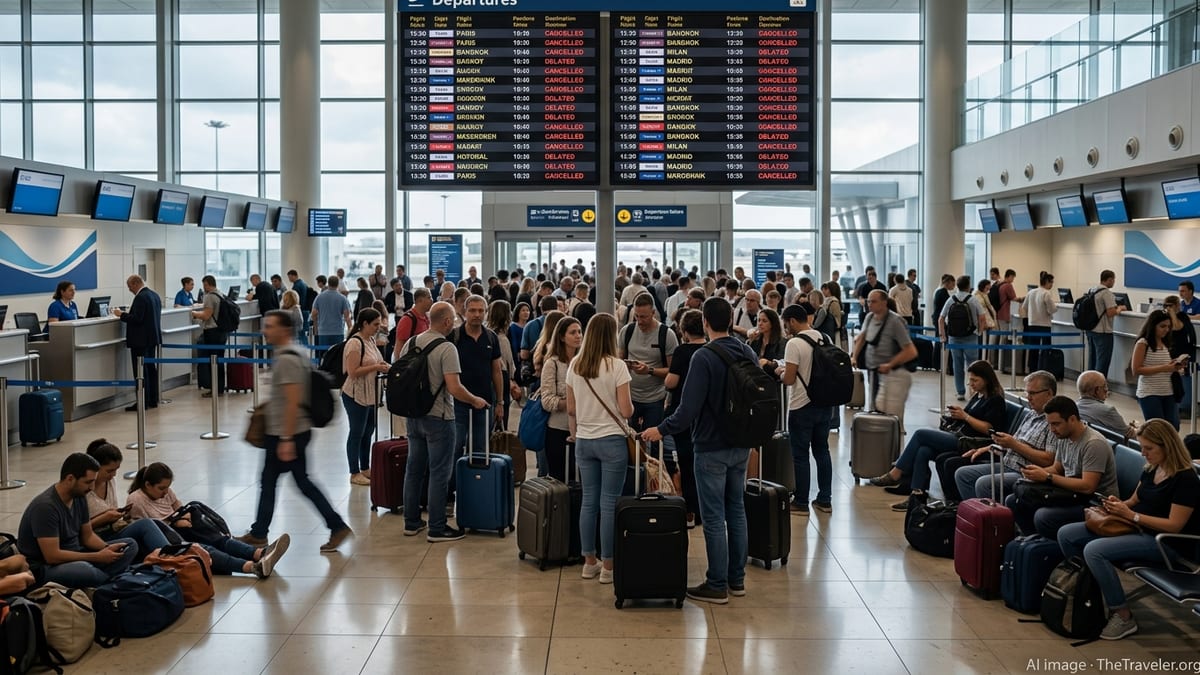
Wave of Cancellations Hits Tel Aviv and Key Hubs
Publicly available flight board data and airline status pages on March 24 indicate that a cluster of 29 flight cancellations connected to Ben Gurion International Airport is rippling through airline networks. Services operated by or codeshared with Air France and El Al are among those most heavily affected, with knock-on disruption at major transit hubs including Paris Charles de Gaulle, Bangkok Suvarnabhumi, Milan Malpensa and Madrid Barajas.
Many of the affected flights involve Tel Aviv services that typically provide onward connections to Europe, North America and Asia. When those departures are removed from the schedule or pushed back by several hours, passengers already in the air or en route to their gateway airports face missed onward legs and unexpected overnight stays.
According to published coverage of the wider regional situation, commercial aviation across the Eastern Mediterranean and Middle East has been operating under heightened operational constraints, contributing to periodic schedule adjustments and corridor changes. Against that backdrop, today’s concentrated block of cancellations at Ben Gurion is amplifying stress on already stretched airline operations.
Travel forums and real-time tracking platforms show disrupted journeys fanning out far beyond Israel, with itineraries connecting through Bangkok, European capitals and secondary European cities all affected by late-notice changes.
Air France and El Al Adjust Networks Amid Ongoing Uncertainty
Air France has already been operating a reduced and frequently adjusted schedule to Tel Aviv in recent months, with several resumptions and pauses documented in airline communications and independent aviation reporting. Today’s cancellations indicate that the carrier continues to recalibrate its Israel network in response to operational and security assessments, aircraft rotation challenges and crew planning constraints.
El Al, which maintains one of the densest networks out of Ben Gurion, has also been reshuffling its timetable. Public data suggests that some departures to European destinations such as Paris, Milan and Madrid have been removed from the schedule or delayed, in part to accommodate shifting demand patterns and airspace management considerations. Where flights do operate, they may be subject to reroutings that lengthen block times and compress turnaround windows at destination airports.
Industry observers note that when two major players connected to a single hub alter their operations simultaneously, the cumulative effect can resemble a short, sharp shock across the wider system. Aircraft are left out of position, crews hit legal duty time limits and downstream flights later in the day must be retimed or cancelled, even if conditions improve locally.
Publicly available information also indicates that both airlines are steering some travelers onto alternative routings through third-country hubs. This can keep people moving but often results in longer journeys and tight connection windows, adding further risk of missed flights if delays accumulate.
Bangkok, Milan, Paris and Madrid Experience Knock-On Effects
Bangkok Suvarnabhumi, a major long-haul gateway between Asia, the Middle East and Europe, is among the airports seeing indirect repercussions. Flights that normally continue to or from Tel Aviv or rely on Tel Aviv-originating traffic to fill seats have had to adjust loads and, in some cases, departure times. Travelers connecting between Southeast Asia and Europe via Tel Aviv have reported involuntary rebookings through alternative hubs.
In Europe, Milan Malpensa, Paris Charles de Gaulle and Madrid Barajas are all feeling the strain as aircraft and crews that would typically cycle through Tel Aviv fall out of their normal rotations. Some short- and medium-haul services are being consolidated, leaving gaps in the timetable and forcing passengers to accept earlier or later departures than originally booked.
Flight tracking data shows that delays at these hubs are not limited to Tel Aviv services. Once a bank of flights is disrupted, ground handling resources, gates and takeoff slots must be re-sequenced, which can cause late pushbacks even for routes unaffected by regional airspace issues. Travelers on intra-European routes with no direct connection to Israel can therefore still encounter disruption stemming from Ben Gurion’s curtailed schedule.
Reports from passenger communities highlight a patchwork of experiences, from relatively smooth automated rebooking to lengthy queues at customer service desks. Some travelers have managed to secure same-day alternatives via nearby airports, while others have been issued vouchers and rebooked one or two days later.
Passengers Face Missed Connections, Rebookings and Compensation Questions
With 29 cancellations and numerous delays concentrated in a single operational window, thousands of passengers are confronting practical challenges around missed connections, accommodation and out-of-pocket expenses. For those whose journeys touch the European Union or involve EU-based carriers such as Air France, passenger rights regulations may come into play, depending on the precise cause of the disruption and where the trip originated.
Consumer advocates emphasize that passengers should closely monitor airline notifications, airport departure boards and official airline apps, rather than relying on third-party booking sites alone. When large clusters of cancellations occur, automated systems sometimes struggle to keep pace with live operational decisions, leading to discrepancies between different channels.
Travel industry commentary suggests that flexible booking policies introduced in recent years remain a crucial buffer. Options such as free date changes within a defined window, rerouting to alternative destinations in the same region and credit vouchers can help limit the financial impact on affected travelers, though they may not fully compensate for lost vacation time or missed business commitments.
At the same time, reports indicate that call centers and digital chat channels are experiencing spikes in demand, which can lengthen response times. Passengers transiting late at night or early in the morning are particularly exposed if on-the-ground staffing is reduced, making proactive self-service through airline apps and kiosks an important tool.
Outlook for Operations at Ben Gurion and Beyond
Aviation analysts tracking developments in the region suggest that while today’s 29 cancellations represent a significant disruption, they form part of a broader pattern of episodic irregular operations rather than a complete shutdown of traffic to and from Israel. Ben Gurion remains open, and a substantial number of flights continue to operate, albeit with heightened potential for last-minute retimings or reroutings.
Airline schedule adjustments published for the coming weeks point to a cautious restoration of capacity on some routes, mixed with continued restraint on others. Carriers appear to be balancing commercial demand against risk assessments and operational resilience, aiming to avoid overcommitting aircraft and crews in an unstable environment.
For travelers planning journeys that involve Tel Aviv, Bangkok, Milan, Paris or Madrid, publicly available guidance from travel agencies and industry groups recommends building in additional connection time, considering flexible tickets and monitoring itineraries closely in the 24 to 48 hours before departure. Even when a specific flight is not among the cancelled services, it may still be affected by the residual impact of today’s disruptions.
As airlines refine their schedules and airspace managers continue to adjust permitted corridors, the situation remains fluid. The experience of passengers caught in the current wave of cancellations at Ben Gurion underscores how quickly localized decisions at one hub can cascade through global networks, reshaping travel plans far beyond the immediate region.