

More news on this day
Numerous flight cancellations at King Abdulaziz International Airport in Jeddah have disrupted travel plans for passengers across several airlines, leaving many stranded or scrambling for alternative routes during a peak travel period.
Get the latest news straight to your inbox!
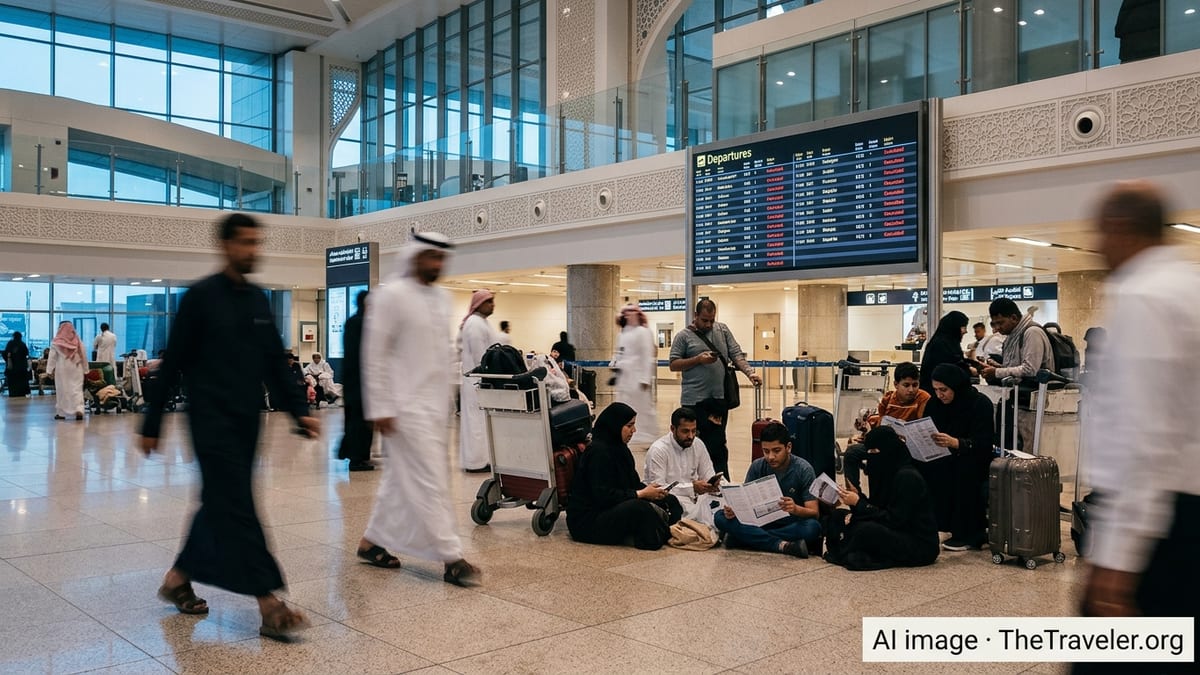
What Is Happening at King Abdulaziz International Airport
King Abdulaziz International Airport in Jeddah, one of Saudi Arabia’s busiest hubs and a primary gateway for Umrah pilgrims, has seen a noticeable increase in flight cancellations and schedule changes in recent days. According to publicly available flight tracking data and traveler accounts, the disruption is not limited to a single route or region, and has affected both arrivals and departures.
Reports indicate that the overall airport remains operational, with many flights still taking off and landing as scheduled. However, the pattern of cancellations across multiple days and carriers has created uncertainty for passengers planning to connect through Jeddah or use the airport as a starting point for their journeys.
Travel advisories on the wider Middle East airspace suggest that ongoing regional tensions and congestion across key hubs are contributing to irregular operations. The situation has left airlines frequently revising timetables, consolidating services, or suspending specific routes at short notice.
Airlines and Routes Most Affected
Published coverage and passenger testimonies suggest that no single airline is responsible for all of the disruption, although some carriers appear more affected than others on particular routes. Low cost and point to point operators linking Jeddah with European gateways and regional destinations have drawn particular attention from travelers reporting cancellations and abrupt schedule changes.
In several cases, passengers describe outbound or inbound flights to and from Jeddah being cancelled with limited advance warning, followed by automatic rebookings to later dates or alternative routings that do not always match passengers’ needs. Some long haul connections that rely on Jeddah as a transit point have also experienced knock on delays when feeder services are removed from the schedule.
Other airlines continue to operate their Jeddah services largely as planned, but with occasional delays and aircraft swaps. This mixed picture means that two passengers traveling on the same day can face very different experiences depending on carrier, route, and booking channel.
Impact on Pilgrims and Holiday Travelers
The timing of the disruption is especially challenging for Umrah pilgrims and travelers combining religious visits with family holidays. Jeddah is the closest major airport to Makkah, and many visitors book tightly timed itineraries that leave little room to absorb a long delay or a last minute cancellation.
Online reports from passengers indicate that some groups have found themselves stuck in Jeddah or nearby cities after return flights were cancelled, while others have had departure dates brought forward or pushed back by several days. This can have a cascade effect on hotel stays, ground transport bookings, and time sensitive visa conditions.
Families traveling with children, elderly relatives, or passengers with medical needs face added complications when overnight stays or multiple rebookings are required. With accommodation near the holy sites in high demand around peak dates, even a small change in timing can significantly increase costs and stress levels for affected travelers.
What Stranded Passengers Can Do Now
For passengers currently at Jeddah airport or due to travel within the next 48 hours, the most important step is to monitor booking details closely. Airline mobile applications and booking management pages are typically updated before airport display boards, so travelers are advised to refresh these tools frequently and enable notifications for schedule changes.
Publicly available guidance from consumer bodies stresses that passengers should keep all documentation related to cancellations, including confirmation emails, boarding passes, and receipts for essential expenses such as food, local transport, and emergency accommodation. These records can be useful when seeking refunds, rebooking assistance, or statutory compensation where applicable under the ticket’s governing jurisdiction.
Travelers who booked through third party agents may need to coordinate with both the airline and the intermediary. In some cases, airlines will only modify tickets through the original point of sale, while in others passengers can handle changes directly. Patience is required, as call centers and airport service desks are experiencing heavy demand while airlines adjust schedules day by day.
Planning Upcoming Trips Through Jeddah
Passengers with upcoming journeys that include King Abdulaziz International Airport are being advised, by travel risk firms and industry advisories, to build extra flexibility into their plans. That can include allowing longer connection times, avoiding the last flight of the day on critical legs, and considering fully refundable or changeable fares where budgets permit.
Public guidance also recommends checking the recent operating history of specific flights in the days leading up to departure. If a particular service has seen repeated cancellations or significant delays, it may signal ongoing operational pressure on that route. Alternative carriers or different departure times might offer a more reliable option, even if slightly more expensive.
Travelers heading to Jeddah for time sensitive events such as religious observance or tour departures should pay special attention to airline communications. In a fluid operating environment, schedules that appear normal at the time of booking can change within hours, so frequent checks and a willingness to adjust onward arrangements are essential to reducing the risk of being stranded.