

More news on this day
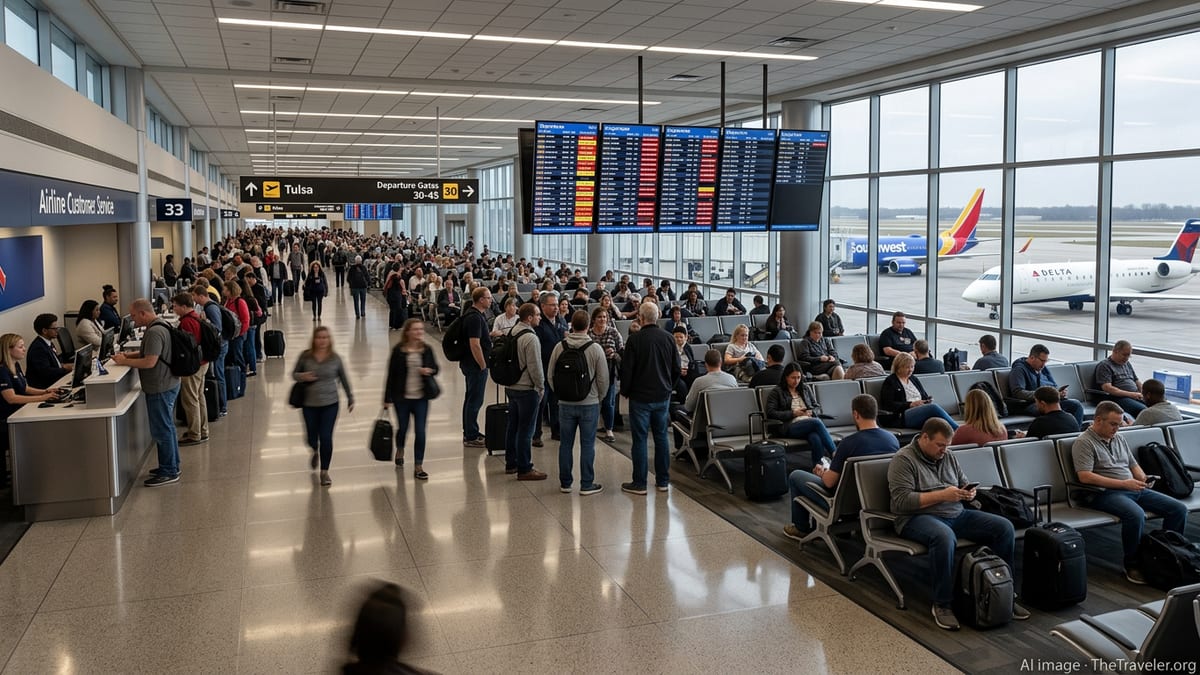
Passengers at Tulsa International Airport are facing a day of disruption as eight flight cancellations and a series of departure delays on Sunday ripple through major hubs including Atlanta, Houston, Denver, Charlotte and the Dallas metro area, affecting operations for Southwest Airlines, Delta Air Lines, CommuteAir and Mesa Airlines.
Weather and Airspace Issues Drive Fresh Wave of Disruptions
The latest interruption to travelers at Tulsa International Airport comes amid a broader pattern of weather and airspace challenges across the United States. Low ceilings, reduced visibility and fast-moving storms in the Southeast and Gulf regions have prompted air traffic managers to slow traffic into key hubs, creating knock-on effects for smaller markets such as Tulsa.
On Sunday, operations planners flagged the potential for stronger ground-delay programs at Hartsfield Jackson Atlanta International Airport, Houston-area airports and Charlotte Douglas International Airport, as well as continuing congestion at Denver International Airport. With Tulsa heavily reliant on connections through these major hubs, even a modest schedule adjustment or holding pattern in one city can cascade quickly into cancellations and missed connections in Oklahoma.
Industry analysts note that while Tulsa itself reported clear conditions for much of the day, its role as a spoke airport means it is highly exposed to route vulnerabilities elsewhere in the network. When aircraft and crews are out of position in Atlanta, Dallas or Denver, subsequent departures from mid-sized airports like Tulsa can be among the first to be trimmed or pushed back.
Southwest and Delta Among Hardest Hit Carriers
Southwest Airlines and Delta Air Lines, two of the largest operators serving Tulsa International, have borne much of the impact from Sunday’s irregular operations. Southwest, which ties Tulsa to Denver and the greater Dallas area, has seen select departures scrubbed as it juggles fleet rotations and seeks to maintain capacity in its busier focus cities.
Delta, which routes Tulsa passengers primarily through its Atlanta megahub and Dallas Fort Worth, has also been forced to cancel and delay flights, particularly on routes feeding into weather-affected southeastern gateways. The combination of storms in the Atlanta region and spacing restrictions along busy East Coast corridors has limited the carrier’s ability to recover quickly.
Regional operators CommuteAir and Mesa Airlines, which provide connecting services under major airline brands, have likewise been caught up in the disruption. Operating with tighter aircraft and crew utilization than mainline carriers, regional affiliates can face outsized challenges when even a single inbound aircraft is delayed, further constraining seat availability for Tulsa travelers trying to rebook.
Ripple Effects at Hubs in Atlanta, Houston, Denver, Charlotte and Dallas
Sunday’s eight cancellations at Tulsa International represent only one visible symptom of a broader system under strain. In Atlanta, delays have accumulated as thunderstorms force temporary flow restrictions and reroutes around active cells, slowing arrivals and departures and causing banks of flights to miss their optimal connection windows.
In Houston, intermittent storms and periods of low cloud ceilings have complicated operations at George Bush Intercontinental and William P. Hobby airports, both important waypoints for travelers from Tulsa heading to the Gulf Coast, Latin America and the western United States. Flight crews reaching their duty limits after extended delays have added a second layer of complexity for dispatchers trying to keep schedules intact.
Denver has continued to post one of the country’s higher delay averages, with shifting winds and intermittent winter weather intersecting with already-busy mid-day and evening banks. Charlotte and the Dallas area, meanwhile, have seen rolling congestion as weather bands cross the region, pushing gate availability and ramp resources to their limits and forcing airlines to prioritize longer-haul and high-demand routes over thinner, secondary-city links.
For Tulsa passengers, that often translates into fewer same-day alternatives when a flight is scrubbed. With many routes operating only a handful of frequencies each day, a single cancellation can strand travelers overnight or require complicated re-routings through multiple hubs to reach their final destinations.
Travelers Confront Long Lines, Rebookings and Missed Connections
Inside Tulsa International’s terminal, the operational strain has manifested in long check-in and customer service lines, as travelers with canceled or heavily delayed flights seek new itineraries. Airline agents have been working to accommodate affected passengers with a mix of same-carrier rebookings, interline transfers where agreements allow, and stand-by lists for later departures through Atlanta, Houston, Denver, Charlotte and Dallas.
Families attempting to start spring vacations, business travelers with tightly timed meetings, and students returning to campuses are among those impacted. Many have reported spending significant time on the phone or through airline apps trying to secure alternatives, only to see remaining seats disappear quickly as the disruption period extends.
For some, the ripple effects are most acutely felt at connecting hubs rather than in Tulsa itself. Missed connections in Atlanta or Dallas can strand passengers far from home or their destination, especially when the final leg is a regional flight with limited daily frequencies back to Oklahoma. In those cases, travelers are often faced with the choice of accepting a hotel voucher or seeking ground transportation to nearby cities with more robust schedules.
What Passengers Flying Through Tulsa Should Do Next
Air travel experts recommend that anyone scheduled to depart from or arrive in Tulsa International on Sunday or Monday closely monitor their flight status and be prepared for last-minute adjustments. Because many of the cancellations and delays originate from problems at other airports, passengers are urged to check not only the status of the Tulsa segment, but also the inbound aircraft and conditions at the connecting hub.
Travelers are also advised to build in additional buffer time for connections, particularly through Atlanta, Houston, Denver, Charlotte and Dallas, where delays can accumulate quickly in the afternoon and evening hours. Those with critical commitments at their destination may wish to inquire about earlier departures or alternate routings, even if they require an extra stop, to reduce the risk of missed events.
As operations stabilize, airlines serving Tulsa are expected to gradually restore normal schedules, though some residual delays could persist as aircraft and crews are repositioned across the network. Until then, passengers are encouraged to arrive at the airport early, keep contact details updated in airline profiles for real-time alerts, and consider carrying essentials in hand luggage in case an unexpected overnight stay becomes necessary.