

More news on this day
Air travel across Brazil faced fresh disruption on March 10 as more than a dozen Qatar Airways, LATAM, and Azul flights departing São Paulo were cancelled, stranding passengers and rippling across key domestic and international routes including Doha, Brasília, and Rio de Janeiro’s Santos Dumont Airport.
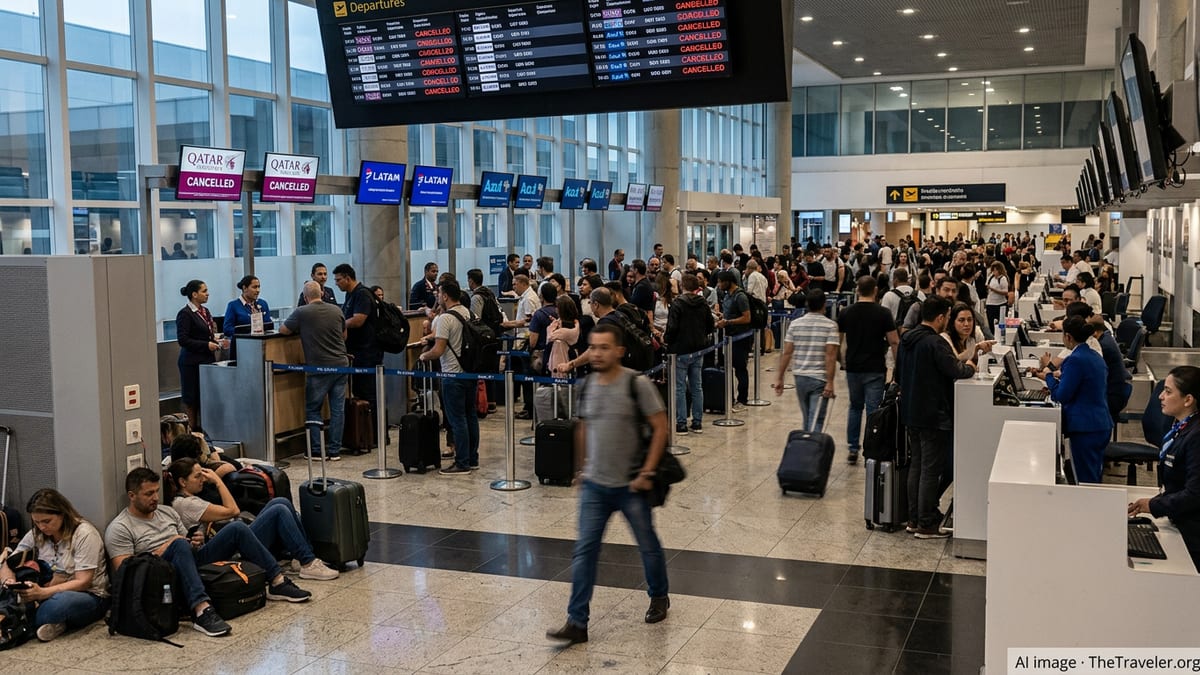
Wave of Cancellations Hits São Paulo Departures
At São Paulo–Guarulhos International Airport, Brazil’s busiest international gateway, airlines reported a cluster of cancellations across both long-haul and domestic services. Qatar Airways scrubbed departures linking Guarulhos with Doha, while Brazilian carriers LATAM and Azul cancelled multiple flights to capitals and regional hubs, including Brasília and Rio de Janeiro’s Santos Dumont Airport.
The disruption followed a volatile week for global aviation connected to Qatar, where the closure of Qatari airspace has already forced the Gulf carrier to run only a limited schedule. With Doha-bound operations heavily curtailed, knock-on effects reached Brazil as aircraft and crews were left out of position, prompting proactive cancellations rather than last-minute delays.
Airport display boards at Guarulhos showed entire rotations removed from the schedule on Tuesday morning, with some domestic sectors from São Paulo to Brasília, Belo Horizonte, and Rio de Janeiro cancelled in sequence. While some passengers were reprotected onto later flights or rerouted via alternative hubs, many reported lengthy queues at airline counters and difficulty securing same-day departures.
The latest wave of cancellations adds pressure to an already strained system at São Paulo’s main airports, where carriers are juggling aircraft availability, crew duty limits, and shifting operational constraints while trying to preserve their highest-demand routes.
Qatar Airways Cuts São Paulo–Doha Service Amid Airspace Closure
Qatar Airways confirmed that its scheduled operations remain largely suspended due to the ongoing closure of Qatari airspace, and that it is currently operating only a limited number of repatriation and essential flights to and from Doha. As part of this pared-back network, the airline’s São Paulo–Doha service has seen fresh cancellations, leaving Brazil-based travelers with few direct options to reach the Gulf and beyond.
In its latest travel updates, the airline reiterated that most commercial flights are halted and that any services that do operate are strictly controlled under temporary corridors approved by Qatari civil aviation authorities. These corridors prioritize routes where there is high demand from stranded passengers, particularly on segments connecting Doha with key European, Middle Eastern, and Asian gateways.
For travelers in Brazil, the loss of the direct Qatar Airways link from São Paulo means that itineraries to Asia, the Middle East, and parts of Africa often require last-minute rebooking via alternate hubs such as Dubai, Istanbul, or European capitals. Travel agents in São Paulo reported a surge in requests to reroute tickets originally issued on Qatar Airways via partner or competitor airlines that still maintain stable operations into Brazil.
The carrier has offered flexible options for passengers whose trips fall within the current disruption window, including complimentary date changes within a limited period or refunds of unused ticket segments. However, with no firm date yet for a full reopening of Qatari airspace, uncertainty continues to cloud forward bookings on the Brazil–Doha corridor.
LATAM and Azul Trim Domestic Links to Brasília and Rio
While Qatar Airways grappled with the international repercussions of the airspace closure, Brazil’s LATAM and Azul focused on realigning their domestic networks from São Paulo. Industry sources and airport data indicated that both airlines cancelled selected departures from Guarulhos and Congonhas to Brasília and Rio de Janeiro’s Santos Dumont, among other cities, in a bid to contain cascading delays.
These targeted cancellations form part of a broader strategy to consolidate capacity on the busiest trunk routes while freeing aircraft and crews for more resilient rotations later in the day. By trimming the number of flights on certain sectors, carriers aim to avoid systemic disruption across their networks as they manage late-arriving aircraft and crew tight on duty hours.
Passengers booked on affected LATAM and Azul services reported being offered rebooking on later flights from São Paulo, alternative airports such as Rio’s Galeão, or, in some cases, travel the following day. Although both airlines prioritized same-day reaccommodation where seats were available, higher-demand peaks around morning and evening bank departures left limited options, especially for business travelers needing to reach Brasília for government and corporate meetings.
Operational analysts noted that while the domestic cancellations are smaller in scale than the Qatar Airways long-haul cuts, their impact is felt sharply inside Brazil, where many travelers rely on frequent shuttle-style services linking São Paulo, Brasília, and Rio. Even a temporary reduction in frequencies can quickly translate into crowded terminals and rising frustration during peak periods.
Travelers Face Long Queues, Patchy Communication, and Rebooking Challenges
The sudden adjustment in schedules has translated into a difficult on-the-ground experience for many travelers. At Guarulhos and other major airports, lines formed early at airline service desks as passengers sought confirmation on whether their flights would operate and what alternatives might be available.
Several passengers described confusion surrounding status updates, with flight-tracking apps, airline websites, and airport display boards not always synchronized in real time. In some instances, a leg of a multi-segment itinerary appeared cancelled on mobile applications while still showing as confirmed on other platforms, leaving travelers unsure whether to proceed to the airport.
Travel agents in São Paulo said they were fielding a spike in calls from customers concerned about upcoming departures to Doha and onward connections, many of whom preferred to proactively reroute rather than risk last-minute cancellations. However, with nearby dates on remaining long-haul flights selling out quickly, some travelers faced the prospect of extending their stays in Brazil or postponing trips altogether.
Consumer advocates urged airlines to maintain clear, frequent communication and to expand flexibility policies while the situation evolves, emphasizing that many passengers booked their trips months in advance and now find themselves caught in a complex web of operational constraints beyond their control.
Outlook: Limited Schedules and Ongoing Uncertainty
Looking ahead, airline planners expect Brazil’s international and domestic schedules to remain fluid over the coming days, particularly for services touching Doha. Qatar Airways has outlined a series of limited operations on selected dates to and from its hub, but these flights are being marketed primarily to passengers already stranded, rather than as an open restart of normal commercial traffic.
For São Paulo, the key question is how quickly carriers can restore predictable timetables once the external constraints around Qatar’s airspace ease and aircraft movements normalize. Until that happens, sporadic cancellations on both international routes and domestic connectors such as Brasília, Santos Dumont, and other Brazilian cities are likely to remain part of the daily reality.
Travel specialists are advising passengers with near-term departures from São Paulo to monitor their bookings closely, keep contact information updated with airlines, and build additional buffer time into connections, especially when itineraries involve rebooking across multiple carriers. They also recommend that travelers remain flexible with dates and routing, as options can shift rapidly when limited-capacity flights open or close.
With the aviation industry still adapting to the evolving situation around Qatari airspace, Brazil’s role as a major South American hub has placed São Paulo’s airports at the center of a complex operational puzzle. For now, passengers can expect continued disruption, even as airlines work to stabilize schedules and keep essential routes open.