

More news on this day
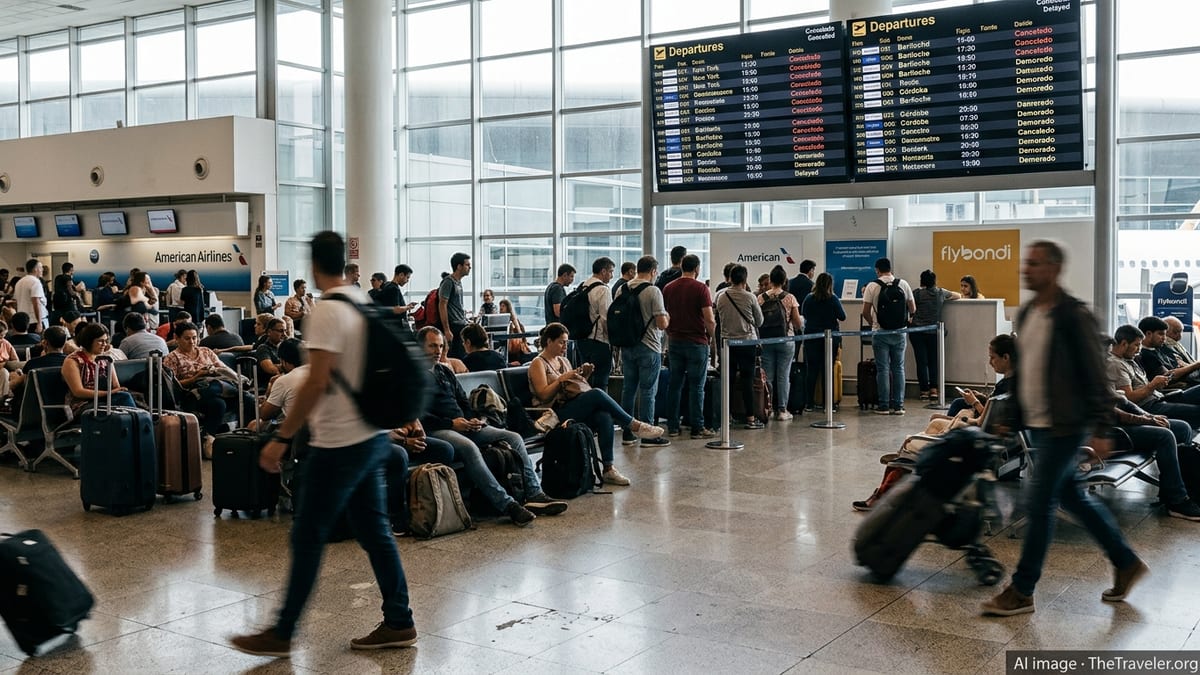
A fresh wave of flight cancellations involving American Airlines, Flybondi and several other carriers is disrupting travel across Argentina in late March 2026, stranding passengers on domestic routes to Bariloche and Córdoba as well as long-haul services to New York and other international destinations.
Get the latest news straight to your inbox!
Series of Cancellations Hits Domestic and International Routes
Published coverage and airline schedule data indicate that more than a dozen flights have been pulled from schedules in recent days at Buenos Aires’ main airports, affecting both local leisure routes and key long-haul connections. American Airlines services linking Argentina with New York and other United States gateways have seen targeted cancellations, while low cost carrier Flybondi has cut multiple rotations on popular domestic corridors such as Buenos Aires to San Carlos de Bariloche and Córdoba.
Reports from travelers and local media describe passengers arriving at airports to find their flights delayed by several hours or cancelled outright, often with limited advance notice. Some travelers heading to or from Patagonia hubs such as Bariloche and El Calafate have described having to purchase last minute tickets on alternative airlines when Flybondi flights were withdrawn, while others reported overnight waits in terminals as carriers attempted to consolidate operations after disruption windows linked to wider labor actions.
The current issues build on a longer pattern of operational strain. Flybondi, in particular, has faced heightened scrutiny since late 2024 for high rates of delays and cancellations, including a period in which dozens of flights were scrapped over a single weekend, prompting an ultimatum from Argentina’s National Civil Aviation Administration to improve reliability. Those earlier problems created a backdrop of concern that has now been amplified by the latest round of disruptions affecting both budget and full service operators.
Labor Disputes and Operational Pressures Behind the Disruption
The latest disruptions are unfolding against a tense industrial relations climate in Argentina’s aviation sector. Union-led stoppages and work-to-rule actions at airports and within air traffic control have been announced periodically through March 2026, affecting morning and evening peak periods. Travelers posting accounts of their journeys describe full day strikes that halted operations entirely at some airports, followed by a surge of reprogrammed flights as carriers rushed to clear backlogs once action ended.
For American Airlines and other international carriers, these localized disruptions have collided with broader network pressures, including tight aircraft utilization and ongoing recovery in long haul demand to South America. When ground handling or air traffic capacity is reduced in Buenos Aires or at key regional gateways, airlines frequently opt to cancel selected frequencies rather than risk cascading delays across their networks. This has translated into isolated cancellations on Argentina to New York services and onward connections.
Low cost operators such as Flybondi are particularly exposed to this environment. Publicly available documents discussing the airline’s recent performance describe a business model built on intensive aircraft use and fast turnarounds, leaving little buffer when unexpected delays arise. When combined with labor-related capacity constraints at airports, this structure has contributed to what many passengers characterize as last minute schedule changes, airport switches and same day cancellations, especially on leisure routes into Patagonia and the northwest of the country.
Impact on Travelers Bound for New York, Bariloche, Córdoba and Beyond
The fallout for passengers has been significant, especially for international visitors relying on tight connections between long haul and domestic legs. Travelers landing in Buenos Aires on American Airlines have reported concerns about making onward flights to Iguazú Falls, Bariloche or Córdoba when local carriers, including Flybondi, adjust schedules at short notice. Some visitors have turned to alternative airlines or rescheduled trips entirely in an effort to avoid windows affected by planned strike activity.
Accounts shared on travel forums describe travelers flying to Patagonia who saw their Flybondi services moved forward by several hours, shifted between Buenos Aires’ two main airports or cancelled outright with limited communication. In some instances, passengers said they were rebooked for the following day, while others opted to seek refunds and purchase new tickets on Aerolíneas Argentinas, JetSMART or LATAM, often at higher last minute fares.
On New York bound routes, cancellations by American Airlines have translated into missed connections and extended layovers for those already in transit. While the carrier’s standard policies provide options such as free rebooking during mass disruption events and refunds when delays meet certain thresholds, travelers still face the practical challenges of reconfiguring accommodation, tours and time-sensitive plans both in Argentina and in the United States when flights vanish from the board.
Authorities and Carriers Face Renewed Scrutiny Over Reliability
The disruption has reignited debate in Argentina over air travel reliability and consumer protection. Publicly accessible regulatory decisions show that provincial and national agencies have previously fined carriers, including Flybondi, for alleged failures to comply with passenger rights rules during earlier cancellation waves, particularly in relation to communication and rebooking obligations. Consumer advocates are again drawing attention to existing regulations that require airlines to offer options such as re-accommodation, refunds or alternative transport when flights are cancelled or subject to prolonged delays.
At the same time, airlines argue that the operating environment has become more volatile, citing factors such as inflation-driven cost pressures, currency fluctuations, and periodic labor unrest that can shut down airport activity for hours at a time. Industry analyses of Argentina’s aviation market note that passenger numbers have been climbing as tourism rebounds, even as infrastructure and staffing remain under strain, especially at peak holiday periods in destinations like Bariloche and along key domestic corridors through Córdoba.
These twin dynamics have created a feedback loop in which carriers seek to expand capacity and capture demand while passengers increasingly demand reliability and transparency. When disruptions such as the current wave of cancellations occur, both regulators and airlines face renewed questions about how much advance information travelers receive and how quickly disrupted passengers are assisted or rebooked.
What Travelers Should Expect in the Coming Days
Based on current schedules and recent patterns, travelers heading to or within Argentina in late March should be prepared for continued pockets of disruption, especially around any remaining strike windows or congested travel days. Routes connecting Buenos Aires with Bariloche, Córdoba, El Calafate and other high demand leisure destinations remain vulnerable when low cost carriers adjust operations at short notice. Long haul departures to New York and other North American hubs can also be affected when domestic disruptions ripple outward into international banks of flights.
Travel advisories and traveler reports consistently suggest building additional buffer time into itineraries that combine international and domestic sectors, avoiding extremely tight same day connections whenever possible. Some visitors are choosing to book with carriers that offer multiple daily frequencies on the same route, providing more fallback options if a particular flight is cancelled. Others are opting to travel outside published strike hours, even if that means early morning or late night departures.
For now, the situation illustrates the fragile balance within Argentina’s aviation system, where fast growing demand, ambitious low cost expansion and periodic labor conflict intersect. Until schedules stabilize and tensions ease, passengers flying with American Airlines, Flybondi and other carriers in and out of Argentina are likely to encounter a travel environment where flexibility, contingency planning and close monitoring of flight status remain essential.