

More news on this day
Travelers moving through Brazil’s busiest air corridors faced mounting disruption this weekend as American Airlines, Gol, Azul, and TAM canceled more than a dozen flights, affecting high-demand routes linking São Paulo, Rio de Janeiro, Brasília, Miami, New York, Recife, Santiago, and other cities across the region.
Get the latest news straight to your inbox!
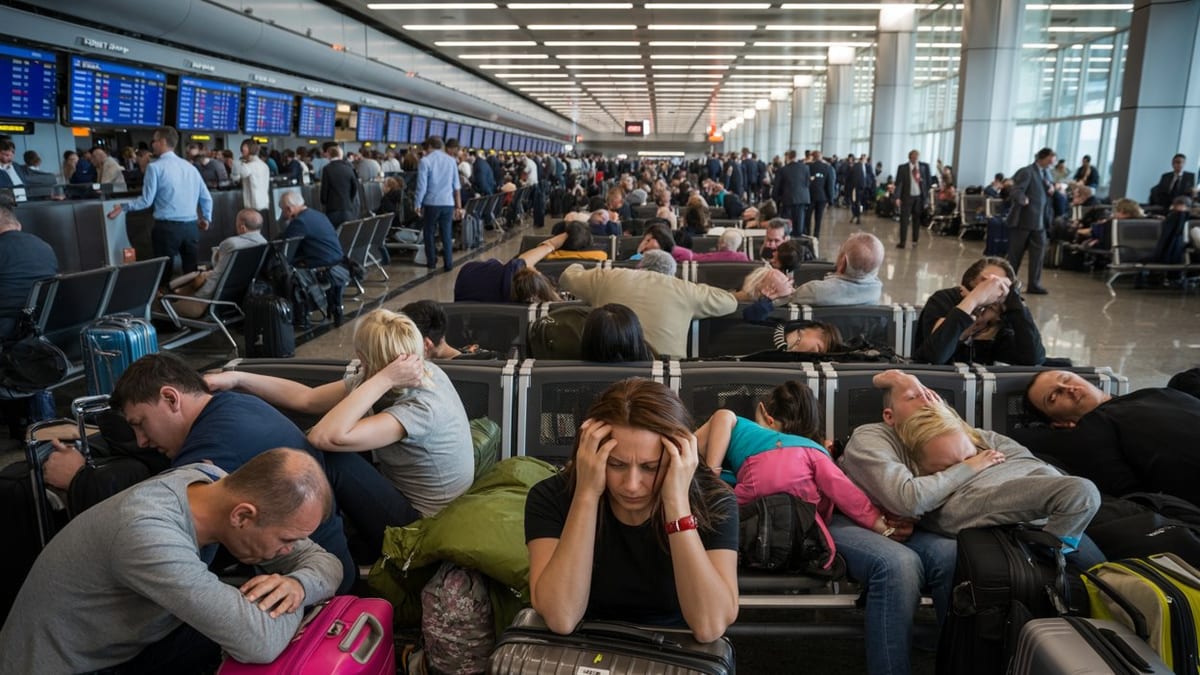
Image by Travel And Tour World
Wave of Cancellations Hits Major Brazilian Hubs
Published operational data and airport monitoring platforms indicate that cancellations were concentrated at Brazil’s primary hubs, particularly São Paulo and Rio de Janeiro, before rippling out to Brasília and northeastern gateways such as Recife. The interruptions affected both purely domestic flights and key international links, creating knock-on delays across multiple carriers.
Gol, Azul, and TAM, which together carry the bulk of Brazil’s domestic passengers, were reported to have grounded a series of services connecting São Paulo to Rio de Janeiro, Brasília, and Recife. Some flights operating the popular shuttle-style trunk routes between São Paulo and Rio were removed from departure boards, while others saw extended delays that complicated onward connections.
American Airlines was also listed among carriers with disrupted operations, particularly on Brazil–United States sectors. Flights touching São Paulo and Rio de Janeiro and linking onward to Miami and New York showed cancellations or significant schedule changes, creating challenges for passengers relying on tight connections to domestic partners.
The pattern of cancellations within a relatively short window led to crowded customer service lines, rebooking queues, and heavier loads on the remaining flights. Publicly available tracking information showed many affected travelers being moved to later departures or re-routed via alternative hubs where seats were available.
Domestic Routes Disrupted Between Key Brazilian Cities
Within Brazil, the most visible impact was felt on dense corridors such as São Paulo to Rio de Janeiro, São Paulo to Brasília, and services linking the Southeast to northeastern cities including Recife. Gol, Azul, and TAM rely heavily on these routes to feed their respective hubs, so even a limited number of cancellations can cascade quickly across the network.
Reports from Brazilian aviation observers indicate that some shuttle-style flights between São Paulo’s Congonhas Airport and Rio de Janeiro’s Santos Dumont and Galeão airports were suspended or consolidated, leaving fewer same-day options for business travelers. In Brasília, Brazil’s political capital, cancellations and delays on Gol and TAM flights constrained connectivity to regional destinations.
Travelers already in the country faced tighter margins for making connections. Anecdotal accounts shared on social platforms described longer queues at check in and security, as well as rebooked itineraries that added extra stops or overnight stays. With several carriers affected at once, opportunities to switch between Gol, Azul, and TAM to avoid disruption were more limited than usual.
Disruption on these domestic segments was particularly problematic for international passengers using São Paulo and Rio as gateways. Those arriving on long haul services and counting on same day connections found that some onward segments had disappeared from schedules, requiring last minute changes at the airport.
International Links to Miami, New York, and Santiago Affected
The cancellations also touched a set of high profile international routes, tightening capacity on flights linking Brazil with the United States and neighboring South American markets. According to published flight tracking information, some services between Brazilian hubs and Miami and New York did not operate as planned, affecting itineraries on both American Airlines and its Brazilian counterparts.
Miami and New York are among the most important long haul markets from São Paulo and Rio de Janeiro, serving both leisure and corporate travelers. When a handful of departures on these routes are withdrawn, remaining flights often depart full, leaving fewer opportunities for same day rebooking and increasing the likelihood of overnight stays.
Regional connectivity was also strained. Flights between Brazil and Santiago, one of the principal south cone gateways, experienced cancellations or equipment changes that altered seating capacity. This affected travelers using Santiago as a connection point toward other parts of Chile and the Andean region, as well as Brazilians headed to ski resorts and other seasonal destinations.
The combination of constrained long haul capacity and disrupted domestic feed meant that even travelers whose international flights operated on time could still be affected if their domestic links into or out of São Paulo and Rio were not available.
Operational and Market Pressures Behind the Disruption
While the precise cause of each cancellation varied from flight to flight, the broader context in Brazil’s aviation market has been challenging. Recent public reporting on Brazilian carriers highlights ongoing cost pressures, fleet availability issues, and intense competition over key hubs such as São Paulo and Rio de Janeiro. These strains have made schedules more vulnerable when unexpected operational issues arise.
Gol, Azul, and TAM are managing complex domestic networks that rely on high aircraft utilization and tight turnarounds, especially on shuttle-type routes. When irregular operations occur, there is limited slack in the system, and airlines may concentrate resources on a reduced number of frequencies instead of operating lightly booked or operationally difficult flights.
American Airlines and other foreign carriers, meanwhile, often coordinate with Brazilian partners to distribute passengers across domestic routes. When local carriers make last minute adjustments, long haul operators may have fewer reliable connection options to offer, prompting consolidation of services or schedule changes that echo across the Atlantic or into other international markets.
Industry analysts have noted that the Brazilian market remains sensitive to shifts in demand, currency fluctuations, and fuel costs. In this environment, carriers may periodically trim or realign schedules to maintain profitability, and clusters of cancellations can arise when those strategic decisions overlap with day to day operational constraints.
Advice for Affected and Future Travelers
For travelers already impacted by this round of cancellations, publicly available guidance from consumer advocates in Brazil emphasizes careful documentation of all changes, including screenshots of original itineraries and records of any additional expenses such as hotels or ground transportation. Such records can be useful when seeking refunds, rebooking assistance, or compensation under applicable regulations.
Travel planners watching the situation in Brazil are encouraging passengers to build extra time into itineraries that rely on connections through São Paulo, Rio de Janeiro, and Brasília, particularly when combining international flights with domestic legs on Gol, Azul, or TAM. Longer layovers can provide a buffer if earlier segments are delayed or rescheduled.
Prospective visitors are also being urged to monitor their flights closely in the days leading up to departure, using airline apps and flight tracking tools to check for schedule adjustments. In some cases, voluntary changes made a few days before travel may offer better options than waiting to be rebooked at the airport after a same day cancellation.
Despite the current disruption, Brazil remains one of the most connected aviation markets in Latin America, and carriers typically restore schedules once operational issues are resolved. Travelers planning future trips are likely to find ample capacity, but recent events serve as a reminder that flexibility and proactive monitoring can significantly reduce the stress associated with sudden flight changes.