

More news on this day
Air travelers across China are facing fresh disruption as China Airlines, China Southern and several other major carriers cancel more than a dozen flights, affecting busy domestic corridors and international links from Beijing, Shanghai, Guangzhou, Chengdu, Shenzhen, Chongqing, Hangzhou and other key hubs.
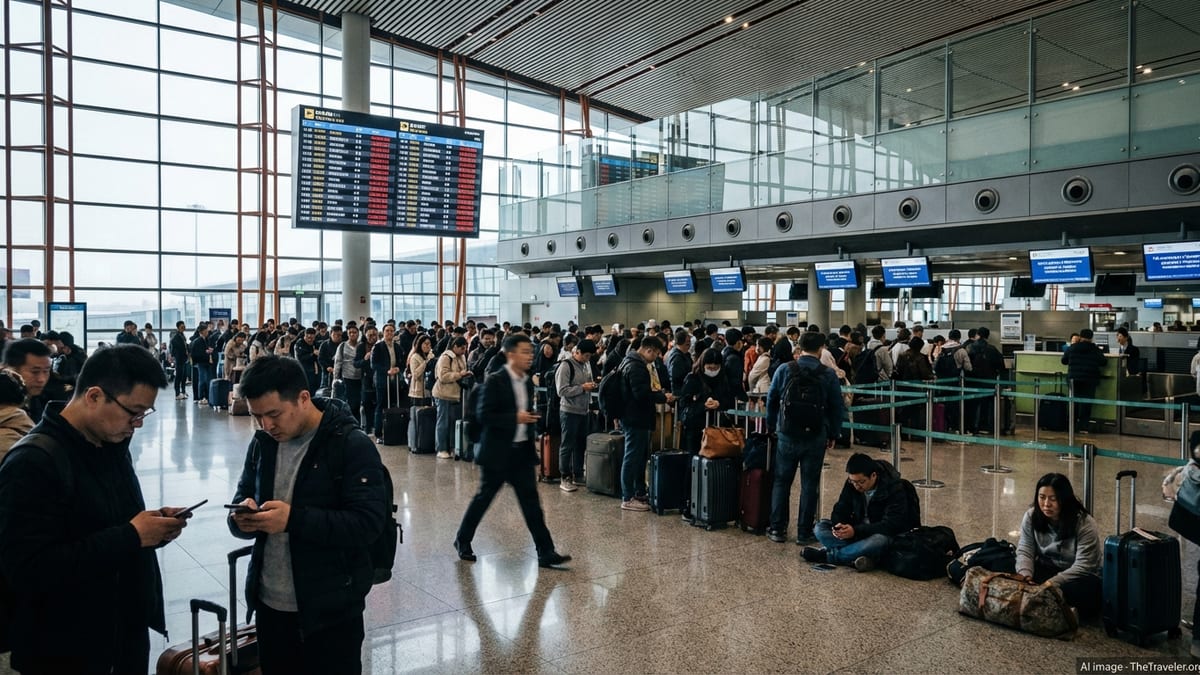
Fresh Wave of Cancellations Hits Major Chinese Hubs
The latest round of cancellations comes amid an already volatile winter travel period, with Chinese airports managing a mix of surging Lunar New Year demand, unsettled weather and shifting international schedules. Recent operational data and aviation reports point to clusters of cancellations at major gateways including Beijing Capital, Beijing Daxing, Shanghai Pudong, Guangzhou Baiyun, Chengdu Shuangliu, Shenzhen Bao’an, Chongqing Jiangbei and Hangzhou Xiaoshan.
While the total number of flights affected in this latest wave is more modest than earlier mass disruptions, the impact is magnified by the importance of these hubs. Even a few cancelled rotations at peak times can cascade into missed connections, extended layovers and last-minute rebooking challenges for passengers travelling across China or connecting onward to overseas destinations.
China Airlines and China Southern are among the carriers adjusting schedules, alongside other Chinese and regional airlines that operate dense networks within the mainland and on short- and medium-haul international routes. Travelers are reporting sudden timetable changes, with some services scrubbed only a day in advance as airlines respond to load factors, weather and broader geopolitical considerations on key routes.
Industry analysts note that Chinese carriers have been oscillating between capacity growth and tactical pullbacks, particularly on international services, as they balance strong seasonal travel demand with elevated operational costs and route-specific risks.
Weather and Operational Constraints Add to Travel Strain
Compounding the cancellations is a pattern of weather-related disruption across China’s airspace. Fast-moving systems bringing low cloud, rain and unstable winds in late February have already driven dozens of cancellations and more than a thousand delays in a single day, with Beijing, Shanghai and Chengdu among the most affected airports.
When weather forces airlines to hold aircraft on the ground or reroute flights, carriers often trim marginal services or consolidate less busy rotations to protect their core schedules. That can mean short-notice cancellations on routes linking secondary cities to major hubs, as well as on some international sectors with thinner demand outside peak holiday travel windows.
China’s congested air corridors magnify the effect of these decisions. Slots at key airports are tightly managed, and any extended ground hold can quickly cause knock-on disruption. Airlines then face difficult choices about which flights to operate, reschedule or cancel outright to restore network stability by the following day.
For passengers, this translates into a need for greater flexibility. Even those whose flights are not directly cancelled may find themselves dealing with schedule changes, aircraft swaps or longer layovers as carriers re-optimize their operations in real time.
International Links to Japan and Beyond Under Pressure
The latest cancellations also intersect with a broader tightening of air connections between China and several nearby markets, most visibly Japan. Data from Chinese flight-tracking platforms and financial news reports show that Chinese airlines have scrapped hundreds of flights and dozens of entire routes between the two countries since late 2025, amid a diplomatic rift and government travel warnings.
In January 2026 alone, around two thousand flights between China and Japan were cancelled, with some 40 percent of scheduled services affected and dozens of China–Japan routes seeing all flights pulled for upcoming weeks. Airlines including Air China, China Eastern and China Southern have announced special change and refund policies on affected tickets, and the wave of cancellations is continuing into the busy early 2026 travel season.
These route cuts are in addition to more localized operational cancellations now affecting services through Beijing, Shanghai, Guangzhou, Shenzhen and other hubs. Travelers booked on itineraries connecting through China to Japan or using Japanese gateways for onward travel to North America and Europe may find that individual segments are cancelled or rerouted even if long-haul sectors remain intact.
Beyond Japan, airlines are reevaluating selected regional and long-haul routes where demand, costs and regulatory factors are shifting. That means passengers flying from Chinese hubs to popular destinations across Southeast Asia, Oceania and parts of Europe should pay close attention to airline notifications and be prepared for possible rebooking.
What Travelers Need to Do Right Now
For travelers with upcoming plans involving Beijing, Shanghai, Guangzhou, Chengdu, Shenzhen, Chongqing or Hangzhou, the most important step is to monitor flight status closely starting at least 48 hours before departure. Airlines often finalize short-term schedule adjustments the day prior to travel, and notifications can arrive via app alerts, email or text messages.
Passengers should ensure their contact details are up to date in airline profiles and booking records, particularly if tickets were purchased through online travel agencies or third-party platforms. Keeping boarding passes, booking confirmations and receipts for accommodation, meals and ground transport is also crucial in case compensation or reimbursement is later offered under airline policies or local consumer rules.
At the airport, arriving early remains prudent, especially at mega-hubs such as Beijing Capital, Shanghai Pudong and Guangzhou Baiyun, where check-in and security queues can lengthen quickly during periods of irregular operations. Ground staff often have the most current information on rerouting options, stand-by lists and available seats on alternative flights.
Travel experts also recommend building additional buffer time into itineraries that involve tight domestic connections or separate tickets on different carriers. Where possible, same-ticket connections on a single airline or alliance can provide greater protection if part of the journey is cancelled or delayed, since the operating carrier bears responsibility for reaching the final destination.
Outlook for China’s Busy Aviation Network
Despite the turbulence, China’s aviation sector continues to expand rapidly, with airlines adding capacity on many domestic and regional routes to capture strong post-pandemic leisure and business demand. Airports such as Shanghai Pudong, Chengdu Tianfu and Shenzhen Bao’an are investing in infrastructure and partnerships to strengthen their roles as international gateways.
At the same time, the current pattern of targeted cancellations underlines how sensitive the network remains to external pressures, from sudden weather changes to geopolitical tensions. The sharp pullback in services to Japan, alongside tactical cuts on other international routes, shows that airlines are willing to adjust capacity quickly when route economics or policy conditions deteriorate.
For travelers, this means that careful planning and real-time information will remain essential tools when flying to, from or within China in the months ahead. While most journeys continue to operate as scheduled, episodes like the latest wave of cancellations by China Airlines, China Southern and other carriers highlight how quickly conditions can change across one of the world’s busiest aviation markets.
As airlines refine schedules and governments negotiate over travel rules, passengers can expect a mix of expanded options on some routes and sudden reductions on others. Staying informed and flexible is likely to be the best strategy for navigating China’s dynamic skies in 2026.