

More news on this day
Travelers across Colombia and key international hubs are facing fresh disruption this week after Avianca, United Airlines, Iberia, JetBlue, and other carriers canceled more than a dozen flights, affecting high-demand routes linking Madrid with Bogota, Medellin, Cali, Cartagena, and additional major destinations.
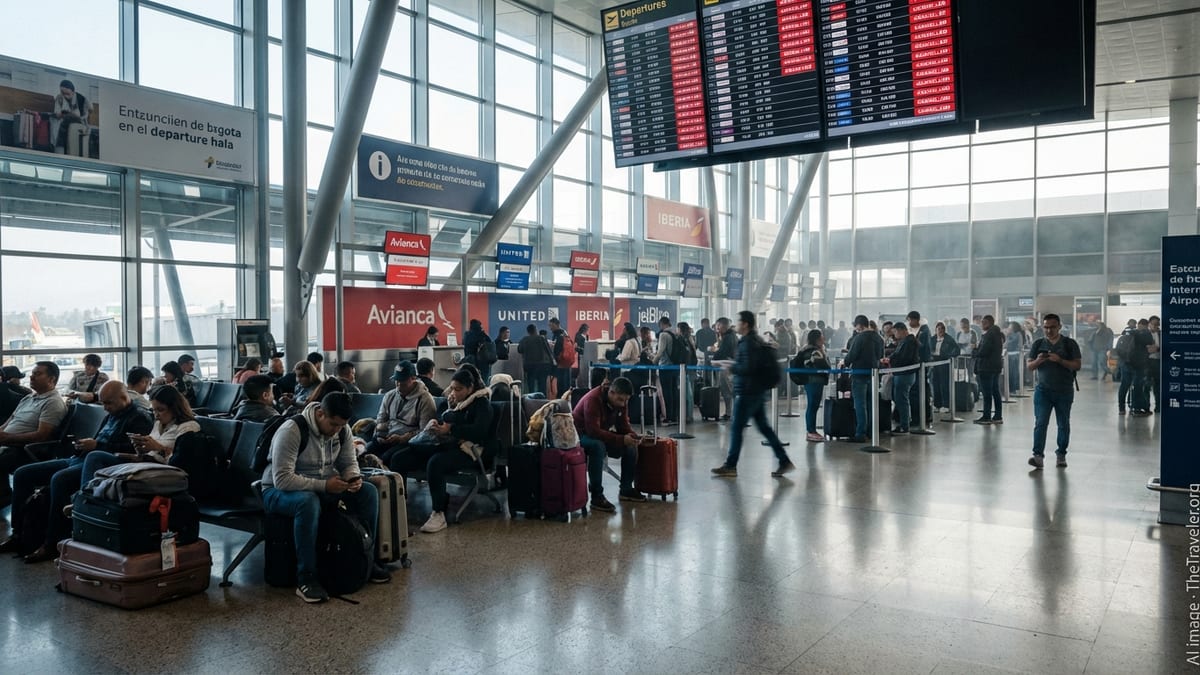
New Wave of Cancellations Hits Key Colombian Gateways
The latest round of flight cancellations, recorded between February 22 and 24, 2026, has added new pressure to an already fragile air travel environment in Colombia. According to operational data compiled from airline schedules and airport reports, at least 13 flights were scrapped on routes connecting Colombia with North America and Europe, including services to Madrid, New York, Newark, and Washington, as well as key domestic and regional links.
The disruptions build on a broader pattern of volatility that has affected Colombia’s aviation sector since late January, when more than 50 flights were canceled in a single week, leaving thousands of passengers stranded at airports such as Bogota, Medellin, Cali, Cartagena, Santa Marta, and Pereira. While the earlier wave largely impacted domestic and regional operations, the newest cancellations are concentrated on long-haul and trunk routes that are vital for business and leisure travel.
Airports most affected in this latest episode include Bogota’s El Dorado International, Medellin, and Cartagena, with knock-on impacts reported for connections onward to Cali and other major cities. Travelers reported overnight delays, missed connections, and last-minute rebookings as airlines adjusted their schedules.
Major Carriers Trim Operations on Madrid and U.S. Routes
Avianca, Colombia’s flag carrier, has been central to the disruption, canceling several services across its network as it juggles aircraft availability and schedule adjustments. Flights linking Bogota with Madrid and other European gateways have seen select departures pulled from timetables, while high-traffic domestic links such as Bogota to Medellin, Cali, and Cartagena have also recorded cancellations or significant delays.
Spanish carrier Iberia, a key operator on the Madrid to Bogota corridor and other Colombia-bound services, has likewise adjusted frequencies in recent weeks amid broader operational challenges. Some Madrid-bound flights connecting through Colombian hubs have been canceled or consolidated, forcing passengers to accept alternative itineraries or travel on different days.
On the North American side, United Airlines and JetBlue have both cut individual services between Colombian cities and major U.S. airports, including New York’s John F. Kennedy and Newark Liberty, as well as Washington Dulles. While the total number of canceled flights remains relatively small compared with daily schedules, the impact is magnified because many of these routes operate near capacity and have limited same-day alternatives.
Industry analysts note that long-haul and transcontinental routes are particularly vulnerable to cascading operational issues. A delayed inbound aircraft from Europe or the United States can quickly translate into a cancellation or time-critical schedule change on the return leg, especially when crews are already operating at the edge of their duty limits.
Operational Strains, Weather, and Capacity Constraints Cited
Airlines have pointed to a combination of factors behind the recent disruptions. Operational constraints, including aircraft rotation challenges and maintenance windows, appear to have played a central role. In some cases, carriers have opted to proactively cancel or consolidate flights rather than risk extended rolling delays that might further destabilize their networks.
Seasonal weather in parts of North America and Europe has also affected on-time performance, with winter storms and air traffic control restrictions occasionally disrupting departures from hubs such as New York and Madrid. When combined with high load factors on Colombia routes, even minor schedule adjustments can leave carriers with few spare seats to accommodate displaced passengers.
Capacity remains tight on many Colombia services following pandemic-era restructuring and the more recent exit or downsizing of certain regional carriers. As a result, Avianca, United, Iberia, and JetBlue are operating in a constrained environment where there is limited redundancy. A single aircraft out of rotation can lead to multiple cancellations over several days, particularly on long-haul flights that require longer ground times and larger crews.
Regulatory and infrastructure pressures at major Colombian hubs have added another layer of complexity. Airports such as Bogota and Medellin already operate near their capacity during peak periods, leaving little room to absorb irregular operations without delays spilling over into subsequent departures.
Passengers Scramble for Alternatives Across Bogota, Medellin, Cali, and Cartagena
For travelers, the latest cancellations have translated into long queues at check-in counters and customer service desks, especially at Bogota, Medellin, Cali, and Cartagena. Many passengers reported being informed of changes only a few hours before departure, limiting their ability to rebook on other carriers or adjust hotel and ground transport plans.
With popular routes such as Madrid to Bogota or Medellin often fully booked days in advance, some affected passengers have had to accept connections through secondary hubs or travel a day or more later than planned. Others have shifted to domestic routes or ground transport options within Colombia, particularly for journeys between cities like Bogota, Medellin, and Cali where road links, though longer, can offer a more reliable fallback.
Travel agencies and corporate travel managers in both Colombia and Europe report a surge in queries related to schedule changes, refund policies, and rebooking options. In some instances, travelers have chosen to reroute via alternative European gateways or U.S. hubs served by other airlines, even when that entails longer total journey times, in order to secure more stable itineraries.
The disruptions have also had a knock-on effect on tourism-dependent cities such as Cartagena and Santa Marta, where international arrivals from Europe and North America help drive hotel occupancy and tour bookings. Industry observers warn that repeated bouts of cancellations risk undermining confidence among high-spending visitors planning trips months in advance.
What Travelers Should Do as Disruptions Continue
With Colombian aviation still experiencing intermittent turbulence, travel experts are urging passengers to monitor flight status closely and build extra flexibility into itineraries involving Bogota, Medellin, Cali, Cartagena, and other major cities. Checking airline apps and airport updates at least 24 hours and again a few hours before departure has become essential, particularly for long-haul journeys.
Passengers scheduled to fly with Avianca, United, Iberia, or JetBlue in the coming days are being advised to confirm their contact details with the airline to ensure they receive real-time notifications of any schedule changes. Where possible, selecting earlier departures in the day, avoiding tight connections, and allowing longer layovers at hubs like Madrid or New York can provide a buffer against unexpected disruption.
Travel planners also recommend reviewing fare rules and flexibility options before booking. Many carriers now offer changeable or partially refundable fares that, while more expensive upfront, can significantly reduce the financial and logistical impact of last-minute cancellations. Travel insurance policies that cover trip interruption and additional accommodation or transport costs may offer further protection, particularly for complex itineraries or peak-season travel.
While airlines continue to fine-tune schedules and restore stability, travelers heading to or from Colombia over the coming weeks are likely to face an environment where resilience and preparation are as important as a valid ticket. Until capacity is strengthened and operational buffers are widened, flight cancellations on strategic routes to Madrid, Bogota, Medellin, Cali, and Cartagena may remain an unwelcome, if intermittent, feature of regional air travel.