

More news on this day
Passengers traveling between Egypt, Saudi Arabia and Libya faced fresh disruption on February 23, 2026, after EgyptAir, Nile Air and EgyptAir Express canceled a cluster of flights on some of the region’s busiest routes, including services to Riyadh, Jeddah and Tripoli.
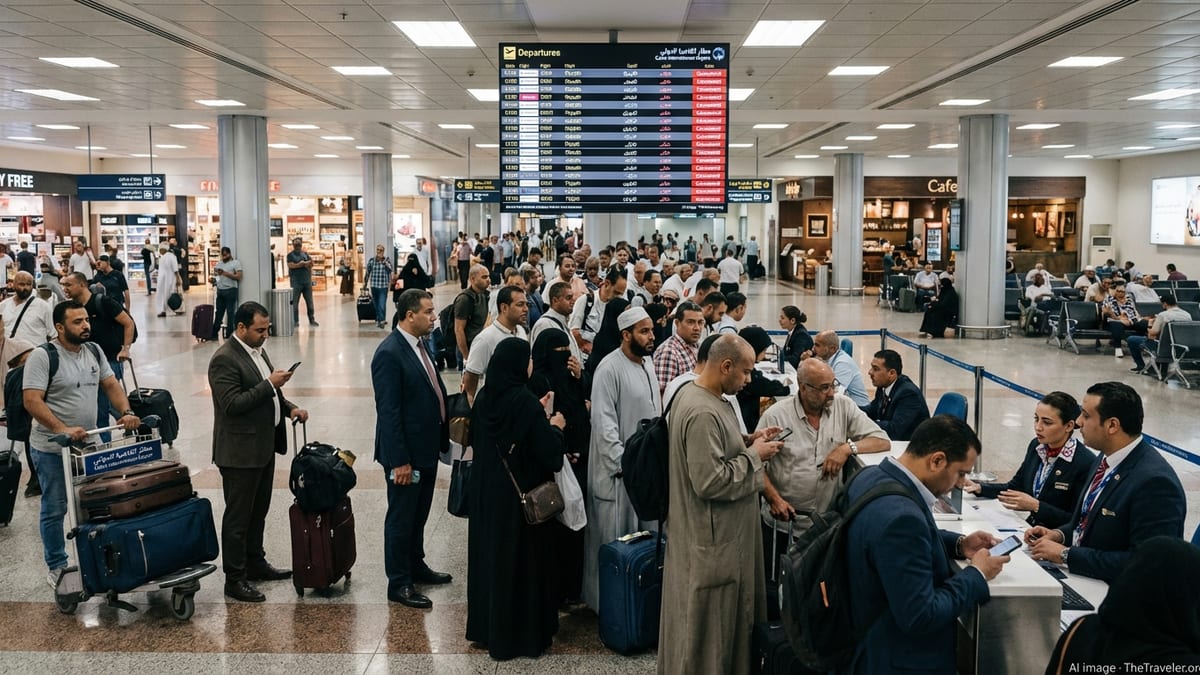
Multiple Carriers Pull Flights on Busy Regional Day
The latest wave of disruption emerged over the course of Monday, February 23, when airline schedule boards at Cairo and other Egyptian airports showed five Egypt-bound or Egypt-origin flights scrubbed within hours of departure. The cancellations affected operations by national flag carrier EgyptAir, privately owned Nile Air and regional operator EgyptAir Express, amplifying the impact across both full-service and feeder networks.
While day-of-operations changes are common in the region’s congested air corridor, the clustering of cancellations on the same day and on the same group of core routes drew particular attention from passengers and industry watchers. Services between Egypt and Saudi Arabia’s major cities, along with flights linking Cairo and the Libyan capital Tripoli, rank among North Africa’s highest-demand corridors, particularly at the start of the work week.
Airport staff and ground handlers reported a spike in rebooking requests and customer-service queues through the late morning and afternoon as travelers sought to salvage business trips, onward connections and family visits. Airlines moved to re-accommodate disrupted passengers on later services where seats were available, but higher-than-usual winter demand left limited slack across the network.
The cancellations also added fresh strain to an air-travel market that has been running close to capacity on Middle East and North Africa trunk routes, with airlines juggling aircraft availability, crew rosters and fluctuating regional demand patterns.
Key Routes to Riyadh and Jeddah Hit at Short Notice
Among the most significant impacts were on flights serving the Saudi cities of Riyadh and Jeddah, two of the most heavily traveled international destinations from Egypt. Both cities handle high volumes of business travelers, religious visitors bound for the Islamic holy sites, and expatriate workers commuting between the two countries.
Passengers booked on affected flights reported receiving short-notice notifications of cancellation via email and mobile applications, in some cases only a few hours before scheduled departure. At Cairo International Airport, digital departure boards briefly displayed the flights as delayed before ground announcements confirmed outright cancellations.
The sudden loss of capacity on Egypt–Saudi routes created an immediate bottleneck, with remaining flights on EgyptAir, Nile Air, Saudia and other regional carriers quickly filling up. Travel agents in Cairo and Alexandria said that last-minute fares on still-operating services to Riyadh and Jeddah climbed sharply as demand surged for the remaining seats.
For some passengers with fixed commitments in Saudi Arabia, such as medical appointments or time-sensitive business meetings, the cancellations meant abandoning or substantially altering their plans. Others opted to route through alternative Saudi gateways such as Medina or Dammam, adding hours and additional connections to journeys that are normally completed on short, direct flights.
Tripoli Connection Disruptions Underscore Fragile Libya Links
The disruption extended westward to Libya, with at least one canceled flight affecting the vital link between Egypt and Tripoli. Air connectivity between Egypt and Libya has gradually rebuilt in recent years from a low base, but remains more fragile than the dense Saudi network, making each individual cancellation more consequential.
Travelers using Cairo as a staging point for onward travel into Libya, including aid workers, oil and gas sector staff and members of the large Libyan diaspora, faced difficult rebooking options. Unlike the Saudi routes, where multiple airlines offer frequent daily services, the Tripoli corridor has thinner schedules and fewer alternative carriers.
Industry analysts note that when a Tripoli flight is canceled at short notice, passengers may not be able to secure a same-day or even next-day alternative without significant detours. Some were forced to travel via third-country hubs such as Tunis or Istanbul, lengthening journeys and adding cost at a time when airfares in the region are already elevated.
The latest cancellations highlight the persistent vulnerability of North African connectivity to operational shocks, whether they stem from airline-level decisions or broader regional constraints. For Libyan travelers in particular, each disruption resonates beyond the day’s schedule, given the limited options for regular, direct international service.
Airlines Cite Operational Reasons as Travelers Seek Clarity
Initial statements from airline representatives described the five cancellations as driven by operational reasons, a catch-all term that can encompass aircraft rotation issues, crew scheduling challenges, technical inspections or air-traffic-flow restrictions. None of the carriers immediately indicated a security-related cause, and airports continued regular operations on other flights.
EgyptAir has in recent months been engaged in ongoing fleet optimization and maintenance planning as it prepares for new long-haul expansions, placing additional pressure on aircraft utilization on regional sectors. Nile Air and EgyptAir Express, which rely on smaller fleets and thinner margins for flexibility, can find their schedules more exposed when a single aircraft is unavailable.
Travelers, however, expressed frustration at the limited detail provided in messages and on airport displays, which typically referred only to “operational reasons” without further explanation. Consumer advocates in Egypt argue that more transparency around the causes of cancellations would help passengers make informed decisions about travel insurance, connection buffers and choice of carrier.
The affected airlines indicated that impacted customers were being offered standard options including free rebooking on the next available flight, refunds in cases where travel was no longer possible, and in some instances hotel accommodation or meal vouchers for those stranded away from home. The actual level of support, however, appeared to vary depending on fare type and point of purchase.
Knock-On Effects Across Egypt’s Domestic and Regional Network
Because some of the canceled services were operated by EgyptAir Express and formed part of a broader wave of connecting flights, the disruption rippled through parts of Egypt’s domestic network. Passengers connecting from secondary cities to long-haul and regional departures in Cairo were among those most vulnerable to missed connections and overnight delays.
Travel agents reported cascading itinerary changes as travelers who missed their Saudi or Libyan connections had to be rebooked onto later flights, sometimes requiring adjustments to domestic segments to align with the new timings. In certain cases, passengers opted to travel by road or rail between Egyptian cities to reach alternative departure points after their original connections fell through.
The pressure on scheduling also led to tighter turnarounds on surviving flights, as ground teams worked to board re-accommodated passengers and their luggage. Aviation observers warned that such compressed turn times can increase the risk of further delays later in the day, particularly if there is any additional strain from air-traffic-control restrictions or weather changes.
Despite these challenges, major hubs such as Cairo International continued to report largely normal throughput, with on-time performance holding steady on most unaffected routes. The localized nature of the cancellations kept the disruption focused but still intensely felt by those directly impacted.
Passenger Rights Vary Across Jurisdictions and Ticket Types
The events underscored continuing confusion among travelers about their rights when flights are canceled on short notice in and out of Egypt. Unlike in some jurisdictions where comprehensive passenger-protection regimes mandate fixed compensation levels, regulations on Egypt–Saudi and Egypt–Libya routes are governed by a patchwork of national rules, bilateral agreements and airline-specific policies.
Legal experts note that in many cases, passengers are entitled to a refund or rebooking at no additional cost when their flight is canceled by the airline, but cash compensation for lost time or consequential damages is less consistent. Terms can also differ significantly between full-service carriers and low-cost or hybrid operators, as well as between tickets purchased directly and those acquired through third-party platforms.
The five-flight disruption highlighted the importance of reading fare conditions and checking both airline and travel-agent policies before booking, especially on routes where irregular operations have been frequent. Some experienced travelers recommend selecting itineraries with more generous connection windows or opting for flexible tickets, even at higher upfront cost, when traveling through congested regional hubs.
Consumer advocates in Egypt and Saudi Arabia continue to call for clearer, more harmonized rules for cross-border routes, particularly on high-demand corridors such as Cairo–Riyadh and Cairo–Jeddah, where travelers may have limited ability to switch to alternative modes of transport when flights fall through.
Travelers Respond With Workarounds and Contingency Planning
In the immediate aftermath of the cancellations, Egyptian and Saudi social media channels carried a stream of advice from frequent flyers sharing practical workarounds. Many recommended monitoring multiple flights on the same route and airport simultaneously, using real-time flight-tracking tools and airline apps to stay ahead of sudden changes.
Others advised building redundancy into travel plans, such as booking morning departures where possible to preserve buffer time for same-day re-accommodation, or selecting routes with more than one daily frequency to a destination. For those traveling to Riyadh and Jeddah, which are served by several carriers, that can mean choosing airlines with historically stronger on-time performance and more extensive backup schedules.
Corporate travel managers in Egypt said they are increasingly revisiting internal policies to account for the risk of operational disruptions on key Middle East corridors, including encouraging staff to avoid last-flight-of-the-day itineraries for critical meetings or events abroad. Some companies are also exploring greater use of virtual meetings where feasible, to reduce exposure to travel uncertainties.
The disruptions also served as a reminder to travelers heading to Libya via Tripoli that itineraries involving multiple segments and carriers can be particularly fragile. Industry advisers stress the value of booking end-to-end tickets on a single booking reference where possible, to ensure clearer responsibility for rebooking when cancellations hit one part of the journey.
Regional Aviation Under Pressure as Demand Outpaces Flexibility
The latest cancellations come at a time when North African and Middle Eastern aviation markets are experiencing strong demand growth, driven by economic ties, religious tourism and a rebound in leisure travel. Yet fleet growth and infrastructure upgrades have not always kept pace, leaving airlines with limited room to absorb shocks such as technical issues, staffing shortages or temporary airspace constraints.
EgyptAir is in the midst of modernizing parts of its fleet and preparing for new long-haul routes, while private carriers such as Nile Air expand into secondary markets and niche city pairs. This expansion can stretch available aircraft and crew resources, particularly during peak travel periods, making any sudden disruption more likely to cascade across the schedule.
Analysts suggest that the five-flight cancellation episode will reinforce conversations within the region’s aviation community about resilience and contingency planning, from more robust spare-aircraft strategies to improved crew rostering systems. For travelers, however, the immediate priority remains straightforward: clear, timely information and practical options when flights that were expected to depart simply do not.
As airlines and regulators review the events of February 23, passengers on the affected routes will be watching closely for signs that lessons have been learned and that safeguards are being strengthened on the lifeline corridors connecting Egypt with Riyadh, Jeddah, Tripoli and other key regional destinations.