

More news on this day
Air travel across Egypt faced fresh disruption this week after EgyptAir, Nile Air, and EgyptAir Express cancelled five scheduled services, stranding passengers and constraining already busy corridors to Riyadh, Jeddah, Tripoli and other key regional destinations.
Multiple Egyptian Carriers Scrub Flights on Key Regional Routes
Egypt’s main air gateways experienced a new bout of disruption after five flights operated by EgyptAir, Nile Air, and EgyptAir Express were cancelled on short notice, affecting passengers bound for Saudi Arabia and Libya as well as domestic and regional connections through Cairo. The cancellations, reported by airport and travel industry sources, hit routes linking Cairo with Riyadh and Jeddah, along with services involving Tripoli and at least one secondary Saudi destination.
While exact flight numbers varied across carriers, the pattern was clear: a cluster of late changes to the schedule on routes that typically see heavy demand from business travellers, migrant workers, medical travellers, and religious visitors. Industry observers said the cancellations underscored how tightly balanced capacity currently is on Egypt’s regional network, particularly on links to Saudi Arabia that are operating close to pre-pandemic levels.
The disruption comes at a time when schedules between Saudi cities and Cairo are already dense, with frequent services by EgyptAir, Nile Air and several Saudi carriers. Even a handful of cancellations can quickly ripple through the system, pushing up last-minute fares and leaving some travellers with limited alternatives, especially for same-day travel.
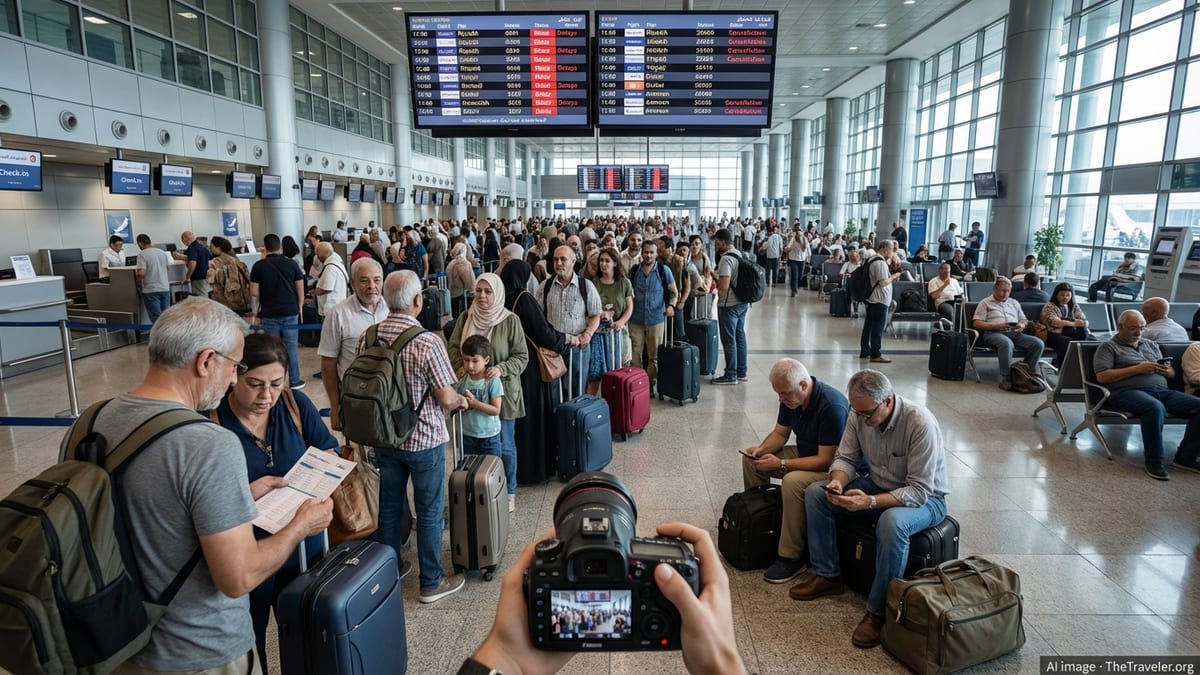
Passengers at Cairo International Airport described scenes of confusion at departure halls as they were informed at check-in that flights had been cancelled or substantially delayed. Some reported being offered rebooking on later services, while others were advised to seek refunds or work with travel agencies to arrange alternative itineraries.
Riyadh and Jeddah Links Under Pressure
Routes between Egypt and Saudi Arabia remain among the busiest in the Middle East, driven by strong labour, religious, and family ties. Direct flights connecting Cairo to Riyadh and Jeddah operate multiple times a day across several carriers, and even incremental cuts to capacity can have an outsize impact on travellers who rely on tight schedules for work or onward connections.
In the latest round of disruption, at least two cancelled flights involved services between Cairo and Riyadh, according to travel agents monitoring same-day departures. These routes are central to EgyptAir and Nile Air’s regional strategy, carrying not only point-to-point traffic but also connecting passengers from Alexandria, Upper Egypt and other cities who use Cairo as a hub for onward travel to the Gulf.
Jeddah, the gateway to the holy cities of Mecca and Medina, has also seen intense demand for seats, particularly around weekends and upcoming religious dates. Regular flights between Jeddah and Cairo continue to operate, but agents say the cancellations have tightened availability, particularly in lower fare classes, adding to costs for workers and families who travel frequently between the two countries.
Saudi Arabia’s own carriers, including low-cost operators, continue to provide substantial capacity on the Saudi–Egypt corridor, but the latest schedule cuts by Egyptian airlines highlight how interdependent the two markets are. When one side trims capacity, travellers can face sudden shifts in pricing, timing and baggage policies as they scramble to rebook on other operators.
Tripoli Passengers Face Fewer Options
The disruption has also affected passengers travelling between Cairo and Tripoli, a route that has experienced periodic volatility over the past decade due to Libya’s security and political situation. While flights between Tripoli and Cairo have increased in frequency compared with earlier years, capacity remains constrained and is highly sensitive to operational changes by a small number of carriers.
With one of the five cancelled flights reportedly linked to services between Cairo and Tripoli, travellers faced particular difficulty securing alternatives. Unlike the Saudi market, where multiple airlines share the route, options from Tripoli to Cairo are limited, and same-day rebooking can be challenging, especially for travellers who need to coordinate with consular appointments, medical visits, or onward international flights.
Travel consultants in Cairo said some Libyan passengers were forced to delay trips or reroute via third-country hubs such as Tunis or Istanbul, which significantly increased both travel time and cost. For many, visa requirements and transit rules further complicate rerouting options, limiting the ability to pivot quickly when a direct flight is cancelled.
The cancellation of even a single service on the Cairo–Tripoli route is therefore more than a minor schedule adjustment. For passengers, it can mean shifting hotel bookings, rescheduling critical meetings, or missing medical treatment windows, all against the backdrop of already complex cross-border travel arrangements.
Operational Strains and Fleet Constraints
Aviation analysts point to a combination of operational factors that may be feeding into the wave of cancellations across Egypt’s carriers. These include tight aircraft utilization, ongoing maintenance cycles for aging aircraft, and crew rostering challenges, all playing out in a market where demand has rebounded strongly since pandemic-era lows.
EgyptAir, Nile Air and EgyptAir Express rely heavily on narrow-body aircraft such as Airbus A320-family jets and Boeing 737s to operate high-frequency services between Cairo and regional destinations. These aircraft often run to packed daily schedules, with quick turnarounds on the ground. When even a single aircraft goes temporarily out of service for unplanned maintenance, it can disrupt multiple rotations in a single day.
Industry sources note that regional carriers across the Middle East and North Africa are grappling with supply chain issues that can slow the delivery of spare parts and delay maintenance checks. In practice, that can translate into last-minute cancellations when technical teams deem it safer to ground an aircraft than to continue operations while awaiting components or approvals.
Additionally, crew planning has become more complex, with airlines balancing variable demand patterns across weekdays and weekends, as well as seasonal spikes for religious travel. Any mismatch between available crew and scheduled flights, particularly on international routes requiring specific qualifications, can result in short-notice schedule adjustments.
Passenger Experience: Long Queues and Limited Information
For travellers caught up in the latest disruptions, the immediate concern has been a lack of clear and timely information. Several passengers at Cairo and other affected airports reported waiting in long queues at check-in counters or customer service desks, only to be informed belatedly that their flights were cancelled or that they would be rebooked on later departures.
Some passengers reported being offered meal vouchers and hotel accommodation when overnight stays became unavoidable, in line with standard airline disruption policies. Others, especially those booked on shorter regional hops, said assistance was less consistent and that they were left to arrange their own accommodation or alternative transport, often at significant personal expense.
Travel agents say that passengers who booked directly with airlines often had to rely on call centres or airport desks for updates, whereas those who used agencies or online travel platforms sometimes received earlier notification and help securing alternative itineraries. However, the speed and clarity of communication still varied widely, with some customers learning of cancellations only upon arrival at the airport.
Frequent travellers in the region increasingly emphasize the importance of monitoring flight status through multiple channels, including airline apps, third-party flight trackers, and direct contact with carriers shortly before departure. The latest cancellations have reinforced that advice, particularly for those travelling on time-sensitive journeys such as medical appointments, exams, or contractual work commitments.
Impact on Fares, Capacity and Future Bookings
Short-notice cancellations on already busy routes have had a knock-on effect on fares and seat availability between Egypt and key regional markets. With some flights removed from the schedule, remaining services can quickly sell out, especially around peak travel days. This dynamic is particularly evident on Cairo–Riyadh and Cairo–Jeddah services, where demand from workers and family visitors remains robust.
Travel agents in Cairo and Alexandria report that last-minute fares have climbed on several Saudi-bound flights following the cancellations, as passengers compete for limited seats on alternative departures. Those able to shift travel dates by a day or more sometimes find more reasonable prices, but flexibility is not an option for all travellers, especially those bound by work contracts or official appointment dates.
The disruptions may also influence future booking patterns. Some passengers indicated they are now more likely to opt for earlier flights in the day, or to build longer layovers into itineraries involving important onward connections, in order to provide a buffer against unexpected cancellations. Others say they will compare carriers more closely on disruption handling and customer support, not just on ticket price.
For airlines, the episode is a reminder that reliability is a core part of their competitive offering, particularly on routes where they face competition from regional and low-cost rivals. Carriers that can demonstrate consistent on-time performance and clear communication during disruptions may win loyalty, even in a price-sensitive market.
Advice for Travellers Currently Planning Trips
With schedules across the Egypt–Saudi Arabia and Egypt–Libya corridors remaining generally robust but occasionally volatile, travel experts recommend that passengers planning upcoming trips take a few practical steps to reduce risk. Booking flights with some time margin before critical events, such as official appointments or onward long-haul departures, can provide valuable flexibility if a flight is delayed or cancelled.
Passengers are also urged to monitor airline announcements closely in the 24 hours before departure and to confirm flight status directly with carriers or through official apps rather than relying solely on static booking confirmations. For those travelling from smaller regional airports and connecting through Cairo, adding extra connection time can help absorb delays and prevent misconnection if an initial leg is disrupted.
Travel insurance that explicitly covers flight cancellations and missed connections can be a worthwhile consideration, particularly for complex multi-leg journeys in the region. Policies differ significantly, so travellers are advised to check coverage terms carefully, including conditions for compensation and documentation requirements in the event of disruption.
Finally, travellers with fixed-date travel to Riyadh, Jeddah, Tripoli or other affected destinations may find it useful to identify backup carriers and alternative routings in advance, even if they do not book them immediately. Having a contingency plan can make it easier to react quickly and secure seats if their original flight is unexpectedly removed from the schedule.