

More news on this day
Air passengers across Germany are facing fresh disruption after more than 20 international flights were cancelled or heavily curtailed, affecting routes operated by Gulf Air, Qatar Airways, British Airways and EasyJet and severing or reducing key links to Bahrain, Doha, London, Amsterdam, Copenhagen, Keflavik, Manchester and other major hubs.
Get the latest news straight to your inbox!
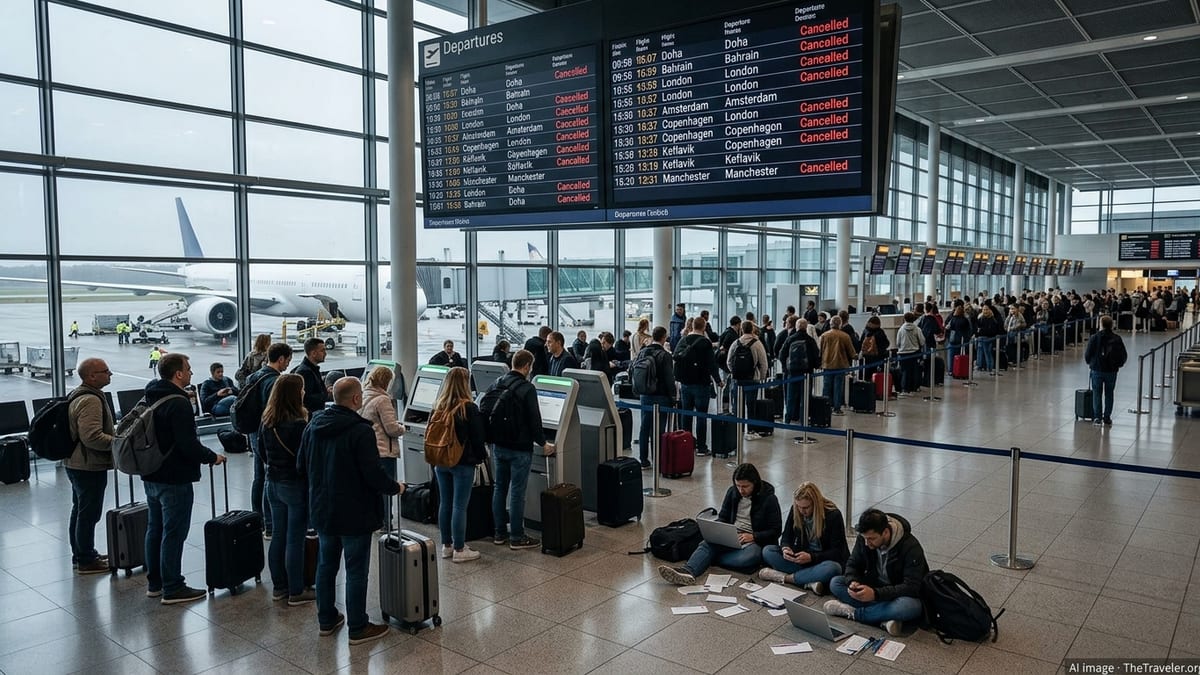
Latest Wave of Cancellations Hits Key German Gateways
Published coverage and live flight-tracking data on 21 March 2026 indicate a new wave of cancellations across major German airports, including Frankfurt, Munich and Berlin, as airlines continue to adjust schedules in response to the ongoing regional crisis around the Gulf. More than 20 departures and arrivals involving Germany and the wider Middle East and North Atlantic network were removed from schedules or listed as cancelled within a short window, compounding weeks of disruption.
The latest changes particularly affect long-haul links that connect Germany with transit hubs in the Gulf and onward destinations in Europe and North America. Flights that would normally funnel passengers from Germany through Doha and Bahrain toward London, Amsterdam, Copenhagen, Keflavik, Manchester and other cities have either been suspended or reduced in frequency, leaving many travellers scrambling to rebook.
Publicly available information shows that the cancellations sit on top of an already thinned-out timetable following airspace closures and capacity restrictions in parts of the Middle East from late February. Airlines serving Germany are now layering additional last-minute changes on interim schedules that had only just been published, creating uncertainty for passengers who believed their revised itineraries were secure.
Gulf Air and Qatar Airways Reduce Connectivity via Bahrain and Doha
Gulf Air, Bahrain’s flag carrier, has been operating a skeletal network after Bahrain’s airspace was closed and then only partially reopened, and Germany-facing services remain among the most affected. Reports indicate that multiple Gulf Air flights linking Germany with Bahrain have been cancelled or downgraded, interrupting what is normally a key one-stop option from German cities to destinations across the Middle East and Asia.
For Qatar Airways, Germany is a major European market, with regular services that normally connect Doha to Frankfurt, Munich and Berlin and feed a wide range of onward routes. Since Qatari airspace was initially closed at the end of February as part of the wider regional conflict, the airline’s schedule has been in flux. Interim timetables released for mid to late March show limited resumptions, but passenger accounts and updated departure boards from German airports on 21 March point to a fresh round of cancellations for some services.
These Qatar Airways cancellations are having a direct knock-on effect on German travellers bound for Bahrain, Doha and beyond. Many itineraries from Germany to London, Amsterdam, Copenhagen, Keflavik and Manchester rely on a Doha connection, and when the German–Qatar leg is cancelled, the entire journey often collapses. Some passengers are being offered rebookings days later or rerouting via alternative European hubs, while others report that there is little to no immediate availability on substitute flights.
European Carriers Trim Germany Links to the Gulf and Northern Europe
British Airways has progressively scaled back services to several Gulf destinations in response to the instability, and Germany has been caught in the wider network reshuffle. Published coverage in recent days notes that British Airways suspended flights to Bahrain and Doha for part of March, and these suspensions are now rippling through its broader European operation. With direct services into the Gulf curtailed, some Germany–UK flights that feed those long-haul routes have been cancelled or adjusted as aircraft and crew are redeployed.
Low-cost carrier EasyJet, a major operator across Germany and the wider region, has also cancelled or consolidated a number of flights, particularly on short-haul city pairs that connect into affected long-haul services. Routes between German airports and key European hubs such as Amsterdam, Copenhagen and Manchester are among those to see cancellations or last-minute aircraft swaps, according to airport boards and passenger reports.
The disruption is not confined only to services touching the Gulf. With aircraft and crew patterns upended, airlines are cutting or retiming some intra-European sectors that would normally be used as feeders. This has left certain city pairs such as Germany to London, Amsterdam or Copenhagen operating at sharply reduced frequencies, pushing up load factors and making same-day rebooking difficult for stranded travellers.
Routes to London, Amsterdam, Copenhagen, Keflavik and Manchester Disrupted
Germany’s role as both an origin and transfer market means that cancellations radiate outward through the network. Passengers aiming to travel from German cities to London, Amsterdam, Copenhagen, Keflavik and Manchester are being affected in several ways: through direct cancellations on these sectors, through loss of Gulf connections that would have routed them onward, or through missed connections caused by upstream delays.
Flight-tracking snapshots from 21 March show particular pressure on links to London and Manchester, with a mix of cancellations and significant delays across different carriers. Some Germany–London flights that would typically be timed to connect with Gulf arrivals are either removed from the schedule or operating with reduced capacity. For Manchester, travellers report that services which had already been rescheduled once are being altered again, with extended layovers or late-night departures becoming common.
Further north, passengers connecting between Germany and Keflavik in Iceland or Copenhagen in Denmark are also experiencing disruption. These routes are often used as gateways to transatlantic or Nordic destinations, and when flights are cancelled, travellers can lose entire itineraries spanning three or four sectors. With airlines prioritising repatriation and minimum connectivity to key hubs, some leisure-heavy routes appear to be bearing the brunt of the current round of cancellations.
What Travellers Through Germany Should Expect Now
For passengers due to travel to or through Germany in the coming days, publicly available guidance suggests preparing for further short-notice changes. Airlines continue to revise schedules as regional airspace restrictions shift and as operational conditions at German airports evolve. Even flights that appear confirmed in booking systems have, in some cases, been cancelled within 24 to 48 hours of departure.
Rebooking options are also tightening. With Gulf Air and Qatar Airways operating reduced networks and with British Airways and EasyJet trimming capacity on selected routes, spare seats on alternative departures are becoming scarce, especially to high-demand destinations such as London, Amsterdam and Manchester. Some travellers report being offered departures several days later or itineraries involving multiple connections through secondary hubs.
Consumer advocates note that passengers should closely monitor their bookings, use airline apps or airport information screens to check real-time status, and review their rights under European Union air passenger regulations. While compensation rules can vary depending on the cause of disruption, Germany-based travellers are being encouraged to keep records of cancellations and additional expenses such as accommodation and meals should they need to pursue claims later.