

More news on this day
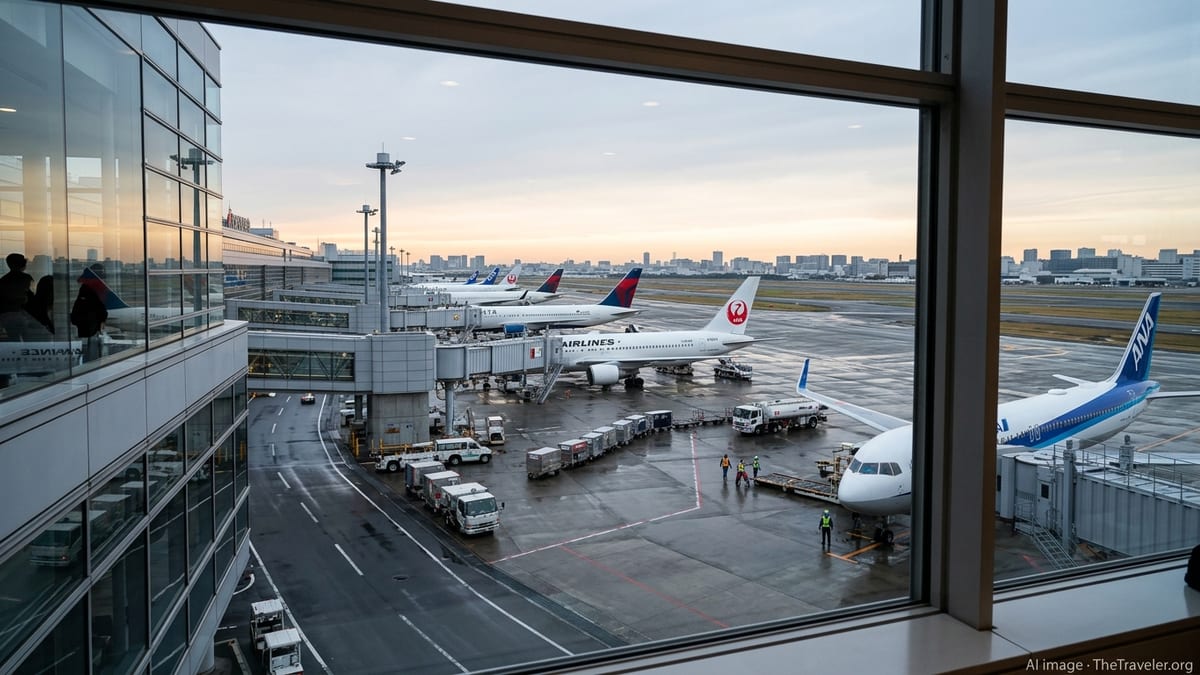
Travelers to and from Japan are facing fresh disruption as a cluster of airlines, including Delta Air Lines, Japan Airlines (JAL), All Nippon Airways (ANA) and several regional carriers, cancel more than a dozen flights on key routes linking Tokyo and other Japanese cities with Atlanta, Taiwan, Hong Kong, Fukuoka and additional hubs across Asia and North America.
Get the latest news straight to your inbox!
Wave of Cancellations Hits Key Japan Gateways
Recent operational changes and short-notice schedule cuts have combined to reduce capacity on a number of Japan-linked routes, creating a patchwork of cancellations rather than a single, clearly defined event. Publicly available flight data and traveler reports indicate that services touching major Japanese gateways, including Tokyo’s Haneda and Narita airports as well as regional cities such as Fukuoka, have been affected on multiple days, with some routes seeing repeated cancellations over the past week.
On transpacific sectors, Delta’s operations have drawn particular attention from travelers using Atlanta as a connecting point. Social media posts and traveler forums describe last-minute cancellations and rebookings on itineraries involving Japan connections, including journeys built around partner airlines. While not all of these flights operate nonstop between Atlanta and Japan, disruptions on U.S. domestic legs have cascaded into international plans, leaving some passengers scrambling for alternatives.
Across East Asia, flights linking Japan with Taiwan and Hong Kong have also seen cancellations spread across different carriers. Network adjustments by Japanese and foreign airlines, some announced in advance as schedule changes and others appearing as rolling cancellations, have reduced seat availability on routes that typically carry both tourists and business travelers.
Japan Airlines, ANA and Partners Trim Asia Services
Japan’s two largest network carriers, JAL and ANA, have spent the past year continually fine-tuning their international and domestic programs, including services to Taiwan, Hong Kong and major Japanese regional cities. Winter and summer schedule documents for both groups show incremental capacity reductions on selected routes, including flights to Fukuoka and Okinawa, as well as frequency changes to and from Taipei and Hong Kong.
These planned reductions have coincided with sporadic short-term cancellations driven by demand patterns, fleet utilization and broader regional headwinds. Travelers booking Japan as a regional hub to move between North Asia destinations including Taiwan and Hong Kong are increasingly finding that flights they purchased months ago no longer operate on their original days or at their original times.
Reports from airline-focused communities describe cases where passengers initially ticketed on JAL or ANA between Japan and other Asian points have been shifted to alternative departures, or in some cases to different airlines altogether. While most travelers have ultimately reached their destinations, the additional connections and longer layovers have added complexity and uncertainty to itineraries that were once considered straightforward.
China–Japan Tensions and Capacity Cuts Ripple Through the Region
The latest disruptions are unfolding against a broader backdrop of reduced connectivity between Japan and parts of greater China. Over the past year, Chinese carriers have significantly cut flights to Japan following government instructions to trim capacity, a move that has sharply lowered the number of available seats on many China–Japan city pairs. Those cuts have forced some travelers to reroute through alternative hubs such as Taiwan and Hong Kong, increasing reliance on Japanese and regional airlines serving those markets.
With fewer direct options between Chinese cities and Japan, pressure has grown on remaining services linking Japan to Taiwan and Hong Kong. Any cancellations on these routes, even if relatively limited in number, now have an outsized impact on passengers hoping to use them as stepping stones to other parts of Asia. The cumulative effect is a more fragile regional network in which isolated cancellations can quickly translate into missed connections and unexpected overnight stays.
Airlines operating in and out of Japan are also contending with shifting tourism flows, currency fluctuations and lingering operational constraints. These factors have encouraged carriers to remain conservative with capacity, leaving less slack in the system when aircraft become unavailable or demand falls short of expectations on specific days.
Travelers Report Disruptions on Japan–U.S. and Intra-Asia Itineraries
Individual traveler accounts published on public forums in mid-March describe a mix of outright cancellations and complex rebookings involving multiple airlines on Japan-related trips. In several reported cases, passengers traveling between Japan and the United States on itineraries involving Delta and its partners have seen their original flights cancelled and replaced with routings that combine Japan Airlines, ANA or other Asian and Pacific carriers, sometimes with additional stops in Hawaii or other transit points.
For some travelers, disruptions have begun even before leaving the United States, with cancellations on domestic legs into major hubs such as Atlanta creating knock-on effects for onward journeys to Japan or connecting flights beyond. Others report last-minute changes on intra-Asia segments from Japan to Taiwan, Hong Kong and other regional destinations, compressing layovers or forcing overnight stays.
While many passengers ultimately arrive within a day of their scheduled time, the unpredictability is creating added stress for first-time international travelers and those with tightly planned itineraries. Reports describe long customer-service queues, limited same-day alternatives and a general sense that schedules into and out of Japan are less reliable than they appeared when tickets were first purchased.
What Travelers Should Expect in the Coming Weeks
Based on current schedules and recent patterns, the near-term outlook points to continued volatility rather than a swift return to complete stability. Airlines serving Japan, including Delta, JAL, ANA and various regional operators, are entering a seasonal period of high demand driven by spring travel, even as they fine-tune capacity and respond to evolving geopolitical and economic conditions in East Asia.
Publicly available booking data and airline timetables suggest that some of the most affected links will remain routes with complex partnership arrangements or those reliant on feed from reduced China–Japan traffic. Travelers heading to or from Atlanta, Taiwan, Hong Kong, Fukuoka and other key nodes in the network may continue to see sporadic cancellations or aircraft swaps that alter departure times and connection windows.
Industry analysts note that Japan remains one of the most sought-after long-haul destinations in the Asia Pacific region, which is encouraging airlines to preserve core routes even as they trim around the edges. However, the combination of constrained capacity, network reshuffles and external political pressures means that passengers planning multi-leg itineraries through Japan should build in extra time, monitor their bookings closely and remain prepared for late schedule changes.