

More news on this day
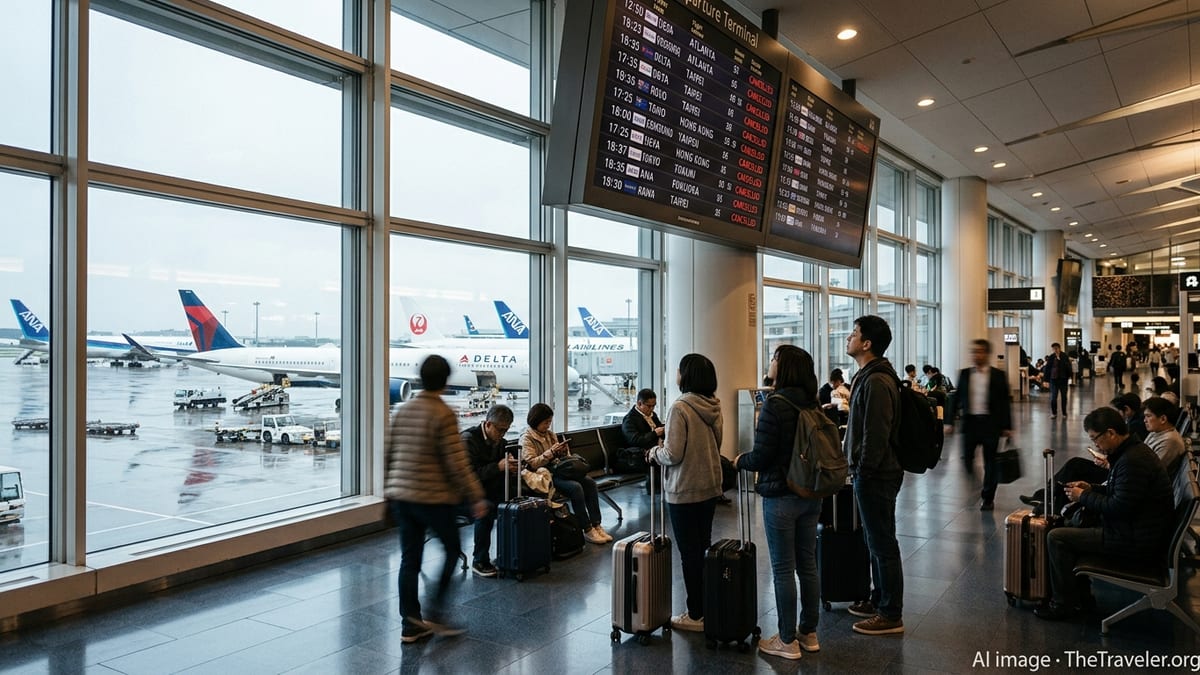
Travelers moving through Japan this week are facing fresh disruption as Delta Air Lines, Japan Airlines, All Nippon Airways, and several regional carriers cancel more than a dozen flights, snarling connections to major hubs including Atlanta, Taiwan, Hong Kong, Fukuoka, and other Asian cities.
Get the latest news straight to your inbox!
Wide-Ranging Cancellations Hit Major Japan Gateways
Publicly available flight information and airport operation updates show that cancellations are affecting services at Tokyo’s Haneda and Narita airports as well as key regional gateways such as Fukuoka. The disruptions are concentrated on international routes linking Japan with North America and Northeast Asia, amplifying the impact for both business and leisure travelers.
Delta-operated and partner flights touching Atlanta appear among the most affected for long haul travelers, with reports indicating that some Japan originating services into the carrier’s primary U.S. hub have been removed from schedules or rescheduled at short notice. For passengers using Japan as a transit point between Asia and the United States, these disruptions are creating missed connections and unexpected overnights.
Japan Airlines and All Nippon Airways, which together operate extensive regional networks from Japan into Asia, have also adjusted flights, including services into Taiwan and Hong Kong. Schedule data and traveler reports suggest that a mix of outright cancellations and frequency reductions is in play, leaving some city pairs temporarily without their usual daily options.
Fukuoka, a key regional hub in southwestern Japan, has seen select services to and from other Asian cities removed or consolidated. For travelers relying on Fukuoka for access to Kyushu and western Japan, the changes are forcing last minute reroutes through Tokyo or Osaka, lengthening overall travel times.
Knock-On Effects for Travelers Across Asia and the United States
The cancellations are having an outsized effect on itineraries that string together multiple carriers and connections. Many journeys between Japan and secondary cities in Taiwan, Hong Kong, and elsewhere in Asia are built on combinations of flights operated by Delta’s partners and Japan’s full service airlines. When one leg is canceled, the entire itinerary can unravel, leaving travelers seeking rebooking options on already busy alternative services.
Reports from affected passengers indicate that some travelers departing from or heading to Atlanta are being rerouted through other U.S. gateways or rebooked onto later dates. This is particularly challenging for those with fixed travel windows or onward domestic connections in North America, where available seats can be tight during peak periods.
On the regional side, cancellations involving routes between Japan and Taiwan or Hong Kong are complicating access to popular weekend and short business-trip destinations. Travelers who had planned tight turnarounds for meetings, events, or holidays are facing decisions about whether to proceed with altered schedules, accept vouchers or refunds, or postpone their trips entirely.
Travel discussion forums and social media posts show that some travelers are opting to route through alternate hubs such as Seoul or Singapore to bypass disrupted links in and out of Japan. Others are shifting from one Japanese gateway to another, for instance switching from Narita to Haneda, in search of flights that are still operating close to their original times.
Operational and Market Pressures Behind the Disruptions
While the precise reasons for each individual cancellation vary by route and carrier, publicly available coverage and schedule data point to a combination of operational challenges and broader market pressures. Airlines serving Japan continue to balance crew and aircraft availability, evolving demand patterns, and the lingering impact of regional diplomatic and economic tensions.
In Northeast Asia, a series of flight reductions over recent months between Japan and parts of Greater China has already tightened capacity on some corridors. When flights that remain on the schedule are then removed on short notice, the room for rebooking passengers quickly disappears, straining both airline call centers and airport customer service desks.
Industry observers note that carriers including Delta, Japan Airlines, and ANA have been fine-tuning their networks around Japan in response to shifting demand between transpacific and intra-Asia markets. Under such conditions, relatively small adjustments in forecast demand, aircraft maintenance needs, or crew positioning can lead to clusters of cancellations, particularly on routes with limited daily frequencies.
The cancellations affecting Fukuoka and other regional Japanese cities highlight how sensitive these markets can be to even minor schedule changes. Many of these routes rely on a narrow band of peak-time flights catering to business travelers and tourists; when these are disrupted, alternatives often require departures at far less convenient times or circuitous routings.
How Airlines Are Responding and What Travelers Can Do
In response to the latest wave of disruptions, airlines are deploying a familiar toolkit of measures including reaccommodation on alternative flights, endorsement to partner carriers where agreements allow, and refunds or travel credits for itineraries that can no longer be reasonably operated. Publicly posted travel advisories and schedule updates indicate that options vary significantly by fare type, route, and the specific carrier involved.
For travelers booked on affected Delta flights touching Japan and Atlanta, rebooking may involve shifting to other transpacific departures that still have seats available, potentially from different U.S. gateways. Those on Japan Airlines and ANA itineraries to Taiwan, Hong Kong, or Fukuoka may find that the most practical solution is to accept retimed services or connect through Tokyo or another major hub rather than holding out for a reinstated nonstop.
Travel experts generally recommend that passengers monitor their reservations closely in the days leading up to departure, confirm flight status repeatedly on the day of travel, and build extra buffer time into connections through Japan’s major airports. Travelers with time-sensitive plans are also advised to consider booking fully flexible tickets or options with favorable change policies, as these can significantly soften the blow of last minute cancellations.
Given the evolving situation, those planning upcoming trips involving Japan, Atlanta, Taiwan, Hong Kong, or Fukuoka may wish to map out backup routings in advance. Having a short list of acceptable alternative airports and departure times can speed decision making if a primary flight suddenly disappears from the schedule.
Japan’s Position as a Regional Hub Under Strain
The current cluster of cancellations underscores the fragility of Japan’s role as a regional hub at a time of shifting travel patterns across Asia and the Pacific. Tokyo, Osaka, and Fukuoka have long functioned as critical waypoints linking North America with secondary cities across Northeast and Southeast Asia. When airlines pull flights, even temporarily, the ripple effects can extend well beyond Japan’s borders.
Recent data on scheduled services published by Japanese airports indicates that international frequencies are still rebuilding and rebalancing, with some carriers adding capacity while others reduce or re-time flights. This dynamic environment creates both opportunities and vulnerabilities for travelers, who may enjoy new route options one month only to see them reduced the next.
For tourism stakeholders in Japan and neighboring markets, the latest disruptions are a reminder that route stability remains a key factor in sustaining visitor flows. Travelers facing uncertainty about flights may postpone or redirect trips to destinations with more predictable connectivity, especially when planning complex itineraries that depend on smooth transfers between long haul and regional sectors.
As airlines, airports, and regulators continue to adjust networks and capacity, travelers using Japan as either a destination or a hub are likely to see further schedule changes in the months ahead. Close attention to booking terms, travel insurance coverage, and real time flight information will remain essential tools for navigating an environment where cancellations can emerge quickly and affect multiple carriers at once.