

More news on this day
Nearly a dozen new and recently launched flights involving Japan have been cancelled in recent days, disrupting travel plans on routes linking Mexico City, Fukuoka, Akita and other key cities as airlines including Aeromexico, ANA and Jetstar adjust schedules amid wider operational pressures.
Get the latest news straight to your inbox!
Multiple Carriers Adjust Schedules on Japan Routes
Published coverage indicates that Aeromexico, All Nippon Airways (ANA), Jetstar and several regional operators have each cancelled individual flights touching Japanese airports, combining into what amounts to nearly a dozen newly affected services. These cancellations come on top of a volatile winter and early spring period for Asia-Pacific aviation, during which carriers have been repeatedly forced to recalibrate networks and capacity.
Reports point to a mix of long-haul and domestic sectors being hit. Aeromexico’s services linking Mexico City with Tokyo Narita sit alongside ANA and Jetstar Japan operations that connect key Japanese hubs such as Fukuoka and Akita with the rest of the country. While the number of cancellations at each airline is relatively small on its own, the aggregate effect has been to strand or reroute passengers across several continents.
Publicly available data on flight status boards and tracker services show that these schedule adjustments often occur close to departure, intensifying the disruption. Travellers with onward connections, particularly between Japan and the Americas, have been among the most affected as missed links cascade through networks.
The latest disruptions follow months of elevated irregular operations across Asia. Earlier in 2026, separate analyses documented hundreds of delays and dozens of cancellations at major Japanese airports over single days, underscoring how fragile regional schedules have become when confronted with weather, airspace constraints and crew availability issues.
Routes to Mexico City and Regional Japanese Cities Affected
On the long-haul side, Aeromexico’s Mexico City to Tokyo Narita link is among the most high profile routes intersecting this wave of cancellations. Industry reporting has previously highlighted the importance of this corridor as a bridge between Latin America and Northeast Asia, providing one-stop connectivity for business and leisure travellers heading to or from Japan.
Any disruption to this transpacific leg has knock-on effects, both for passengers originating in Mexico and for those connecting through Mexico City to other Latin American destinations. When a Narita service is cancelled, published coverage shows that travellers are typically offered rerouting over alternate hubs or rebooking on later departures, but options can be limited during busy travel periods.
Within Japan, the impact is more granular but still significant. ANA and Jetstar Japan cancellations associated with this latest cluster have involved routes such as Fukuoka and Akita, both important nodes in Japan’s domestic and regional tourism economy. Fukuoka acts as a major gateway for Kyushu, while Akita serves popular hot spring and winter destinations in northern Honshu.
According to flight information services tracked by travel outlets, even a small number of cancellations on these sectors can lead to crowding on the remaining departures and longer wait times for rebooking, particularly where rail alternatives are already busy or require multiple transfers.
Operational and Demand Pressures Behind the Disruptions
Several overlapping factors appear to be driving the latest cancellations, based on aviation analytics and regional travel reporting. Airlines in Japan and across Asia have been dealing with lingering staffing constraints, aircraft maintenance backlogs and changing demand patterns on both domestic and international routes.
For Japanese domestic services, publicly available commentary from industry observers suggests that airlines are consolidating flights where load factors are soft or where irregular operations on international sectors create crew and aircraft imbalances. This can cause last minute cancellations on routes like Tokyo to Akita or Fukuoka when carriers opt to prioritize busier trunk lines.
On international links such as Mexico City to Tokyo, schedule changes are often tied to broader network optimization. Longer routings required to avoid certain airspace, currency fluctuations and fuel costs have all been cited in previous analyses as reasons carriers reassess marginal flights. When an airline like Aeromexico adjusts capacity on a long-haul sector, the repercussions can be felt for weeks as connecting banks and code-share itineraries are restructured.
At the same time, Japan’s aviation system has been contending with bouts of severe weather and congestion at key hubs. Earlier this year, travel-focused outlets documented days in which hundreds of flights across Tokyo, Hokkaido and western Japan were delayed or cancelled. These disruptions can ripple forward in time as aircraft and crews end up out of position, leading to further short-notice schedule cuts.
What Travelers to and from Japan Should Expect
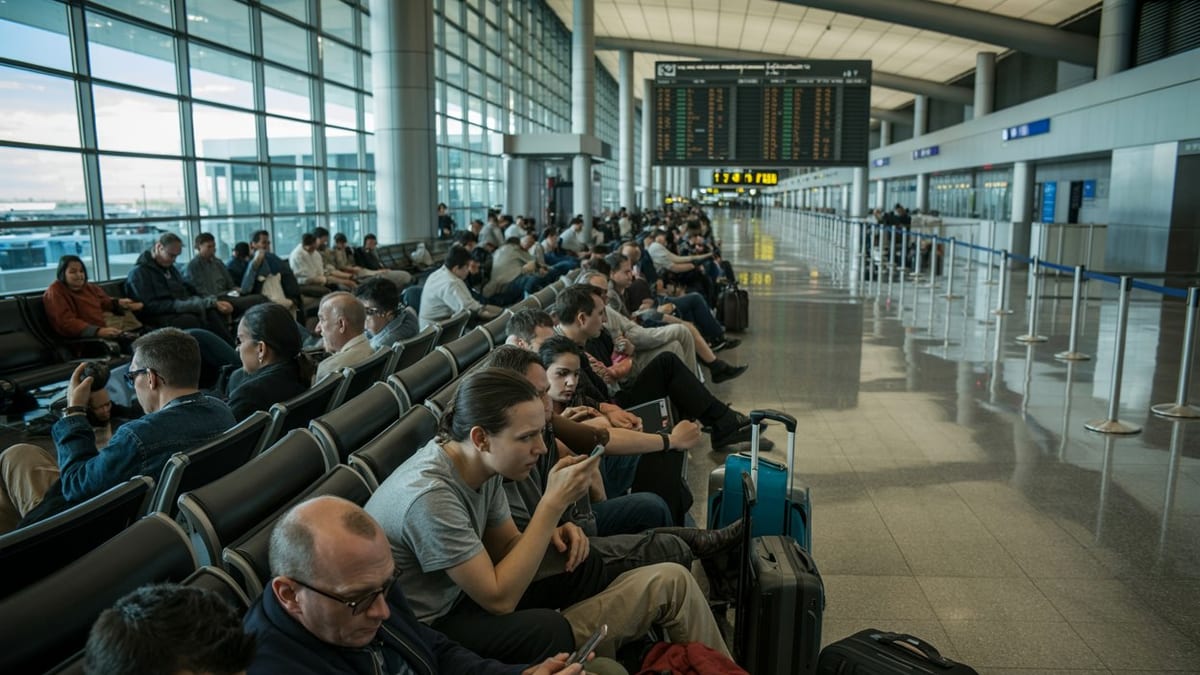
For travellers booked on Aeromexico, ANA, Jetstar and other affected airlines, the immediate consequence of the latest cancellations has been missed connections, extended layovers and, in some cases, overnight stays near major airports. Passenger accounts compiled by travel media describe scenes of crowded customer service desks and long lines at rebooking counters when multiple flights are pulled from the schedule on the same day.
Travel industry guidance consistently recommends checking flight status frequently in the 24 hours leading up to departure, particularly for itineraries involving Japan and longer-haul connections to destinations such as Mexico City. Airline mobile apps, departure boards and notifications from online travel agencies have become crucial tools for identifying problems early enough to adjust plans.
When a cancellation does occur, publicly available airline policies indicate that customers are generally entitled to rebooking on the next available flight in the same cabin or, where capacity is constrained, on partner airlines. Some carriers have been issuing fee waivers that allow passengers to change dates or routes without penalty during defined disruption windows.
However, re-accommodation options may be more limited on secondary domestic routes like Akita or at peak times on transpacific services. Travel planners advise allowing additional buffer time between flights, considering flexible tickets where possible and being prepared for overnight delays if a key leg such as Narita to Mexico City is suddenly removed from the schedule.
Broader Implications for Japan’s Role as a Regional Hub
The flurry of cancellations touching Aeromexico, ANA and Jetstar underlines the delicate balance Japan now occupies in the global air network. Tokyo, Osaka and regional cities like Fukuoka have become vital transfer points for travellers moving between North America, Southeast Asia and the wider Asia-Pacific region.
Recent figures on flight disruption across Asia show that when operations in Japan become unstable, the effects are felt far beyond the country’s borders. Delays or cancellations on one leg can quickly affect multi-country itineraries that rely on tight connection windows, including journeys that pair Mexico City or North American gateways with Japanese hubs.
Industry analysts note that as airlines continue to rebuild and refine their post-pandemic networks, periods of instability are likely to persist, especially on long-haul and leisure-focused routes. New services may launch with fanfare only to be cut back or cancelled if demand underperforms or operational challenges mount, as appears to be the case with some of the newly affected flights highlighted in recent reports.
For now, travellers using Japan as either a destination or a transit point are likely to face an environment where flexibility is essential. The latest cluster of cancellations involving Aeromexico, ANA and Jetstar serves as another reminder that even well-established corridors linking cities such as Mexico City, Fukuoka and Akita remain vulnerable to sudden change.