

More news on this day
Travel plans for hundreds of passengers were upended at Lima’s Jorge Chávez International Airport today as four flights operated by United Airlines, Sky Airline, and LATAM were cancelled, disrupting routes to Houston as well as major Peruvian cities including Arequipa and Trujillo.
Get the latest news straight to your inbox!
Cancellations Hit Key Domestic and International Routes
The sudden wave of cancellations at Peru’s main gateway unfolded over the course of the morning and early afternoon, with flight status boards at Jorge Chávez International Airport showing multiple services scrubbed rather than delayed. Among those affected were a United Airlines service linking Lima with Houston, a critical connection for both business and leisure travelers to the United States, alongside Sky Airline Peru and LATAM Peru flights serving high-demand domestic routes.
Domestic connectivity took a significant blow as flights to regional hubs such as Arequipa and Trujillo were withdrawn from the schedule. These cities are among Peru’s busiest business and tourism centers, and disruptions there can quickly cascade across the country’s aviation network. Passengers connecting onward to smaller destinations, or planning tight itineraries around tours, meetings, and events, faced the prospect of last-minute rebookings or overnight stays in Lima.
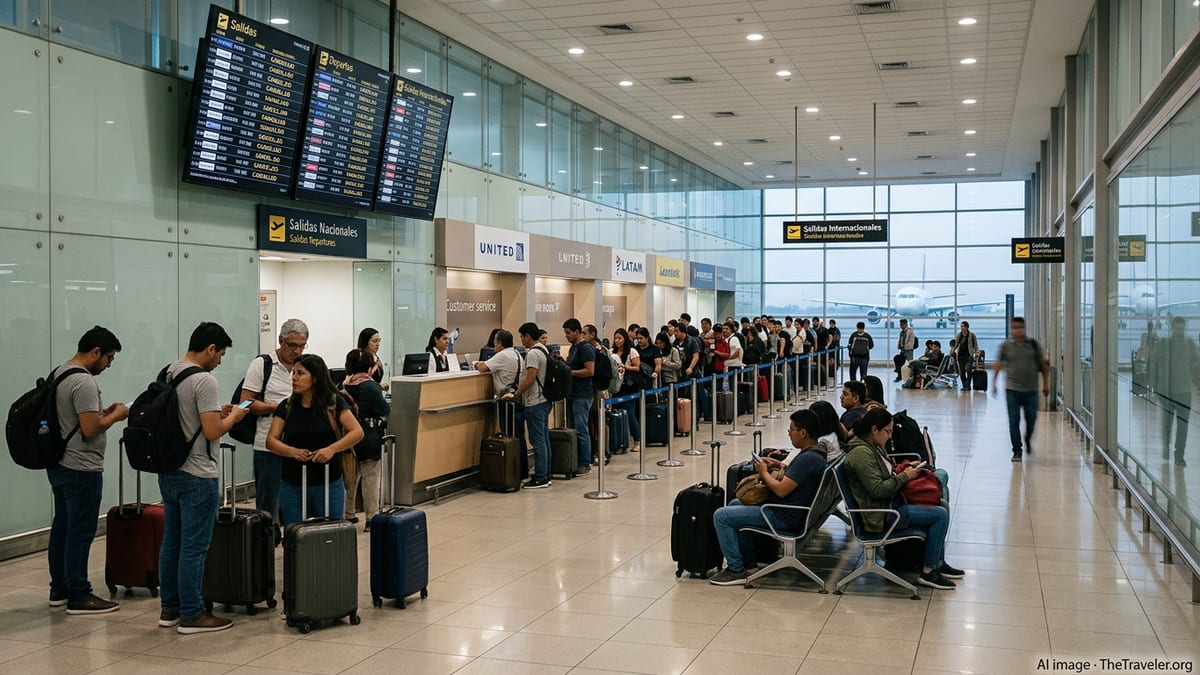
Airport staff reported a rapid buildup of queues at airline counters and customer service desks as travelers sought clarification and alternatives. While some passengers were promptly moved to later flights on the same day, others were informed that limited seat availability and congested schedules could mean waiting until at least the following day to reach their destinations.
The cancellations added pressure to an already busy operation at Jorge Chávez, which serves as Peru’s primary international hub and the center of its domestic air network. Even a small cluster of cancellations can have outsized effects, forcing airlines to juggle aircraft rotations, crew schedules, and passenger connections across multiple cities.
Airlines Cite Operational Disruptions as Travelers Scramble
United, Sky Airline, and LATAM each acknowledged the cancellations, attributing them broadly to operational disruptions rather than a single, clearly defined cause. Industry observers note that a combination of factors commonly drives such events, including aircraft availability, crew rostering limits, and knock-on effects from weather or technical issues on earlier flights in the network.
For United, the cancellation of the Lima–Houston link highlighted the fragility of long-haul and connecting traffic between North and South America. Houston is a major hub for onward connections across the United States, and the loss of a single rotation can leave travelers with few same-day alternatives, particularly during peak travel periods.
Sky Airline and LATAM, both major players in Peru’s domestic market, faced particular scrutiny from passengers bound for regional destinations. Many travelers had aligned their plans with early morning or late evening flights designed to maximize time on the ground in cities like Arequipa and Trujillo. The sudden removal of those services left tourists, business travelers, and residents alike searching for replacement options with little advance notice.
At check-in halls and boarding areas, travelers were seen reviewing their itineraries on phones and tablets, contacting hotels and tour operators, and in some cases rearranging entire trips. While airlines offered rebooking and, in some instances, accommodation vouchers, the lack of immediate clarity amplified frustration on the ground.
Knock-On Effects Across Peru’s Domestic Network
The cancellations underscored how sensitive Peru’s domestic network remains to even limited disruption at its main hub. With most internal routes funneled through Lima rather than operated point-to-point, the loss of a few key departures can reverberate throughout the system, affecting airports hundreds of kilometers away.
Arequipa, often described as Peru’s second city and a major jumping-off point for travelers heading to Colca Canyon and the southern Andean highlands, relies heavily on frequent links with Lima. A cancellation there not only delays arrivals and departures but can also force tour operators and hotels to reshuffle itineraries at short notice. Trujillo, a coastal center with growing business ties and archaeological attractions, faces similar issues when its air bridge to the capital is interrupted.
Travel specialists in Peru note that such disruptions can hit domestic tourism particularly hard, as many itineraries are compressed into short stays that rely on punctual flights to move between regions. Missed connections in Lima can mean the loss of prepaid tours or non-refundable bookings, placing both financial and logistical strain on visitors.
Local passengers, including students and workers commuting between home regions and the capital, are similarly exposed. For many, Lima is the only viable transit point, and cancellations there can mean unexpected overnight stays, missed classes, or rescheduled meetings, with few alternative transport options matching the speed of air travel.
Passenger Rights and Airline Responses Under Scrutiny
The disruptions have renewed attention on passenger rights in Peru and the broader Latin American region, where travelers often face a patchwork of regulations and airline policies governing compensation, rebooking, and care during irregular operations. Consumer advocates stress that passengers should be informed clearly and promptly about their options, particularly when cancellations occur with little warning.
Airlines operating in Peru typically offer to rebook affected travelers on the next available flight at no additional charge and may provide meal vouchers or hotel accommodation when overnight delays are unavoidable. However, the level of support can vary depending on the cause of the disruption, the carrier involved, and whether the passenger is on a domestic or international ticket.
Legal experts point out that travelers on itineraries touching other jurisdictions may benefit from stronger protections on certain legs of their journey, while remaining subject to local rules within Peru. This complexity can be confusing, especially during stressful situations at the airport, leaving some passengers uncertain about what they can reasonably request or expect.
In the wake of the latest cancellations, calls have grown for clearer, more standardized communication from airlines and airport authorities. Information screens, mobile alerts, and staffed information points are seen as critical tools for reducing confusion, limiting queue build-up, and ensuring that vulnerable passengers such as families with children, older travelers, and those with limited mobility receive timely assistance.
Advice for Travelers Transiting Through Lima
Travel advisors recommend that passengers with upcoming trips via Lima build additional flexibility into their plans, particularly if they are connecting to or from long-haul flights. Allowing extra time between connections, choosing earlier flights on critical travel days, and monitoring flight status closely can help mitigate the impact of sudden cancellations or delays.
Travelers are also urged to ensure their contact details are correctly entered in airline reservations, enabling carriers to send real-time notifications about schedule changes. Having access to an airline’s mobile app or call center can be invaluable when quick rebooking decisions are required, especially if airport queues lengthen following a disruption.
For those planning multi-stop itineraries within Peru, considering partial flexibility in hotel and tour bookings can provide a safety cushion. Refundable or changeable reservations, while sometimes more expensive upfront, may reduce financial losses if flight schedules shift unexpectedly.
Finally, frequent travelers emphasize the importance of travel insurance policies that explicitly cover missed connections, cancellations, and additional accommodation costs. As today’s events at Jorge Chávez International Airport illustrate, even a relatively small number of cancellations involving major carriers like United, Sky Airline, and LATAM can have far-reaching consequences for passengers moving between Peru’s key cities and international hubs such as Houston.