

More news on this day
Flight disruptions across Peru are rippling through some of South America’s busiest Andean routes, as more than half a dozen additional cancellations on LAN and LPE services affect travel between Lima, Cusco and Santiago.
Get the latest news straight to your inbox!
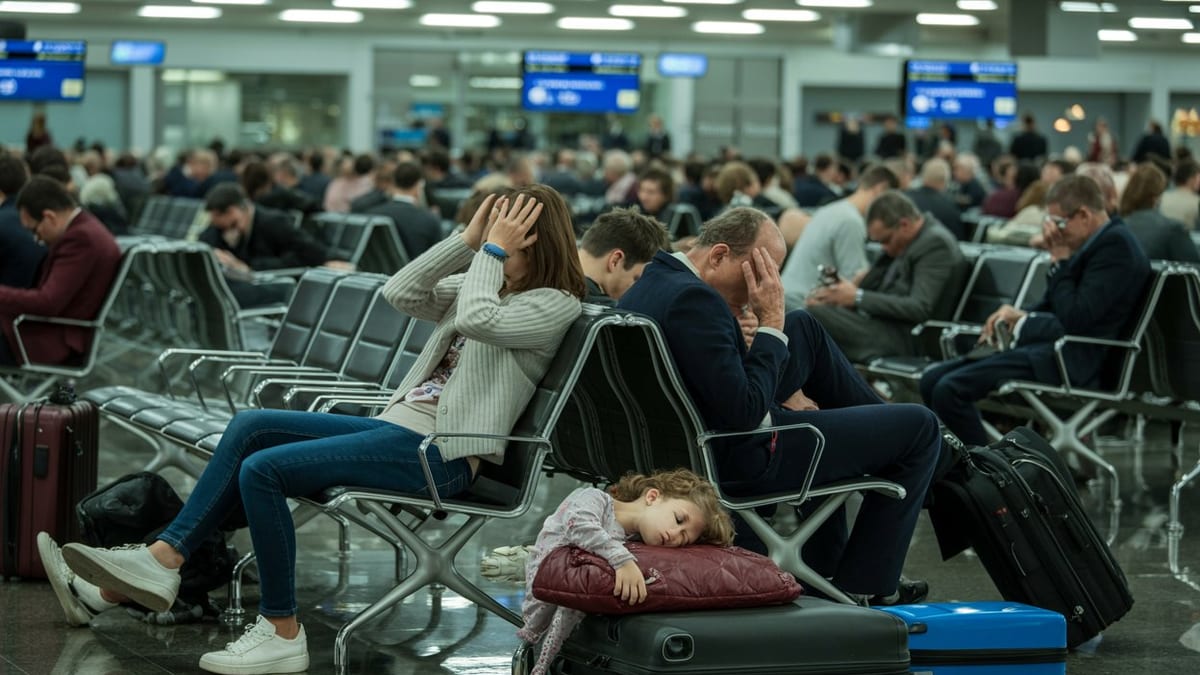
Image by Global Travel Alerts, Advisories, International Travel Alerts
Cancelled Sectors Hit Core Lima and Cusco Links
Reports from airline tracking platforms and local travel forums indicate that at least six newly cancelled services involving LAN- and LPE-branded operations have affected itineraries linking Lima with Cusco and Santiago. The disruptions are concentrated on short- and medium-haul sectors that are heavily used by international visitors connecting to Peru’s main gateway in Lima and onward to the tourism hub of Cusco.
Several of the affected flights are understood to be part of multi-leg itineraries, where a single aircraft operates sequential rotations between Lima, Cusco and Santiago. When one segment is cancelled, the knock-on effect often cascades across subsequent legs, leading to additional cancellations or significant delays on later departures.
The recent cancellations come at a time of sustained demand for travel to Peru’s southern Andes, with Cusco and nearby Machu Picchu remaining at the center of many regional itineraries. Any interruption on the Lima–Cusco corridor in particular can quickly affect passenger flows across South America, since many long-haul services from North America and Europe still rely on Lima as a primary entry point.
Available operational data suggest that aircraft availability and tightly timed rotations are leaving limited slack in the system. When weather or congestion interrupts one flight, airlines have few spare aircraft to cover the remaining schedule, increasing the likelihood that multiple services on the same route group are cancelled within hours of one another.
Weather, Geography and Infrastructure Add to Operational Strain
Analysts frequently point to the combination of geography and weather in the Peruvian Andes as a structural challenge for airlines. Cusco’s Alejandro Velasco Astete International Airport sits in a mountain valley at high altitude, with approach paths that are particularly sensitive to low clouds, crosswinds and afternoon convective activity. When weather deteriorates, operators often reduce or cancel services as a safety precaution, which can quickly lead to backlogs.
Publicly available flight histories show that cancellations into and out of Cusco tend to cluster around periods of poor visibility and unsettled conditions, especially during the wet season. When these conditions coincide with tight scheduling on key Lima and Santiago connections, the risk of multiple same-day cancellations rises sharply.
At the same time, Peru’s aviation infrastructure is under visible pressure. Lima’s Jorge Chávez International Airport continues to function as the main hub for both domestic and regional traffic, funnelling passengers to Cusco and onward to Chile. Construction and phased upgrades at Lima’s facilities, combined with high traffic volumes at peak hours, have contributed to congestion that can lengthen turnarounds and narrow margins for on-time performance.
Industry observers note that, while airport expansions in Lima and new infrastructure plans for the Cusco region are advancing, current capacity still leaves airlines reliant on complex scheduling to maintain connectivity. Any disruption in that chain, whether due to weather in the mountains or delays on inbound aircraft from other South American cities, can quickly translate into cancellations on popular tourist routes.
Impact on International and Domestic Travelers
The latest cancellations are having an immediate impact on both domestic passengers and international tourists who depend on reliable links to reach Peru’s most visited destinations. Travelers with long-haul arrivals into Lima are particularly vulnerable when their connecting LAN or LPE flight to Cusco or Santiago is removed from the schedule at short notice.
Accounts shared on traveler forums describe passengers facing extended waits in terminals, unexpected overnight stays and last-minute rerouting through alternative cities when Lima–Cusco or Lima–Santiago services are cancelled. Some travelers have reported missing organized tours or nonrefundable hotel reservations in Cusco due to lost travel days, while others have had to shorten or rearrange side trips in Chile.
Disruptions also affect Peruvians who use these routes for business, family visits and regional connections. The Lima–Cusco corridor is not only a tourism lifeline but also a critical domestic air bridge, and the Lima–Santiago route links two major economic centers in the Pacific Alliance. When several flights in quick succession are cancelled, seat availability on remaining services can tighten, raising prices and limiting rebooking options.
For tour operators, repeated cancellations create additional complexity in coordinating ground transport, ticketed excursions and guided itineraries. Agencies that package flights with visits to Machu Picchu or onward travel to Chile may need to maintain more flexible schedules and greater contingency buffers to accommodate potential last-minute changes in flight operations.
What Travelers Can Do if Their Flight Is Cancelled
Consumer advocates and experienced travelers emphasize preparation as the most practical response to the current pattern of flight disruptions. They recommend building generous connection times in Lima, particularly when pairing a long-haul arrival with a domestic leg to Cusco, and avoiding tight same-day links to Santiago during periods when weather-related delays are more common.
Public guidance from airlines and airports in the region highlights the importance of monitoring flight status in real time and registering contact details with carriers so that passengers receive notifications about cancellations or schedule changes. Travelers are also encouraged to familiarize themselves with rebooking and compensation policies before departure, especially when itineraries involve multiple tickets or codeshare partners.
Travel insurance that includes coverage for missed connections, additional accommodation and alternative transport arrangements can help mitigate the financial impact of cancellations. Some policies treat high-altitude and weather-sensitive airports as higher-risk nodes, making it essential for travelers to review terms and conditions closely when planning Peru and Chile itineraries.
Passengers already in transit are typically advised, through publicly available airline guidance, to seek assistance at official airline counters inside the terminal and to retain all documentation related to delays, cancellations and extra expenses. These records can be important when submitting claims to airlines or insurers after the journey.
Outlook for Reliability on Andean Routes
Aviation planners suggest that the outlook for reliability on Andean routes will depend on a combination of improved infrastructure, better schedule resilience and continued attention to safety margins in challenging operating environments. As airport upgrades in Lima progress and new capacity near Cusco gradually comes online, there is potential for more flexible routing and additional slots that could reduce the likelihood of cascading cancellations.
In the near term, however, Peru’s air travel network remains vulnerable to short-notice disruptions whenever adverse weather, congested terminals or fleet imbalances occur simultaneously. The most recent cluster of more than six new cancellations involving LAN and LPE flights underlines how quickly a small number of operational triggers can affect passenger flows across multiple cities.
Travel industry observers note that the sustained popularity of routes linking Lima, Cusco and Santiago means airlines are likely to keep investing in these corridors. Additional capacity, more robust contingency planning and clearer passenger communication have been cited as key elements in restoring confidence among travelers who rely on these flights for access to some of South America’s most iconic destinations.
Until those measures fully take hold, passengers planning trips through Peru’s Andean gateways may continue to face an elevated risk of disruption and should factor that possibility into their schedules and contingency planning.