

More news on this day
Travelers flying through Singapore faced unexpected chaos today after three key regional services to Jakarta and Bangkok were abruptly cancelled by Thai National Airlines and Tiger Airways, leaving scores of passengers stranded and forcing last-minute rebookings across the already busy Southeast Asian air corridor.
Sudden Cancellations Snarl a Key Regional Hub
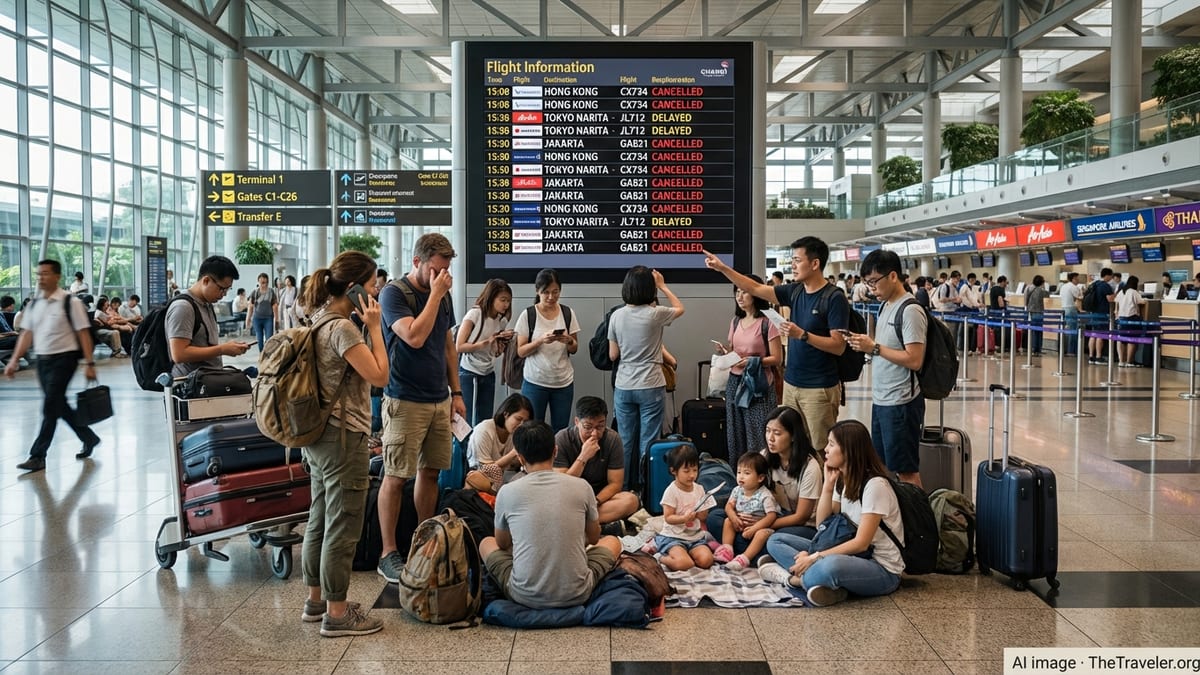
Changi Airport, one of Asia’s busiest transit hubs, saw mounting frustration as passengers bound for Jakarta and Bangkok were told at short notice that their flights on Thai National Airlines and Tiger Airways would not operate. Airport display boards showed the three services as cancelled within hours of departure, triggering queues at airline counters as travelers scrambled for alternatives.
The affected flights, which link Singapore to two of Southeast Asia’s most important capitals, typically carry a mix of business travelers, tourists, and regional workers. With load factors already high in the late-February travel period, replacement options were limited, and many passengers reported being offered rebookings only for later dates or on circuitous routings via other regional hubs.
Ground staff at Changi said they were working to accommodate as many passengers as possible onto remaining services but acknowledged that capacity on short-haul routes to Indonesia and Thailand is already tight. Several travelers described waiting for more than an hour to speak to airline representatives as counters grew crowded.
Passengers Left Scrambling for Answers and Alternatives
At the departure concourses, passengers described a confusing mix of announcements and app notifications, with some learning of the cancellations only after clearing security. Families traveling onward from Jakarta and Bangkok reported particular concern about missed connections on long haul flights to Europe and the Middle East as their carefully timed itineraries unraveled.
Some travelers said they received initial text messages suggesting “operational reasons” for the cancellations, while others were told at the counter that a combination of aircraft availability and crew scheduling constraints had forced the airlines to consolidate services. Without clear explanations, many passengers turned to social media to vent their frustration and seek advice on alternative routings.
Hotel and transport arrangements in Jakarta and Bangkok were also thrown into disarray. Several passengers said they faced nonrefundable bookings at their destinations, raising questions about who would bear the added costs of overnight stays and rearranged local connections. Travel agents in Singapore reported an uptick in urgent calls from clients requesting last-minute tickets on rival carriers.
Regional Ripple Effects on Jakarta and Bangkok Routes
The cancelled services come at a sensitive time for regional aviation, with airlines still fine-tuning schedules and capacity in response to fluctuating demand. Routes between Singapore, Jakarta, and Bangkok form a vital triangle for both business and leisure travel, and cancellations on even a handful of flights can quickly create bottlenecks across multiple carriers.
Airlines with existing services on similar timings reported heavier than usual demand as stranded passengers attempted to rebook. Some carriers opened limited additional inventory, but fare levels on remaining seats rose sharply throughout the day, making immediate rebooking prohibitively expensive for some travelers.
Airport observers noted that disruptions on these particular routes can have outsized impact on the wider network, as many Southeast Asia itineraries rely on tight connections through Singapore, Jakarta, and Bangkok. Missed onward flights can translate into a cascade of rebookings, baggage rerouting challenges, and crew scheduling knock-on effects.
Airline Responses and Passenger Rights Concerns
Thai National Airlines issued a brief statement acknowledging the cancellations and citing “operational constraints” without offering detailed reasons. The carrier said it was prioritizing rebooking for affected passengers onto the next available flights and would provide meal vouchers and accommodation where required under its conditions of carriage.
Tiger Airways, which operates a network of short haul services across the region, said it was working with airport authorities to manage crowds at check in and had deployed additional customer service staff at Changi. The airline indicated that passengers who chose not to travel on alternative flights would be eligible for refunds or travel credits, subject to fare rules.
Consumer advocates pointed out that passengers’ entitlements typically depend on the ticket type and local regulations, and urged travelers to keep records of all communication with airlines as well as receipts for any out of pocket expenses. In the absence of a single, unified regional compensation standard, many stranded passengers were left to navigate complex policies on their own.
What Travelers Should Expect in the Coming Days
With three key services pulled from schedules on short notice, travel industry analysts warned that further adjustments on closely related routes cannot be ruled out in the near term. They advised passengers traveling between Singapore, Jakarta, and Bangkok in the coming days to monitor their flight status closely and to build extra time into connection plans where possible.
Travel agents recommended that passengers traveling on tight schedules consider earlier departures or, where affordable, fully flexible tickets that allow same day changes without heavy penalties. They also suggested that travelers reconfirm their flights 24 hours before departure and again on the day of travel, using both airline apps and airport information screens.
While operations at Changi remained otherwise normal, the day’s events highlighted how quickly disruptions on a handful of regional services can cascade through Southeast Asia’s interconnected air network. For many of those left queuing at airline counters, the episode was a stark reminder of the importance of travel insurance, flexible planning, and clear, timely communication from carriers when schedules suddenly change.