

More news on this day
Air travelers moving through Thailand this week are facing fresh disruption as a cluster of cancellations by Cathay Pacific, Malaysia Airlines, Jetstar and other carriers has knocked out five international departures from Bangkok and Phuket, disrupting busy routes to Hong Kong, Kuala Lumpur, Melbourne, Sydney and beyond.
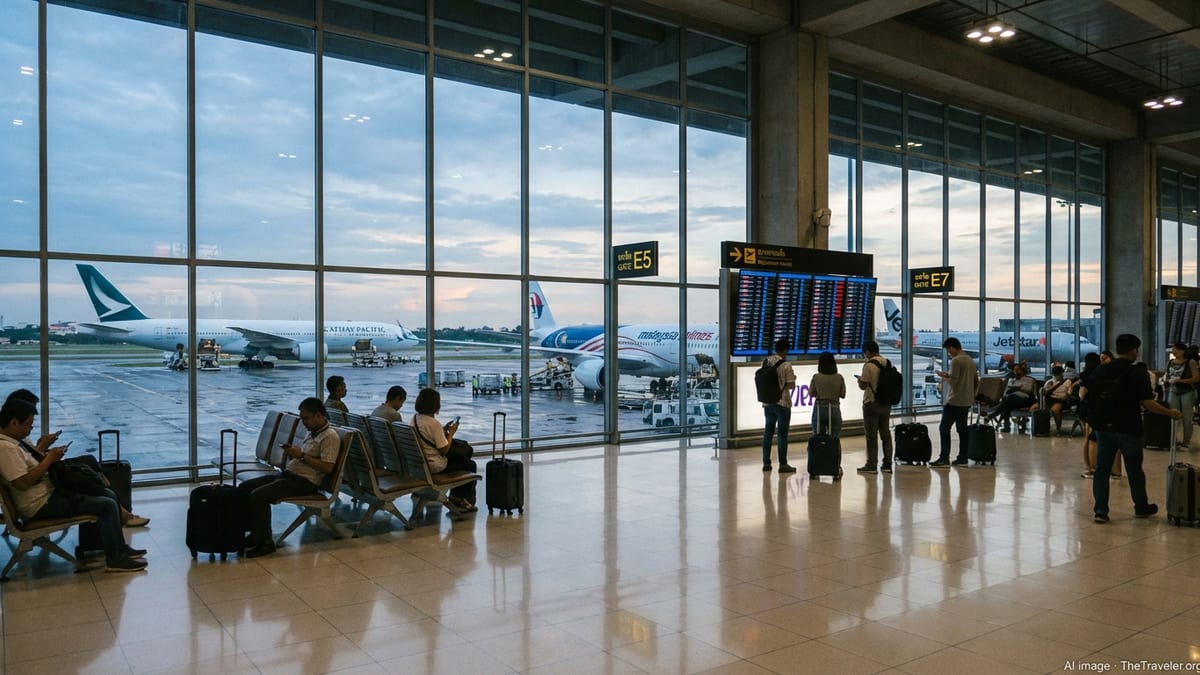
Fresh Wave of Cancellations From Bangkok and Phuket
Thailand’s role as a key aviation hub in Asia-Pacific came under renewed strain after multiple international departures from Bangkok Suvarnabhumi and Phuket International Airport were scrubbed in quick succession. According to updated operational data and airport schedules, a total of five flights operated or marketed by Cathay Pacific, Malaysia Airlines, Jetstar and partner carriers were cancelled on short notice, affecting both regional and long haul links.
The latest disruption follows a pattern of tactical schedule cuts across the region, as airlines balance strong demand with tight capacity, crew availability and aircraft rotation pressures. While the number of flights involved is limited in absolute terms, the impact is amplified because the affected services connect major hubs such as Hong Kong, Kuala Lumpur, Melbourne and Sydney with Thailand’s two busiest gateways.
Most of the cancellations occurred within a narrow time window, limiting same day rebooking options for passengers with onward connections. Travelers reported receiving late schedule change notifications as airlines adjusted their Thailand operations, adding further uncertainty for those relying on Bangkok and Phuket as transfer points between Asia and Australia or other regional cities.
Airport officials and airline representatives framed the cancellations as operational rather than safety related, describing them as short term schedule adjustments. However, the clustering of disrupted flights on high demand routes has raised questions about how robust current capacity planning is during peak travel periods.
Key Routes Hit: Hong Kong, Kuala Lumpur, Melbourne and Sydney
The cancellations disproportionately affected some of the busiest corridors linking Thailand with the wider Asia-Pacific network. On the regional side, flights between Bangkok and Hong Kong as well as Bangkok and Kuala Lumpur were among those dropped, impacting services marketed by Cathay Pacific and Malaysia Airlines. These routes are heavy with both business traffic and leisure travelers connecting onward to North Asia, the Middle East and Europe.
Further south, long haul passengers felt the knock on effects in Phuket, where services to Australia were curtailed. Jetstar and partner operators removed departures to Melbourne and Sydney, temporarily shrinking the number of direct options from Thailand’s leading beach destination to two of Australia’s biggest cities. For many holidaymakers, these point to point flights are the backbone of seasonal travel between the two countries.
The combination of regional and long haul cuts meant that some passengers lost not just a single leg but their entire connecting itinerary. Travelers booked on through tickets from Hong Kong or Kuala Lumpur via Bangkok and onward to Phuket, or from Phuket back to Australia, suddenly faced an unplanned need to re-route, often via alternative Asian hubs such as Singapore or Kuala Lumpur.
Industry analysts noted that even a small cluster of cancellations on trunk routes can ripple widely through airline networks, particularly when they occur on days with already high load factors. With many flights close to full, finding spare seats to accommodate disrupted customers can quickly become a challenge, especially for larger groups and families.
What Airlines Are Saying About the Thailand Disruptions
The airlines involved have largely characterized the cancellations as a function of day to day operational management rather than any broader strategic retreat from Thailand. In brief statements and customer communications, carriers pointed to factors such as aircraft rotation, crew scheduling and fleet deployment priorities across overlapping regional and long haul networks.
While Cathay Pacific and Malaysia Airlines did not issue Thailand specific public advisories, their customer channels indicated that affected travelers were being offered rebooking on later flights where possible or full refunds when alternatives did not align with travel plans. Jetstar, which has been recalibrating its presence in Southeast Asia following wider group changes, continued to direct passengers to digital self service tools for managing disrupted itineraries.
Aviation consultants say that amid still evolving post pandemic travel patterns, many Asia-Pacific airlines are fine tuning capacity almost week by week. Demand on routes into and out of Thailand remains strong, but it is also highly seasonal and sensitive to currency shifts, tourism campaigns and competitive moves by rival carriers. That can result in abrupt timetable tweaks when certain rotations no longer fit an airline’s broader network priorities.
Behind the scenes, airlines also remain cautious about spare capacity, with some fleets still in phased reactivation or undergoing cabin upgrades and heavy maintenance. When unexpected issues such as technical checks or crew shortages arise, thinner schedule buffers can quickly translate into cancellations on what might otherwise appear to be stable, high demand routes.
Passenger Impact: Missed Holidays, Business Trips and Connections
For travelers caught in the middle of the latest wave of cancellations, the disruption has been more than an abstract scheduling exercise. Reports from passengers transiting Bangkok and Phuket described missed cruise departures, lost nights of prepaid accommodation and reshuffled meeting schedules across multiple countries.
Holidaymakers in Phuket bound for Melbourne and Sydney have faced particular difficulty finding same day alternatives, with many Australia bound flights already heavily booked. Some were forced to accept overnight stays in Thailand, wait for later departures from Bangkok instead of Phuket, or rebook via other Asian hubs at times that significantly extended total journey time.
On business heavy sectors such as Bangkok to Hong Kong and Bangkok to Kuala Lumpur, frequent flyers reported scrambling to secure seats on rival carriers, sometimes at higher last minute fares. Travelers with tightly timed connections from Hong Kong to North America or from Kuala Lumpur to Europe found that even a single cancelled leg could unravel complex itineraries stitched together across alliances and codeshares.
Consumer advocates in the region reiterated that passengers whose flights are cancelled are generally entitled to options that include a choice between rerouting at the earliest opportunity or receiving a refund for the unused portion of their ticket. However, they also stressed that the exact level of compensation or assistance depends heavily on the ticket type, operating carrier, and the regulatory framework in the country where the journey begins.
Guidance for Travelers Flying Via Thailand in the Coming Days
With cancellations concentrated but not entirely isolated, travel experts are advising passengers using Bangkok and Phuket as gateways to build in extra margin for potential disruptions over the coming days. Travelers with imminent departures are being encouraged to monitor their booking status closely through airline apps, email alerts and airport information boards, rather than assuming schedules will remain unchanged.
Those connecting onward from Hong Kong, Kuala Lumpur, Melbourne or Sydney may wish to avoid extremely tight layovers, particularly where separate tickets on different airlines are involved. Allowing longer connection windows reduces the risk that a last minute cancellation or delay in Thailand will cascade into subsequent missed flights in other countries.
Specialists also recommend that travelers keep digital and printed copies of all booking confirmations, receipts and communications from airlines about cancelled services. These records can prove helpful later if passengers seek refunds, travel insurance claims or compensation under applicable consumer protection rules.
Travel insurance providers, for their part, are reminding policyholders to review the fine print regarding coverage for airline schedule changes. Some policies will reimburse additional costs such as extra hotel nights or replacement flights when cancellations are outside the traveler’s control, while others are more limited in scope or apply only when disruptions reach a certain threshold.
Regulatory and Airport Responses in Thailand
Thailand’s aviation and airport authorities have been monitoring the situation as airlines adjust their schedules. While no sweeping regulatory action has been announced in direct response to this cluster of cancellations, officials have emphasized the importance of clear, timely communication with passengers when flights are removed from the schedule or substantially retimed.
Airport operators at Bangkok Suvarnabhumi and Phuket have worked with affected carriers to redeploy staff to customer service counters and transit zones at peak disruption periods. Ground teams have been tasked with assisting travelers in rebooking, arranging overnight accommodation where appropriate, and guiding passengers through immigration and baggage reclaim when plans change mid journey.
Aviation observers note that Thailand’s role as both a destination and a transfer hub means authorities must calibrate their oversight to protect passengers without discouraging airlines from using Bangkok and Phuket as key nodes in their networks. So far, officials appear to be treating the recent cancellations as part of a broader pattern of post recovery network fine tuning rather than as a sign of deeper structural instability in the market.
Nonetheless, regulators are expected to scrutinize whether consumer rights were adequately upheld in each case, including the timeliness of notifications and the options presented to affected passengers. Any findings could influence future guidance on how airlines operating in Thailand should manage and communicate schedule changes during peak travel periods.
Broader Asia-Pacific Context: Tight Capacity and Shifting Networks
The disruptions in Thailand come against a wider backdrop of flux in Asia-Pacific aviation. Across the region, airlines are rebuilding networks, opening new routes and trimming others, with Thailand often sitting at the crossroads of these changes. Carriers such as Cathay Pacific and Malaysia Airlines continue to recalibrate their long haul and regional offerings, while low cost brands including Jetstar adjust capacity in response to cost pressures and competitive dynamics.
At the same time, tourism demand into Thailand remains robust, with Bangkok and Phuket attracting visitors from across East Asia, Australia and Europe. This combination of strong demand and cautious capacity can leave little slack in the system when operational issues arise. As a result, even a handful of cancelled flights can reverberate through booking systems, sending travelers scrambling for alternatives.
Industry data show that Asia-Pacific airlines are also contending with lingering supply chain constraints affecting aircraft maintenance and new aircraft deliveries. Crew training pipelines, while recovering, have yet to fully match pre pandemic levels in some markets. These factors contribute to a situation in which scheduling margins are thin, making tactical cancellations more likely when unforeseen challenges emerge.
Analysts say travelers should expect continued fine tuning of networks around Thailand and other regional hubs over the coming months. While most flights will operate as scheduled, the experience of those caught by the latest cancellations in Bangkok and Phuket underscores the value of flexibility, up to date information and contingency planning when flying across the region.