

More news on this day
Air travel across Argentina has been hit by a fresh wave of disruption as more than a dozen flights operated by American Airlines, Flybondi and other carriers were cancelled in recent days, affecting key routes between Buenos Aires, New York, Bariloche, Córdoba and several domestic hubs at the height of the late-summer travel period.
Get the latest news straight to your inbox!
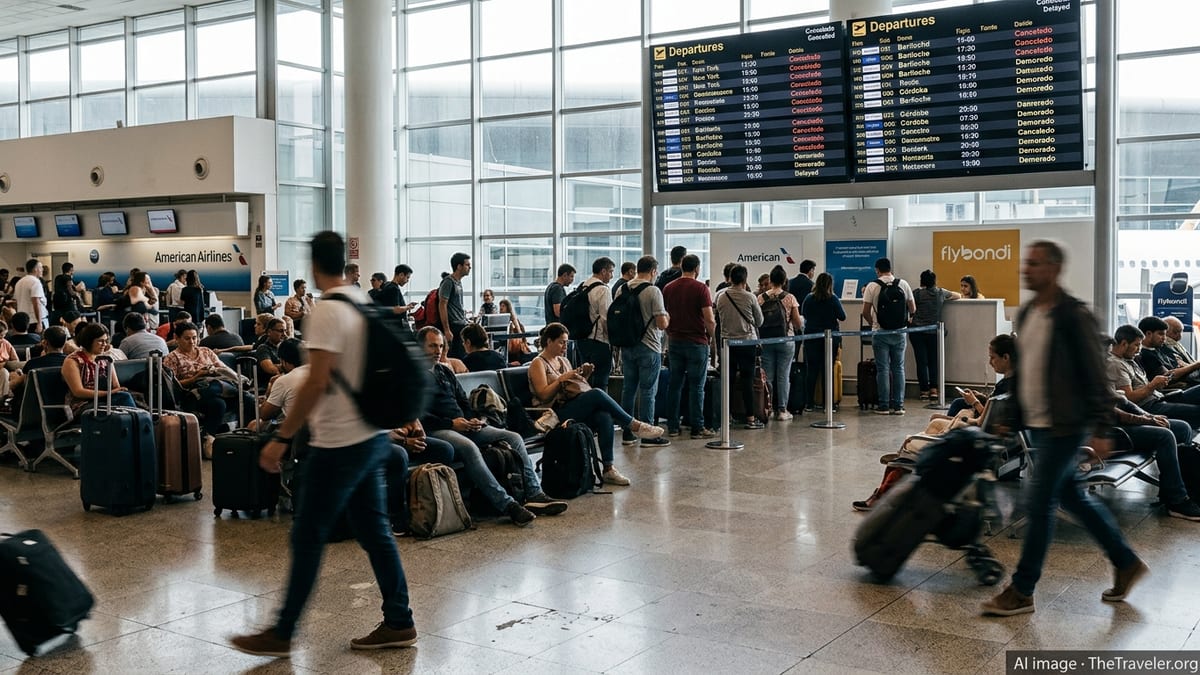
Wave of Cancellations Hits Buenos Aires Gateways
Published coverage and live schedule data indicate that the latest round of disruptions has centered on Argentina’s main international gateways serving Buenos Aires, particularly Ezeiza International Airport and Aeroparque Jorge Newbery. Multiple services linking these airports with regional destinations such as Bariloche and Córdoba, as well as long-haul operations to New York, have been withdrawn from schedules or scrubbed close to departure, leaving passengers scrambling for alternatives.
Reports tracking airline operations in the region show that more than a dozen flights were cancelled over a short period, with American Airlines and Argentine low-cost carrier Flybondi among the most visible names affected. While not all cancellations are linked to a single cause, the pattern has resulted in unusually high disruption on routes that are essential for both international visitors and domestic tourism flows.
Real-time flight listings for San Carlos de Bariloche and Córdoba suggest that some services have been consolidated or removed entirely on peak travel days, particularly around weekends. This has heightened the knock-on impact for travelers who had built itineraries around onward connections, including long-haul journeys between Buenos Aires and New York’s major airports.
Flybondi’s Reliability Under Renewed Scrutiny
Flybondi, Argentina’s first low-cost carrier and a prominent player in domestic leisure markets, has faced sustained criticism over cancellations dating back several seasons. Publicly available regulatory summaries highlight that the airline was previously ordered to present a plan to reduce cancellations after an intense episode in which dozens of its flights were scrapped over a single weekend, leaving thousands of passengers stranded.
Recent local reporting and traveler accounts indicate that Flybondi’s operations on high-demand routes such as Buenos Aires to Bariloche and Córdoba remain vulnerable to sudden schedule changes. Cancellations reported at short notice have forced some passengers to purchase last-minute tickets on competing airlines or embark on lengthy overland journeys across Patagonia to reach their destinations.
Route information for Bariloche, Córdoba and other provincial cities shows Flybondi positioned as a key provider of lower-fare seats, especially during peak holiday and long-weekend periods. When flights are cancelled or combined, the limited spare capacity on alternative airlines can cause rapid price spikes and limited availability, amplifying the practical impact of each disruption on travelers and tour operators.
American Airlines Adjusts Argentina and New York Operations
American Airlines, a major carrier on transcontinental routes into South America, has also experienced disruptions that have rippled into Argentina–United States connectivity. Recent operational bulletins and weather-related travel alerts show the airline managing elevated cancellation volumes across its wider network in the wake of severe winter storms in North America, a factor that can cascade into long-haul rotations touching Buenos Aires and New York.
Schedule changes on American’s multi-city operations have resulted in isolated cancellations on services involving New York’s John F. Kennedy International Airport. Even when only a small number of flights are removed from the timetable, the effect can be significant for Argentina-bound passengers because long-haul frequencies are comparatively limited and heavily booked in late summer, when North American and European travelers combine Argentina trips with regional connections to Patagonia.
Publicly accessible timetable data and booking platforms suggest that some travelers have faced rebookings onto indirect routings through other U.S. hubs or later departure dates. For those with onward domestic flights to Bariloche, Córdoba or other Argentine cities, even a single cancelled leg between New York and Buenos Aires can unravel an entire itinerary, creating hotel, tour and ground-transportation complications.
Domestic Tourism Hubs Bear the Brunt
The disruption comes at a sensitive moment for Argentina’s domestic tourism sector. Recent aviation statistics from Argentine industry trackers show strong growth in passenger numbers on routes linking Buenos Aires with key leisure destinations, including Bariloche in northern Patagonia and Córdoba in the country’s interior. These cities function as gateways for lakes, mountain resorts and wine regions that rely heavily on predictable air links.
With Flybondi and other low-cost carriers playing a central role in opening new routes and boosting seat capacity, cancellations on these corridors can quickly impact local economies. Hotel operators, tour companies and transport providers in Bariloche and Córdoba report through regional media that abrupt schedule changes tend to compress stays, push visitors to reschedule trips or, in some cases, cancel their plans entirely.
Travel search data for upcoming months still shows substantial demand for Bariloche and Córdoba, underscoring the importance of stabilizing operations ahead of key holiday and shoulder seasons. However, continuing volatility in flight schedules may prompt some travelers to favor more conservative routing, such as flying with legacy carriers or selecting itineraries with greater buffering time between connections in Buenos Aires.
What Travelers Are Experiencing on the Ground
Accounts shared on public forums by passengers currently traveling in Argentina describe a patchwork of experiences, from relatively smooth rebookings to significant challenges finding replacement flights. Some travelers who saw their Flybondi services between cities like El Calafate, Bariloche and Buenos Aires cancelled at short notice report having to rearrange entire itineraries or undertake lengthy road journeys across Patagonia.
Similar experiences have been reported by passengers on American Airlines facing last-minute schedule changes or cancellations tied to wider network disruptions. In several cases, travelers describe being re-routed through alternative hubs or having return dates moved, with implications for onward travel, work commitments and additional out-of-pocket costs for accommodation and ground transport.
Consumer advocates following the Argentine aviation market note that while weather, labor actions and airspace issues can impose unavoidable constraints on airlines, communication and contingency planning remain critical. Given the recent cluster of cancellations involving American Airlines, Flybondi and other carriers in Argentina, passengers are increasingly encouraged by public travel advisories and media guides to monitor flight status closely, consider flexible booking options and allow additional time in their itineraries when connecting between New York, Buenos Aires and regional destinations such as Bariloche and Córdoba.