

More news on this day
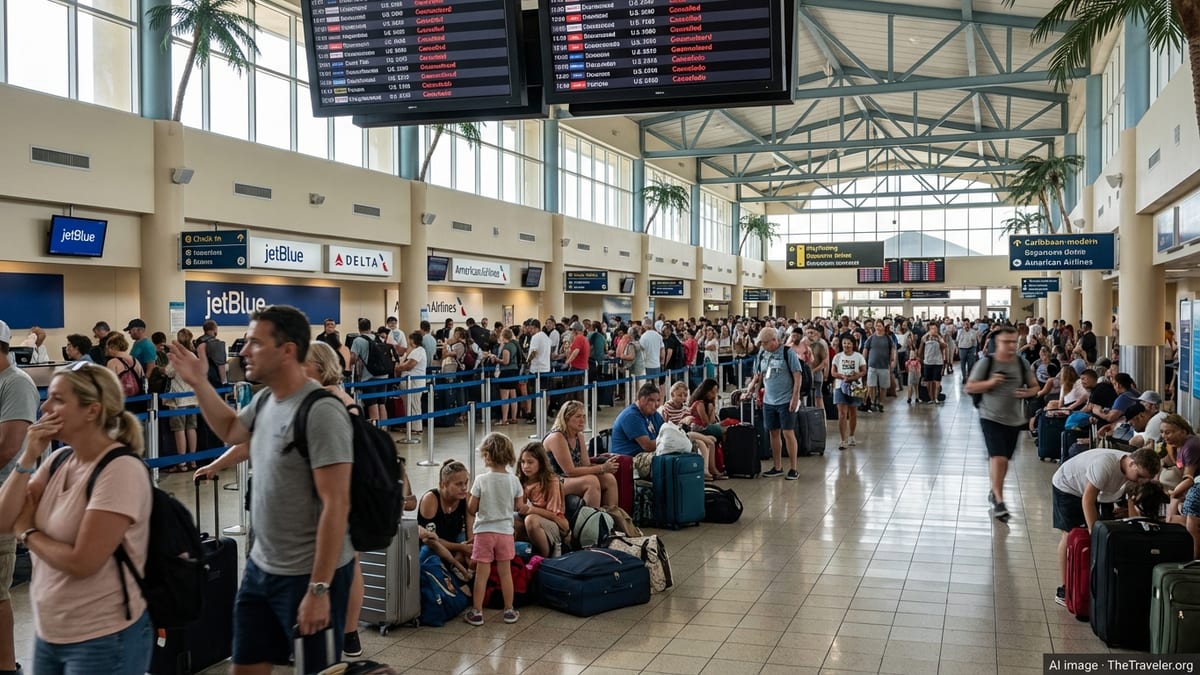
Travelers passing through Aruba’s Queen Beatrix International Airport on Sunday faced unexpected disruption as at least 13 flights operated by JetBlue, Delta Air Lines and American Airlines were cancelled, forcing hundreds of passengers to scramble for scarce hotel rooms and alternative routes off the Caribbean island.
Security Incident Triggers Wave of Disruptions
Airport officials in Oranjestad said the latest round of cancellations followed heightened security measures after a recent incident involving a JetBlue arrival from Boston, which prompted law enforcement to keep passengers on board for nearly two hours while checks were carried out. While that flight eventually deplaned safely, the episode underscored operational strain at Queen Beatrix International, a key gateway between the United States and the southern Caribbean.
By late morning Sunday, the airport’s departure boards showed a patchwork of delays and cancellations, including multiple JetBlue services to Boston and New York, alongside impacted departures from Delta and American. Ground staff said a combination of crew duty-time limits, aircraft rotation issues and a backlog from earlier disruptions had cascaded into a fresh wave of schedule cuts.
Aruba Airport Authority confirmed that overall operations had “fully resumed” following the security incident, but acknowledged that airlines were still adjusting schedules and that some services would be withdrawn as carriers sought to reset their operations. For would-be vacationers and homebound holidaymakers, that translated into long waits in the terminal and growing lines at customer service desks.
“We understand the impact these cancellations are having on our passengers,” one airport spokesperson said, adding that airlines remained responsible for rebooking and compensation decisions. “Our focus is on ensuring safe and orderly operations as schedules stabilize.”
Thirteen Flights Lost in a Single Day
According to airport screens and airline status tools monitored throughout Sunday, at least 13 departures and arrivals operated by JetBlue, Delta and American were cancelled in a roughly 24-hour window, primarily affecting high-demand routes between Aruba and major hubs along the U.S. East Coast. While precise passenger counts were not immediately available, aviation analysts estimated that several thousand travelers could be touched by the schedule cuts given the typical load factors on those routes in peak season.
JetBlue, which maintains a strong presence in Aruba with links to New York and Boston, appeared to bear a significant share of the disruption, with multiple Aruba to New York flights listed as cancelled and no immediate same-day alternatives available for many customers. American Airlines also trimmed its timetable from Aruba, including services to Miami and connecting hubs that feed much of the U.S. network. Delta, a key operator of the Aruba to New York route, canceled selected frequencies as it dealt with aircraft and crew positioning constraints.
For Aruba, which in recent years has relied heavily on nonstop connections to major U.S. cities to sustain its tourism-driven economy, the loss of 13 flights in a compressed period was a sharp reminder of the island’s exposure to external shocks in global aviation. The affected services represented not only lost seats for incoming tourists but also a sudden reduction in outbound capacity for visitors trying to return home at the end of their stays.
Local hospitality businesses reported a spike in last-minute inquiries from stranded passengers seeking extra nights, while rental car agencies noted that some travelers opted to explore the island further rather than remain inside the crowded terminal. “We are doing what we can to accommodate guests who unexpectedly need to extend,” one hotel manager near Palm Beach said, “but availability is tight this time of year.”
Stranded Passengers Face Long Waits and Limited Options
Inside the terminal, the cancellations translated into long queues at airline counters and anxious conversations at departure gates. Many travelers reported receiving notices of schedule changes only hours before their planned departure, leaving little time to adjust hotel bookings or make alternative arrangements. Those traveling with families, especially with young children, described a tiring day of waiting as airlines worked through backlogs.
On social media and traveler forums, passengers recounted being offered rebooked flights several days out, often with overnight connections in other Caribbean or U.S. cities. Some JetBlue customers described difficulties finding open seats on any carrier before the following weekend, while Delta and American passengers said they were advised to consider nearby gateways if they were able to reposition at their own expense.
In one widely shared account, a Delta customer traveling with a family of five said the earliest available rebooking offered by the airline was more than a week away. Others reported turning to smaller carriers or regional connections through Bogotá or Panama City to get back to North America sooner, accepting longer itineraries in exchange for certainty.
Airport officials urged travelers not to arrive at Queen Beatrix International without confirmed bookings, citing crowding concerns and limited seating in the public areas. “Passengers whose flights have been cancelled should contact their airline directly for rebooking before coming to the airport,” the authority advised, emphasizing that walk-up options at ticket counters were extremely constrained.
Airlines Balance Safety, Crew Limits and Network Recovery
For JetBlue, Delta and American, the Aruba disruptions came on top of broader operational challenges in the Caribbean, where a combination of airspace restrictions linked to U.S. military activity in Venezuela and regional security measures had already forced widespread cancellations earlier in the season. Carriers have been working to rethread complex route networks that link U.S. hubs to a constellation of island destinations, many of which have limited infrastructure and tight turnaround windows.
Industry experts said the cancellations at Queen Beatrix International were likely the result of several factors converging at once. Aircraft that were out of position after previous disruptions, strict limits on crew duty hours and additional security screening procedures all contributed to schedule instability. When even a handful of flights in a sequence are delayed or rerouted, the knock-on effect can quickly lead to full cancellations further down the line.
While airlines typically prefer to operate delayed services rather than cancel outright, there is a threshold at which running significantly late flights becomes impractical or unsafe, particularly in hot-weather destinations where crew and aircraft performance limits are closely monitored. In those cases, airlines may opt to scrub a flight and consolidate passengers onto later departures instead.
Representatives for the carriers stressed that safety remained the overriding priority in making such decisions, even when they result in substantial inconvenience for customers. Travel waivers, which allow passengers to change their itineraries without penalty, have become a standard tool during such events, though their usefulness is diminished when available seats are scarce.
Aruba’s Tourism Sector Feels Immediate Ripples
The wave of cancellations landed at a sensitive time for Aruba’s tourism sector, which has been enjoying strong demand from North American travelers seeking warm-weather escapes during the winter months. Queen Beatrix International serves as the island’s primary gateway, and any significant disruption there is quickly felt in hotel lobbies, beach resorts and local businesses.
Tour operators reported that some incoming guests were forced to cut trips short or delay arrivals by several days, complicating carefully arranged itineraries that often include pre-booked excursions and restaurant reservations. For hotels running near capacity, accommodating both new arrivals and guests unexpectedly extending their stays required rapid coordination behind the scenes.
Taxi drivers, car-rental companies and tour guides, many of whom operate on tight margins, experienced a mix of cancellations and new demand as some visitors adjusted plans on the fly. A number of businesses said they were offering flexible rescheduling to keep goodwill with repeat customers, even at the cost of short-term revenue.
Local tourism officials emphasized that the airport itself remained open and that the cancellations were limited to specific flights rather than a full shutdown of operations. They urged future visitors not to cancel trips outright, but to maintain close communication with airlines and travel agents in the days leading up to departure.
Comparisons With Earlier Regional Disruptions
The latest Aruba cancellations came only weeks after a more severe episode, when a wave of regional tensions and airspace closures led to the cancellation of roughly three-quarters of scheduled flights to and from the island on a single Saturday. On that day, dozens of U.S.-bound services were scrapped as airlines complied with temporary restrictions affecting parts of the eastern Caribbean and routes near Venezuelan airspace.
In that earlier event, many travelers were stranded across multiple islands, with some resorting to ferries and multi-stop itineraries to return home. The memory of that disruption has left both airlines and passengers increasingly sensitive to signs of instability in Caribbean aviation, from security incidents to weather systems and geopolitical developments.
By comparison, the current round of 13 cancellations at Queen Beatrix International is more contained, but it nonetheless reinforces perceptions that flying to popular Caribbean destinations can be unpredictable, particularly during peak travel periods. Travel advisors said they have seen a rise in questions from clients about contingency planning, including the wisdom of adding extra buffer days to vacation schedules.
Analysts noted that smaller island airports like Aruba’s, with limited runway slots and ramp space, have less flexibility to absorb sudden surges in delayed or diverted aircraft. Once the schedule slips beyond a certain point, the room to recover within the same operational day narrows quickly, increasing the likelihood of outright cancellations.
What Travelers Can Do if Their Aruba Flight Is Canceled
For travelers booked on JetBlue, Delta or American flights to or from Aruba in the coming days, experts recommend monitoring flight status closely and signing up for airline alerts that can provide early notice of any changes. Many airlines are offering fee-free changes for affected routes during the disruption window, though fare differences may still apply if passengers choose alternative dates or routings.
Passengers whose flights are canceled outright should first attempt to rebook through airline apps or websites, which are often updated faster than call centers during high-volume events. If suitable options do not appear, travelers may find more flexibility by speaking directly with agents at the airport, though this can mean long waits when multiple flights are affected simultaneously.
Travel insurance that includes trip interruption benefits can help offset extra costs such as additional hotel nights, meals and new tickets on other carriers, but policy terms vary widely. Travelers are advised to keep all receipts and document communications with airlines to support any future claims.
For those still planning upcoming vacations to Aruba, seasoned flyers suggest building some flexibility into itineraries, such as avoiding last-day connections to critical events back home and considering nonstop flights from major hubs when available. While episodes like the current cancellations remain relatively rare in the broader context of Caribbean travel, the impact on those caught up in them can be significant.
Airport and Airlines Look Ahead to Stabilizing Operations
By Sunday afternoon, airport officials at Queen Beatrix International expressed cautious optimism that the worst of the current disruption had passed, noting that most scheduled flights were operating and that airlines were working to accommodate displaced passengers over the next several days. Ground handling teams and security staff remained on heightened alert as they processed heavy passenger volumes.
JetBlue, Delta and American are expected to gradually rebuild their normal Aruba schedules as aircraft and crews return to planned rotations. Industry watchers will be looking closely at whether the carriers adjust frequencies or equipment on key routes in response to operational pressures and evolving demand.
Local authorities, mindful of Aruba’s reliance on reliable air links, signaled that they would review the latest events with both airport management and airline partners to identify any lessons that could reduce the impact of future disruptions. Topics likely to be examined include contingency plans for rapid schedule changes, passenger communication protocols and coordination between security agencies and airline operations teams.
For now, travelers and tourism businesses alike are focused on restoring a sense of normalcy after a weekend of frayed nerves and broken plans. As planes continue to lift off over the island’s turquoise waters, the hope is that Queen Beatrix International can quickly return to its familiar role as a smooth and welcoming gateway to one of the Caribbean’s busiest resort destinations.