

More news on this day
Travelers across eastern Montana faced major disruptions as a wave of 23 flight cancellations tied to Cape Air commuter service and a Horizon-operated route out of Billings Logan International Airport halted key links to small communities including Sidney, Havre, Wolf Point, Glendive and Glasgow.
Get the latest news straight to your inbox!
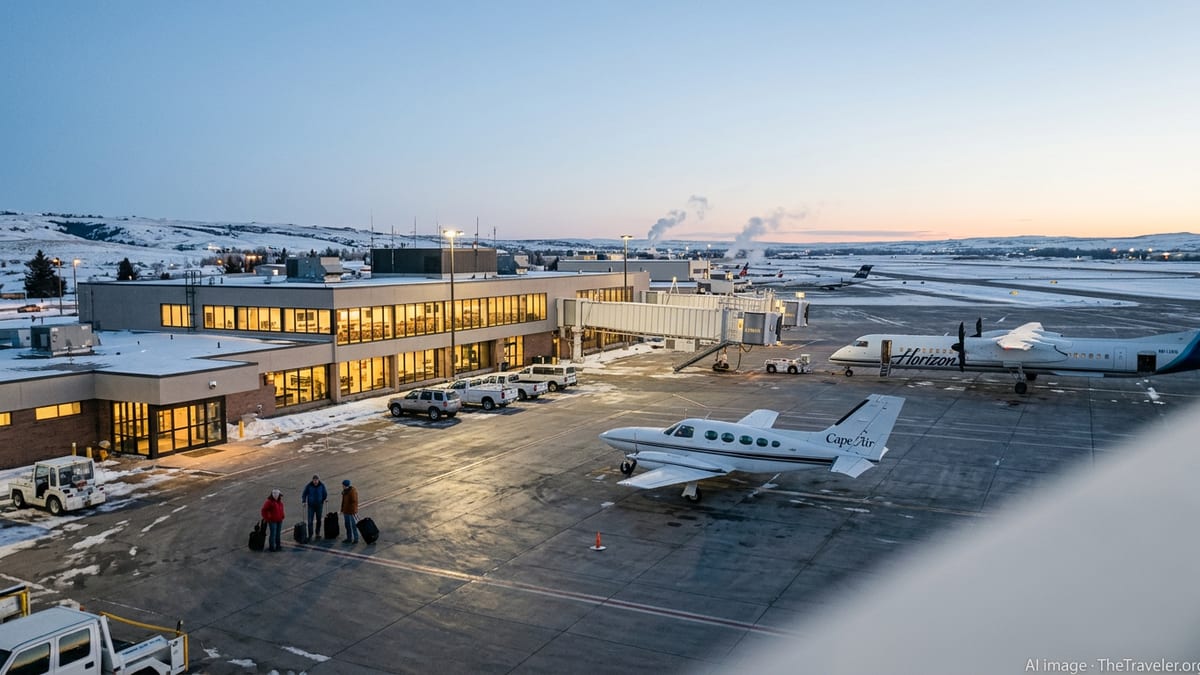
Wave of Cancellations Hits Billings Hub
Billings Logan International Airport, a regional hub for both major carriers and Essential Air Service commuter routes, saw an unusual cluster of cancellations as Cape Air and Horizon operations were sharply curtailed on heavily relied-upon spokes. Airport officials reported that 23 departures and arrivals were scrubbed across a single operating window, a significant hit for a facility where many small towns depend on just a handful of daily flights.
The cancellations affected routes linking Billings with Sidney, Havre, Wolf Point, Glendive and Glasgow, all of which rely on small commuter aircraft to connect residents to larger jet networks. With limited alternative options and long highway distances across the High Plains, even a short disruption ripples quickly through business travel, medical appointments and family trips.
Passengers arriving at Billings found departure boards stacked with red "canceled" notices on regional routes, while customer service counters for the affected carriers saw long lines of stranded travelers seeking rebooking or refunds. For some, the next available seats were not until the following day, forcing last-minute hotel stays or drives of several hours across winter roads.
While airport operations such as security screening and ground handling continued normally for other airlines, the sudden loss of multiple regional flights underscored how dependent eastern Montana remains on a thin network of subsidized and regional connections centered on Billings.
Impact on Remote Communities From Sidney to Wolf Point
The cancellations landed hardest in the small communities that sit at the end of these routes. Towns such as Sidney, Glasgow, Havre, Glendive and Wolf Point depend on a limited number of daily Cape Air flights to reach Billings for onward connections to Denver, Minneapolis, Salt Lake City and other national hubs.
For residents in these areas, a missed flight often means rescheduling crucial medical visits, job-related travel or college trips. Many passengers booked on the canceled services had timed their journeys to align with same-day connections on larger carriers, only to see those plans unravel when their initial leg never left the ground.
Local officials in several affected towns have long warned that even brief disruptions can have outsized impacts in rural Montana, where no rail alternatives and long winter drives can make surface travel risky and time consuming. With average distances of several hundred miles between communities and major hospitals or universities, air links are often considered a lifeline rather than a convenience.
Travel agents and airport staff in the region reported a surge in calls from anxious customers seeking clarity on when normal schedules would resume. Some passengers opted to rent cars and drive to Billings or other larger cities overnight, while others chose to postpone their trips entirely.
Operational Strains for Cape Air and Horizon
Cape Air, which operates small Tecnam P2012 and similar propeller aircraft under the federal Essential Air Service program, serves Billings as a mini hub for a network of remote Montana communities. The concentration of cancellations across so many spokes at once pointed to operational strains that went beyond routine weather or an isolated mechanical issue.
Industry observers noted that regional carriers nationally have faced a mix of pilot availability challenges, maintenance bottlenecks and schedule adjustments as they work to align resources with fluctuating demand. For a carrier operating small aircraft on thinly served routes, even one or two out-of-service planes or unavailable crews can cascade into multiple cancellations in a single day.
Horizon, operating under the Alaska brand on larger regional routes into and out of Billings, also reported at least one key cancellation during the same period, further reducing options for travelers attempting to reroute. That added pressure on the remaining flights that did operate, with some departures leaving nearly full as rebooked passengers squeezed onto limited seats.
Neither carrier immediately provided a full public breakdown of the causes behind every canceled segment, but airport staff indicated that a combination of scheduling constraints and aircraft availability appeared to be at the center of the disruption rather than any single safety-related concern.
Travelers Scramble for Alternatives Across Eastern Montana
For many stranded passengers, the first question was whether they could still reach their destinations the same day. With 23 flights removed from the board, the answer for a significant number was no. Rebookings often involved waits of many hours in Billings or overnight stays before a replacement flight could be found.
Some travelers, especially those with urgent medical visits or time-sensitive work commitments, opted to turn to Montana’s highways despite winter conditions. Rental car counters at Billings Logan reported brisk demand as customers pivoted to last-minute one-way drives to and from communities like Sidney and Havre, journeys that can stretch four to six hours or more.
Others looked to larger airports such as Bozeman or Great Falls for backup options, but the geographically scattered nature of Montana’s population and the cost of long-distance ground transfers limited the practicality of such workarounds. For many residents in the most remote areas, there was simply no realistic alternative other than waiting for the regional schedule to stabilize.
Hotel operators in Billings indicated a noticeable uptick in same-day bookings from air travelers unexpectedly forced to stay overnight. Local taxi and shuttle services also reported additional late-evening trips as stranded passengers attempted to regroup after learning of the cancellations at the airport.
Questions Raised Over Reliability of Essential Routes
The large block of cancellations has reignited questions about the resilience of regional air service in the American West, particularly in states where small communities rely on federal Essential Air Service subsidies to maintain commercial connections. While those programs are designed to preserve access for rural residents, they often depend on a single carrier and a small fleet, leaving little margin when disruptions arise.
Local leaders and business groups have frequently emphasized that reliable air service is critical to economic development, health care access and tourism in eastern Montana. When a cluster of flights disappears in one day, they argue, it can discourage investors, complicate workforce recruitment and erode public confidence in the region’s connectivity.
Aviation analysts suggest that improving reliability may require a blend of stronger contingency planning between carriers and communities, more flexible scheduling and long-term investments in both aircraft and workforce. At the same time, travelers are increasingly encouraged to build extra buffer time into itineraries that rely on single daily flights or tight regional connections.
For now, passengers across Billings and the smaller towns it serves are focused on getting to where they need to go as the disrupted schedule gradually resets. Yet the sudden loss of 23 flights in a short span has left many residents and officials calling for a closer look at how to protect critical air links that, for much of eastern Montana, represent the only practical bridge to the wider world.