

More news on this day
Hundreds of travelers moving between Colombia, the United States and Europe are facing unexpected disruptions after Avianca, United Airlines, JetBlue and other carriers canceled or significantly delayed more than a dozen flights on key routes linking Bogotá, Medellín and Cartagena with New York’s JFK, Newark, Madrid and Washington Dulles, according to new operational updates released on Monday.
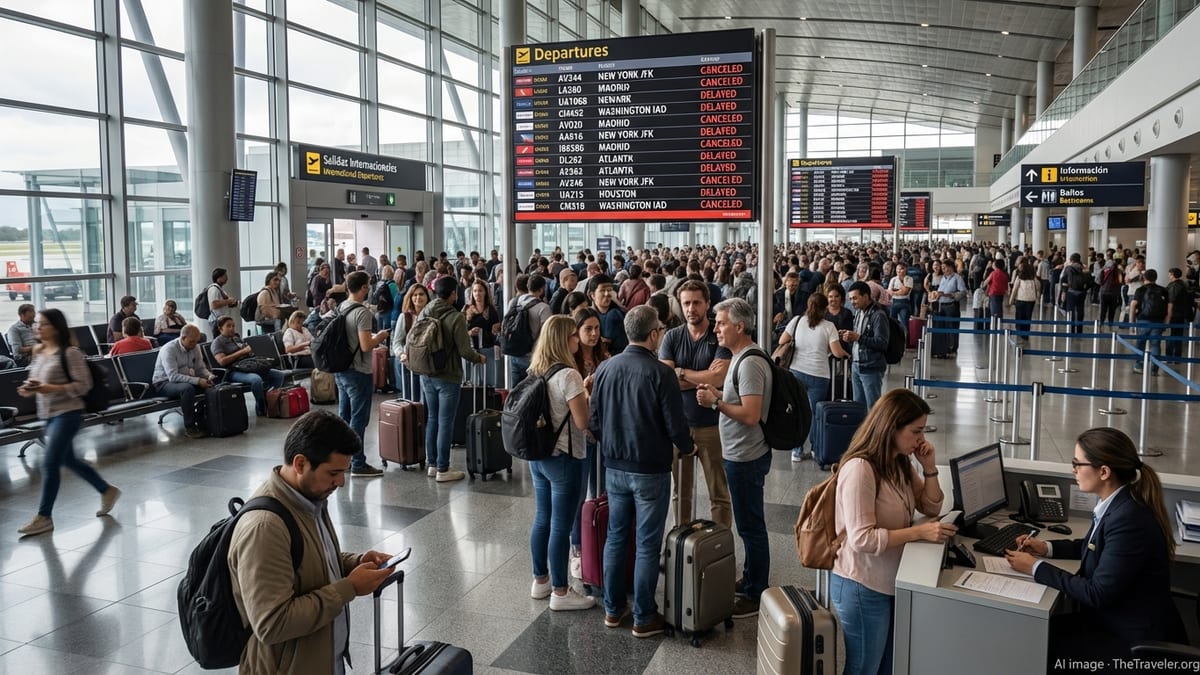
Key Routes to JFK, Newark, Madrid and Washington Dulles Disrupted
The latest cancellations center on some of the busiest long-haul links out of Colombia, with flights to New York, New Jersey, Spain and the U.S. capital region among the hardest hit. Operational data and airport status boards on February 23 show a cluster of scrubbed or heavily delayed departures and arrivals involving Avianca, United, JetBlue and several codeshare partners, affecting both daytime and overnight services.
Among the most visible disruptions are Colombia–New York connections. An Avianca service between Bogotá’s El Dorado International Airport and New York’s John F. Kennedy International Airport, scheduled to operate late Sunday into early Monday, was marked canceled in the lead-up to departure, forcing passengers into last-minute rebookings or overnight stays. Similar issues have appeared on flights into Newark Liberty International Airport, a key United hub handling connecting traffic across the United States.
Europe-bound travelers have not been spared. Services linking Colombian gateways with Madrid, historically one of Latin America’s most important transatlantic markets, have also seen cancellations and rolling delays. Routes to Washington Dulles International Airport outside the U.S. capital, another strategic long-haul point for Colombian and codeshare traffic, have similarly been affected, tightening capacity on corridors that are central for business travelers, diplomats and visiting friends and relatives.
While the total number of scrapped flights remains modest compared with a severe weather event or an air traffic control outage, the impact is magnified by the importance of these routes for onward connections. A single cancellation on a Bogotá–JFK or Bogotá–Madrid leg can unravel multiple itineraries feeding in from regional Colombian cities such as Cali, Barranquilla and Bucaramanga.
Avianca, United and JetBlue at the Center of the Turbulence
Colombia’s flag carrier Avianca, one of Latin America’s largest airlines, is bearing a significant share of the cancellations, particularly on long-haul flights departing from Bogotá. The airline’s transnational services to North America and Europe typically operate close to capacity, with a large portion of passengers traveling on connecting itineraries or under codeshare agreements with other global airlines. When even one widebody or high-demand narrowbody service is pulled from the schedule, re-accommodating affected travelers becomes complex.
United Airlines, which has steadily expanded its presence in the Colombian market over the past decade, has also cut or retimed several flights linking Colombian cities with its East Coast hubs. Newark, in particular, functions as a bridge between Colombia and secondary markets across the northeastern United States. Disruptions there ripple outward to smaller destinations that rely on timed connections, increasing the risk of missed flights and overnight stays.
JetBlue, a key player at JFK and a familiar presence on routes between New York and the Caribbean basin, has been adjusting its schedule in response to the wider operational strain affecting the eastern seaboard. Recent weather-related disruptions across the northeastern United States and broader operational challenges have prompted the airline to trim or reschedule services, and flights touching Colombia are being swept up in those network-wide decisions.
Other carriers, including regional airlines codesharing with Avianca and United, are indirectly entangled in the disruption. When an Avianca long-haul to JFK or Madrid is canceled, partner airlines that feed passengers into those flights must scramble to rebook their own customers, often onto already full services later in the week.
Operational Pressures and Weather Combine to Strain the Network
The current wave of cancellations is not linked to a single catastrophic failure such as a nationwide air traffic control outage or an airline-wide system breakdown. Instead, it appears to be the product of converging pressures on both sides of the equator. In the United States, winter weather and a series of storms have periodically snarled operations at key East Coast hubs, forcing carriers to preemptively cancel flights to keep the remainder of their schedules manageable.
For airlines like JetBlue and United, whose operations are deeply intertwined with airports such as JFK and Newark, those storm-driven schedule cuts inevitably extend to international partners. Flights to and from Colombia are often among the services adjusted, particularly overnight and early-morning rotations that can be more difficult to recover when delays cascade through the system. In many cases, carriers have chosen to cancel entire round-trips rather than risk rolling delays lasting many hours.
Within Colombia, the network remains under pressure from a combination of high demand, tight fleet utilization and lingering staffing challenges. The country’s major airports in Bogotá, Medellín and Cartagena have all reported elevated levels of delays and congestion over the past several weeks, with domestic connections often departing late and arriving into hubs behind schedule. That leaves long-haul departures to North America and Europe vulnerable when aircraft and crews are not in position on time.
Industry analysts note that these overlapping stress points have become more common in the post-pandemic era. Airlines have worked aggressively to restore capacity on lucrative international routes, but infrastructure and staffing at both airports and air traffic control providers have not always grown at the same pace. The result is a network where a disruption in one region, such as a winter storm in the northeastern United States, can quickly translate into cancellations thousands of kilometers away.
Impact on Bogotá, Medellín and Cartagena Travelers
The brunt of the current disruption is being felt by passengers traveling through Colombia’s busiest airports, particularly those using Bogotá as a long-haul gateway. El Dorado International, already known for heavy traffic and tight connection windows, saw waves of frustrated travelers over the weekend and into Monday as check-in screens and departure boards flicked between delayed and canceled notices for flights to the United States and Europe.
In Medellín and Cartagena, where international operations are smaller but rapidly growing, travelers reported long lines at service desks and limited options for same-day rebooking. Passengers on canceled flights to Madrid and U.S. gateways, including Washington Dulles, found themselves facing choices between multi-stop routings through other Latin American cities or waiting one or more days for the next available direct seat.
For business travelers and those with time-sensitive commitments, the uncertainty has been particularly painful. Missed meetings, lost hotel nights and rebooked ground transportation add to the financial and emotional toll. Leisure travelers and those visiting friends and relatives are also feeling the strain, especially when trips have been planned around specific events such as weddings, medical appointments or school holidays.
Social media posts from affected passengers on Monday showed crowded gate areas and stretched customer-service teams trying to work through queues of stranded travelers. While most airlines are offering standard rebooking options and, in some cases, hotel and meal vouchers, the volume of disrupted itineraries has slowed response times and left some customers waiting hours for assistance.
How Airlines Are Responding: Waivers, Rebooking and Limited Compensation
In an effort to contain the fallout from the cancellations, airlines have been rolling out a mix of change-fee waivers, flexible rebooking policies and limited financial compensation. JetBlue and United, both heavily exposed to the volatile winter conditions on the U.S. East Coast, have issued travel advisories covering affected dates and airports, allowing customers to shift their travel dates without incurring change penalties or fare differences, provided they rebook within a defined window.
Avianca has likewise urged travelers to check their flight status before heading to the airport and has been using its app and online platforms to push notifications about last-minute schedule changes. The carrier has been offering alternative routing options for passengers who were originally booked on nonstops from Colombia to JFK, Newark, Madrid or Washington Dulles, often sending them through other hubs in Europe, Central America or the southern United States where capacity permits.
Compensation policies vary by carrier and by the cause of disruption. If weather at a U.S. airport is deemed the primary driver of cancellations, airlines typically are not obliged to offer cash compensation, though they may provide meal vouchers or accommodation as a goodwill gesture. When operational decisions or crew availability are at the root of a cancellation, passengers on some itineraries may have stronger grounds to seek reimbursements or credits under airline contracts of carriage or local consumer protection rules.
For now, the immediate focus appears to be on clearing existing backlogs. Extra staff have been deployed at service counters in key Colombian airports, and carriers are working to restore regular patterns on the most affected routes. However, with winter still active in the northern hemisphere and Colombian airports operating close to capacity, further sporadic disruptions over the coming days cannot be ruled out.
Advice for Passengers: Monitor, Rebook Early and Allow More Time
Travel experts say that for passengers planning to fly between Colombia and North American or European gateways in the coming days, close monitoring and extra flexibility are essential. Checking flight status frequently through airline apps or airport information channels, rather than relying solely on original booking confirmations, can provide earlier warning of potential issues and a better chance to secure alternative seats.
Where airlines have published travel waivers, passengers with flexible plans are being urged to take advantage of them proactively instead of waiting for flights to cancel. Moving a trip by one or two days away from the peak of a disruption can significantly reduce the risk of being stranded. For those who must travel on specific dates, calling airlines early, or using digital chat and messaging tools, can sometimes secure rebooking options before airport queues build.
At the airport, passengers are advised to allow more time both before departure and between connections, particularly at Bogotá’s El Dorado, where security lines and immigration processing can be slow during peak hours. Travelers connecting from domestic Colombian flights onto international long-haul services may want to build in longer transfer windows to hedge against late arrivals from secondary cities.
Experts also recommend that passengers keep essential items, medications and a change of clothes in carry-on baggage, in case checked luggage is separated from them during an unplanned overnight stay. Having digital copies of travel documents and contact information for airlines and travel insurers readily available can streamline the process of filing claims and securing support if things go wrong.
What This Disruption Signals About Colombia’s Growing Air Connectivity
The latest wave of cancellations underscores how deeply integrated Colombia has become in global air networks, and how that integration cuts both ways. On one hand, expanded nonstop routes to hubs like JFK, Newark, Madrid and Washington Dulles have made it easier than ever for tourists, business travelers and diaspora communities to move between Colombia and the rest of the world. On the other, that same connectivity leaves the country more exposed to external shocks, from U.S. winter storms to European airspace restrictions.
Colombia’s aviation sector has undergone rapid change in recent years, with new entrants, low-cost carriers and expanded long-haul offerings reshaping the market. While that growth has created more choice and, in some cases, lower fares, it has also pushed airports and infrastructure to their limits. Delays and disruptions like those seen this week are signs that capacity on the ground is struggling to keep pace with demand in the air.
Industry observers argue that investments in runway capacity, terminal facilities and air traffic management, along with measures to strengthen staffing resilience, will be crucial to reducing the frequency and impact of such events. They also point to the need for clearer and more consistent communication standards, so that passengers receive timely, accurate information when things do go wrong.
For travelers, the disruptions of late February serve as a reminder that even on flagship international routes, reliability is not guaranteed. As global aviation continues to recover and expand, those flying between Colombia, the United States and Europe may need to plan more conservatively, build in more slack into itineraries and pay closer attention to the evolving conditions at the hubs that connect them.