

More news on this day
Travelers at Palm Beach International Airport faced an uneven start to the day as Delta Air Lines, Spirit Airlines, United Airlines and American Airlines suspended six key departures and triggered rolling delays on dozens more, disrupting flights to Atlanta, Newark, Boston, Cleveland, Washington and other major U.S. hubs.
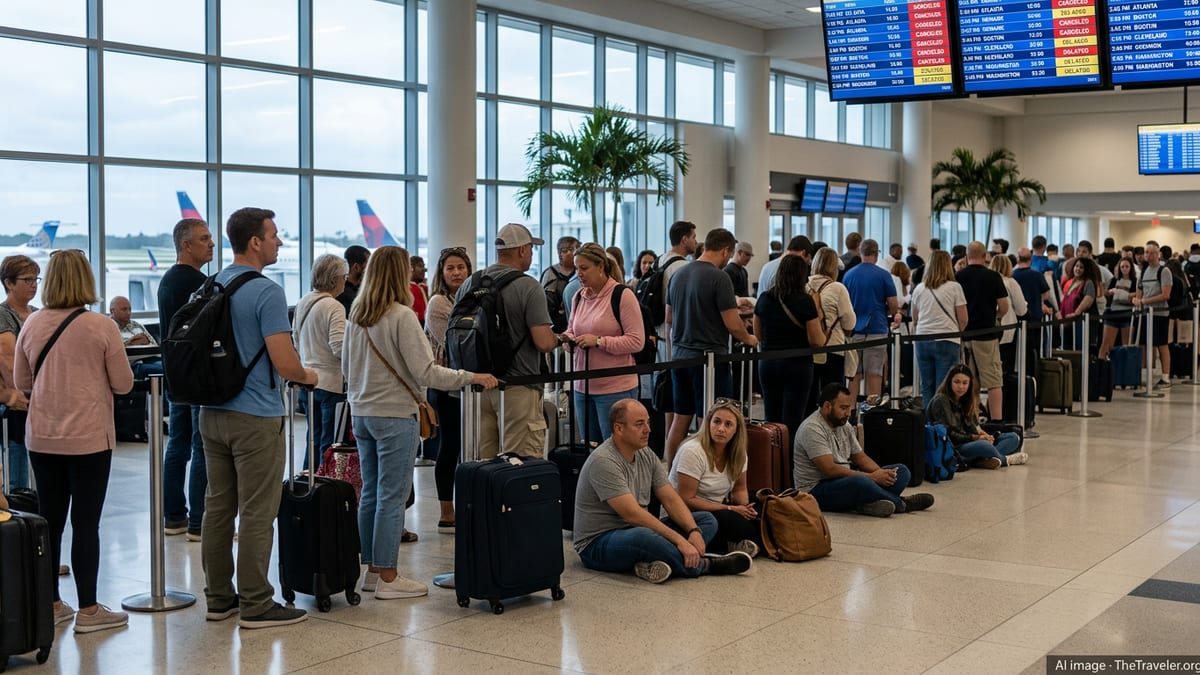
Six Canceled Departures Ripple Across Major Hubs
The cluster of six cancellations at Palm Beach International Airport, confirmed by flight-tracking data and airport information screens on Sunday, centered on high-demand routes that connect South Florida with the broader national network. Affected departures included morning and midday services to Atlanta, Newark, Boston, Cleveland and Washington, with knock-on disruptions for travelers making onward connections across the United States and overseas.
Delta scrapped at least two flights linking Palm Beach and Atlanta, cutting capacity on one of the airport’s busiest corridors at a time when aircraft on the route were already heavily booked. United removed a Newark-bound departure from the schedule, while American and Spirit each canceled services aimed at Northeast and Mid-Atlantic gateways, including Washington and Boston. Together, the moves reduced options for both leisure and business travelers during a peak spring travel window.
While six cancellations might appear modest in isolation, their impact at a medium-sized airport such as Palm Beach is amplified by limited alternative frequencies and tight aircraft utilization. Once those flights disappeared from departure boards, rebooking options narrowed quickly, forcing many passengers into later departures, forced overnights or rerouted itineraries through Orlando, Miami and Fort Lauderdale.
Airport staff said operations remained safe but constrained, with gate changes and crew shuffles common throughout the morning and early afternoon as carriers tried to consolidate passengers onto remaining services. Travelers described long but orderly lines at airline counters as agents worked through rebooking requests on a case-by-case basis.
Ground Delays and Weather Complicate Airline Operations
The cancellations unfolded against a backdrop of mounting delays in the national airspace system. A combination of high traffic volumes, lingering weather cells over key hubs and air traffic management constraints led federal aviation officials to apply ground delay programs that slowed the flow of departures out of Palm Beach and other Florida airports.
Hartsfield-Jackson Atlanta International Airport, the primary hub for Delta and a key connection point for Palm Beach travelers, was again under strain from storms and volume-related congestion. Delays there cascaded southward, making it more difficult for airlines to position aircraft and crews on time for Palm Beach departures. When arrival and departure slots at Atlanta tighten, regional spokes like West Palm Beach are often among the first to feel the effects through schedule cuts and rolling delays.
Farther north, recovering operations at Newark Liberty International, Boston Logan, Washington-area airports and Cleveland Hopkins added another layer of complexity. Recent winter weather and air traffic control constraints in the Northeast have left airlines with limited flexibility in their schedules, increasing the likelihood that a single disruption in Florida can reverberate throughout the network.
Carriers at Palm Beach responded by holding some flights at the gate, extending scheduled ground times and combining lightly booked services where possible. Passengers reported departure delays ranging from 45 minutes to more than two hours on routes that did operate, with some aircraft waiting for inbound crews or final air traffic control release times.
Travelers Confront Missed Connections and Overcrowded Alternatives
For many passengers, the most immediate consequence of the Palm Beach disruptions was the loss of connecting options through major hubs. Travelers bound for destinations as varied as the West Coast, the Midwest and transatlantic points depended on one-stop itineraries via Atlanta, Newark, Boston and Washington. When those first legs were canceled or significantly delayed, entire trip plans unraveled.
Lines formed early at customer service counters as families, retirees and business travelers attempted to salvage itineraries. Some accepted reroutes through Miami or Fort Lauderdale, adding a highway drive and additional security checks to their journey. Others opted to stay overnight in South Florida, unable to find same-day alternatives that would still connect to their final destinations.
Seats on remaining departures out of Palm Beach tightened quickly. By midday, airline apps showed only a scattering of open seats on later flights to Atlanta and Newark, often in premium cabins or at higher fare classes. Standby lists grew longer, and gate areas became more crowded as travelers waited to see whether they would clear onto oversold flights.
Rental car counters and ride-hailing pickup zones also saw increased demand, as some passengers abandoned air travel altogether for drivable destinations such as Orlando, Tampa and Jacksonville. Others used cars to reposition to larger airports, hoping to find more robust flight options from Miami International or Orlando International.
Airlines Offer Waivers and Advise Flexible Plans
In response to the mounting disruption, Delta, Spirit, United and American advised affected customers to monitor their apps for real-time updates and to take advantage of any travel waivers in place. Such waivers typically allow passengers to change to another flight within a set timeframe without change fees and, in some cases, without a fare difference, provided they travel on the same city pair.
Customer service staff at Palm Beach urged travelers not yet at the airport to check their flight status repeatedly before leaving home or hotels. With schedule changes occurring throughout the day, some passengers were able to secure earlier or more reliable departures by acting quickly when new seats became available.
Travel advisors and frequent flyers noted that passengers with flexible schedules had the most success navigating the disruption. Willingness to accept nearby airports, off-peak departure times or connections through secondary hubs often made the difference between traveling the same day and being stranded.
Nonetheless, frustration was evident among those facing missed cruises, family events or tightly timed business commitments. Several travelers questioned why airlines did not preemptively trim schedules earlier in the week, instead of canceling flights on the day of departure, although carriers argued that evolving forecasts and air traffic constraints made precise planning difficult.
What Palm Beach Travelers Should Expect Next
Operationally, Palm Beach International is expected to unwind the backlog of delayed passengers over the next 24 to 48 hours, provided there are no further weather or air traffic surprises. Airlines have signaled that they will upgauge certain flights to larger aircraft where possible and may add late-night or early-morning sections to move stranded customers.
For Monday and Tuesday departures, travelers bound for Atlanta, Newark, Boston, Cleveland and Washington should brace for tighter seat availability and the possibility of residual delays. Even as airlines restore their schedules, aircraft and crew positioning can lag behind, leaving isolated cancellations in the wake of a broader disruption.
Airport officials at Palm Beach emphasized that security screening, baggage handling and ground services remained fully staffed and functional, with the primary constraints coming from airline scheduling decisions and national airspace controls. They encouraged passengers to arrive early, pack medication and essentials in carry-on bags, and be prepared for schedule changes on short notice.
For now, the episode underscores how quickly routine travel plans in South Florida can be upended when conditions deteriorate at distant hubs. With demand surging into the spring and summer high season, Palm Beach travelers heading for Atlanta, Newark, Boston, Cleveland, Washington and beyond are likely to continue feeling the ripple effects of any strain placed on the national aviation network.