

More news on this day
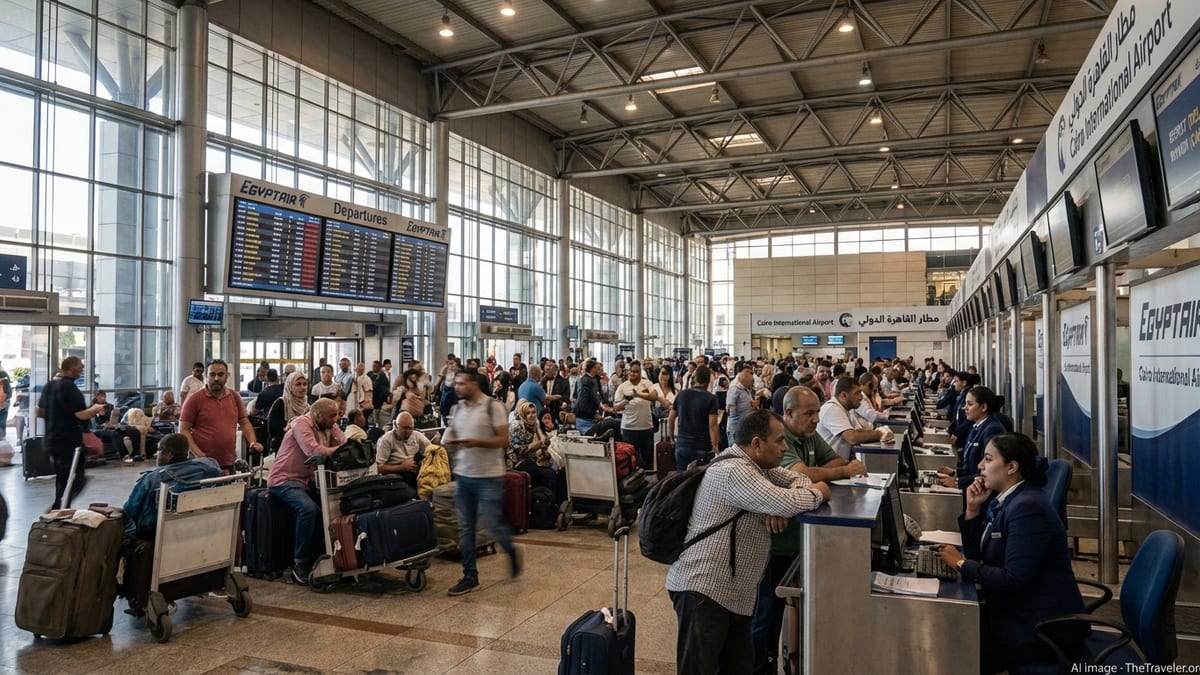
Passengers traveling through Cairo International Airport on February 24 faced fresh disruption as EgyptAir and other carriers scrubbed multiple departures, including key services to Beirut and Riyadh, amid a wave of short-notice schedule changes that left travelers rebooking on already crowded regional routes.
Three Key Flights Canceled on a Busy Cairo Morning
Operational data from Cairo International Airport on February 24 showed at least three notable cancellations affecting regional connectivity, including EgyptAir flights to Amman and Port Sudan and another EgyptAir-operated service to Istanbul. While Beirut and Riyadh departures remained on the board, travel agents in Cairo reported that the loss of these services tightened options for passengers relying on Cairo as a hub for onward connections to Lebanon, Saudi Arabia and the wider Middle East.
Among the early morning departures, EgyptAir flight MS740 to Amman and MS746 to Istanbul were listed as canceled, alongside regional services such as MS866 to Port Sudan. Although these routes do not fly directly to Beirut or Riyadh, they feed a dense web of same-day connections through Cairo that many travelers use to reach Lebanon and Saudi Arabia when nonstops are full or unaffordable.
The cancellations came as Cairo’s departure boards were already dotted with delays to and from Saudi destinations including Jeddah, Medina, Tabuk and Taif. The combination of outright cancellations on some regional routes and rolling delays on others contributed to longer queues at check-in, more missed connections, and rising frustration among passengers who had built tight itineraries through Egypt’s busiest airport.
Airport and industry sources said the pattern was consistent with a broader bout of disruption reported over the weekend, when EgyptAir and other Egyptian carriers cut a cluster of services on short notice, stranding passengers headed to Riyadh, Jeddah, Tripoli and domestic points such as Aswan.
Riyadh Services Reshuffled as Carriers Shift to Terminal 5
The latest cancellations coincided with a structural shift in how flights between Egypt and Saudi Arabia are handled in Riyadh. EgyptAir and Air Cairo have both confirmed that, effective February 25, all their operations at King Khalid International Airport will move to the newly designated Terminal 5, a change that covers key EgyptAir services MS651 and MS652 on the Cairo to Riyadh route.
For travelers, the terminal move comes at a sensitive time. Any disruption in Egypt on the day before a major operational change in Riyadh raises the risk of missed or misrouted connections, especially for passengers unfamiliar with the new terminal layout or those relying on short connection times. Agents in Cairo say they are advising customers bound for Riyadh to build in additional buffers and to double-check their terminal and gate assignments before departure.
Saudi routes from Egypt remain among the busiest in the region, fed by migrant workers, business travelers and religious visitors. Even when a cancellation does not directly involve a Riyadh flight, the loss of feeder services into Cairo can ripple across the network, limiting seat availability on onward segments or forcing passengers to overnight in Cairo to catch the next day’s departures.
Adding to the shifting landscape, new capacity is set to enter the market as Saudi Arabia’s emerging carrier Riyadh Air prepares to launch a daily service to Cairo. While that additional lift should help in the medium term, it does little to ease the immediate strain on passengers caught in this week’s disruptions, who face packed alternatives and fluctuating last-minute fares.
Beirut Connections Squeezed by Regional Knock-On Effects
Direct services between Cairo and Beirut continue to operate, with both EgyptAir and Middle East Airlines maintaining multiple daily frequencies. However, the cancellation of other regional flights and the broader pattern of delays across Cairo’s schedule have tightened the window for same-day links into Lebanon, particularly for travelers arriving from secondary Egyptian cities or other Middle Eastern hubs.
Travel consultants monitoring February 24 movements said that while the mainline Cairo to Beirut flights remained scheduled, passengers arriving late from disrupted services to Saudi Arabia, Jordan, Sudan and domestic points risked missing their onward connections. Rebooking onto later Beirut departures was complicated by high load factors, reflecting resurgent demand after years of political and security-related volatility in Lebanon and its neighborhood.
The strain on Beirut-bound traffic comes at a time when airlines across the region have only recently rebuilt their Lebanon networks following earlier suspensions and reductions. With capacity carefully calibrated to current demand, even small schedule shocks in a key hub like Cairo can cascade across itineraries, particularly when travelers are using indirect routings to work around high fares or limited seat availability on preferred nonstop flights.
For many passengers, that means longer airport waits, unscheduled hotel nights and last-minute changes to business meetings, medical appointments or family commitments in Beirut, adding both cost and uncertainty to already complex trips.
FlyEgypt’s Absence Limits Backup Options
The disruption in Egypt this week is unfolding against the backdrop of a slimmer competitive landscape. FlyEgypt, once an important player in low-cost and charter operations from Cairo and other Egyptian cities to regional destinations, ceased flight operations in late 2024 amid financial distress. Its absence has reduced the pool of backup options that might otherwise have absorbed some of the demand displaced by EgyptAir’s cancellations.
Before its collapse, FlyEgypt had operated a mix of scheduled and charter services to Saudi Arabia and other regional points, including Jeddah and seasonal leisure routes. With those aircraft now grounded and the airline in limbo, pressure has intensified on remaining carriers such as EgyptAir, Nile Air, Air Cairo and foreign operators to meet resurgent demand with finite fleets.
Aviation analysts note that when a carrier exits the market, its capacity is not easily or immediately replaced. Aircraft orders take years to fulfill, leasing markets are tight, and the training pipeline for flight and cabin crews is constrained. The net effect for travelers is fewer choices, less redundancy in the system and a greater likelihood that the cancellation of even a handful of flights on a given day will leave some passengers without same-day alternatives.
In practical terms, that means higher sensitivity to operational hiccups at Cairo International, where limited spare capacity on neighboring departures can quickly translate into sold-out flights and sharply higher walk-up fares to key regional destinations.
What Travelers Through Cairo Should Do Now
Travel advisors in Egypt are urging passengers booked through Cairo in the coming days to treat schedules as fluid and to monitor their flights more closely than usual. They recommend checking flight status repeatedly in the 24 hours before departure, using both airline channels and independent trackers, and confirming any onward connections, especially to Beirut, Riyadh and other high-demand regional hubs.
Passengers already holding tickets on affected EgyptAir services are being rebooked where possible, though availability is limited on peak travel days. Those yet to travel are being encouraged to build longer layovers into multi-leg trips, to avoid relying on the last daily departure to critical destinations, and to carry printed or digital copies of all reservations in case they need to negotiate alternatives at airport counters.
For travelers considering new bookings, agents suggest comparing routings that use alternative hubs such as Jeddah, Dubai or Doha, while remaining mindful of visa and transit requirements. Where flexibility allows, shifting travel by a day on either side of peak demand can significantly improve the chances of securing seats at reasonable fares.
While airlines are working to stabilize their schedules, the recent wave of cancellations at Cairo highlights how quickly conditions can shift in a tightly stretched regional network. For now, passengers moving between Egypt, Lebanon, Saudi Arabia and neighboring markets may need to plan with extra caution, expect potential last-minute changes and budget time and money for unexpected disruptions along the way.