

More news on this day
Travelers across the United States faced fresh disruption on March 30 as more than 50 flights on major carriers including American, Delta, United, Southwest and Virgin Atlantic were canceled, affecting key domestic and long haul routes to New York LaGuardia, London, Paris, Houston, Auckland and several other hubs.
Get the latest news straight to your inbox!
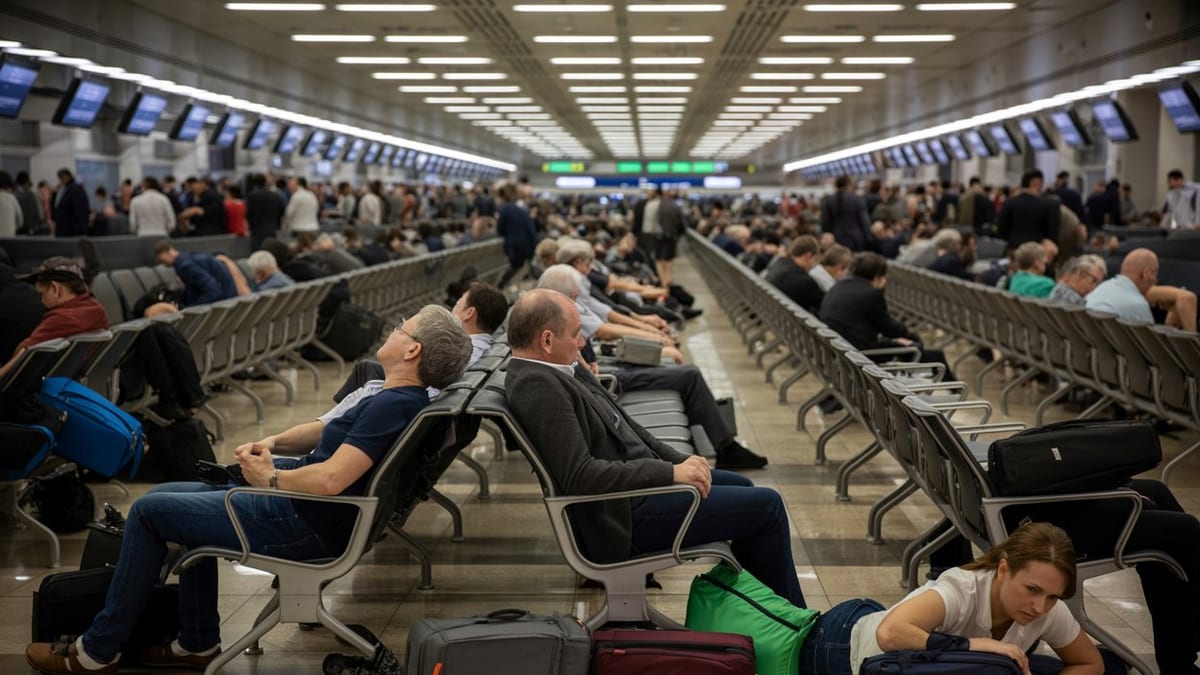
Image by Travel And Tour World
Latest Disruptions Hit an Already Strained Flight Network
The latest round of cancellations comes on the heels of a volatile month for air travel, with severe weather, operational strains and lingering knock-on effects from earlier airport closures combining to put pressure on airline schedules. Publicly available data from flight-tracking and airline advisory pages on March 30 indicate that dozens of services across the US network did not operate, even as carriers attempted to stabilize timetables after earlier turbulence this spring.
LaGuardia Airport remains one of the most closely watched points in the system after a fatal runway collision there on March 23 triggered a lengthy ground stop and widespread disruption. Recent coverage of that incident shows that the closure led to thousands of delays and cancellations nationwide as aircraft and crews were left out of position, a problem that can continue to ripple through schedules for days and even weeks.
At the same time, the broader US system is still recovering from severe storms and winter weather episodes earlier in the year that produced historically high cancellation days. Those events highlighted how tightly coupled domestic and international operations have become, with a disruption at a single major hub often cascading into missed long haul connections hours or days later.
Against that backdrop, the more than 50 flights grounded on March 30 are being viewed as part of an ongoing pattern of fragility in the system rather than as an isolated incident, with travelers urged to build in extra time and flexibility when planning spring trips.
Major US Carriers Affected: American, Delta, United and Southwest
American Airlines, Delta Air Lines, United Airlines and Southwest Airlines account for a significant share of US domestic and transcontinental traffic, and all four featured among the latest round of cancellations. Operational summaries and airline travel alerts reviewed on March 30 show that each of these carriers cut at least several services, reflecting a mix of residual weather impacts, aircraft rotations and crew availability constraints.
American and Delta, both large players at New York LaGuardia, have been managing particularly complex recoveries following last week’s runway incident. Earlier reports noted that these carriers offered change flexibility to affected travelers and conducted large-scale automatic rebooking. Even as most flights have now resumed, today’s cancellations indicate that the knock-on effects are still being felt across select short-haul and connecting routes.
United, which has been aggressively growing at key hubs such as Chicago O’Hare and Houston Intercontinental, has also seen scattered cancellations in recent weeks during periods of severe weather and heavy traffic. Recent commentary on airline performance has pointed out that United’s cancellation totals can spike more quickly than some competitors when storms or airspace constraints limit operations.
Southwest, a dominant domestic carrier with large operations at airports including Houston Hobby and several secondary US cities, has generally aimed to maintain lower cancellation percentages but has not been immune to disruption. When weather or airfield constraints limit departures for several hours, point-to-point networks like Southwest’s can face difficult decisions about which segments to prioritize, leading to targeted cancellations on thinner routes.
International Links to London, Paris, Auckland and Beyond Affected
While much of the immediate attention tends to focus on domestic US hubs, March 30’s disruptions also reached key international corridors. According to publicly available flight-status boards and schedule data, services connecting US gateways to London, Paris and Auckland were among those impacted or placed under schedule pressure as carriers worked to accommodate passengers from earlier canceled flights.
London remains one of the most important long haul destinations for US travelers, served by multiple airlines and airports on both sides of the Atlantic. When a US feeder flight to New York, Chicago, Houston or the West Coast is canceled, it can cause passengers to miss evening departures to Heathrow or other UK airports, forcing rebookings onto later flights or via alternate European hubs.
Paris has seen its own structural adjustments this month, with Air France-KLM consolidating more operations at Charles de Gaulle. Any US-side disruption on the day of travel can complicate these new patterns for connecting passengers, especially those booked on multi-leg trips linking smaller American cities to European and onward destinations in Africa, the Middle East or Asia.
Farther afield, routes to destinations such as Auckland can be particularly vulnerable to cancellations and missed connections because of limited daily frequencies. When one transpacific or transpolar leg is removed from the schedule, travelers often face long waits for the next available departure or must accept complex rerouting through alternative hubs.
Lingering Impacts From LaGuardia Closure and March Weather
The current disruption cannot be separated from the cumulative shocks that have hit the North American air system since the start of 2026. A series of major winter storms in January and February produced tens of thousands of cancellations, including one day that ranks among the worst in recent US aviation history for weather-related schedule cuts. These events left aircraft and crews scattered and increased maintenance and staffing pressures as airlines rushed to restore full schedules.
More recently, March brought a serious ground incident at LaGuardia as well as rounds of severe thunderstorms and high winds along the East Coast and in parts of the Midwest. Publicly available storm summaries show that these systems generated several days with thousands of cancellations nationwide, disproportionately affecting hub airports such as New York, Atlanta and Chicago.
Even after the immediate weather window passes, airlines can take days to normalize operations, particularly when crew duty-time rules and maintenance checks come into play. If a late-arriving aircraft or crew cannot legally operate a planned rotation, carriers are sometimes forced to cancel otherwise clear-weather flights to avoid further knock-on delays.
For passengers, this means that a seemingly routine flight on a calm spring day can still be vulnerable if it is part of a chain that traces back to a stormy or disrupted period earlier in the month. Today’s scattered cancellations across multiple airlines and routes are a visible example of this hidden complexity.
What Travelers Need to Know Before Heading to the Airport
With disruptions continuing to flare up even on days without headline-making storms, travelers are being strongly encouraged by consumer advocates and travel experts to verify flight status repeatedly in the 24 hours before departure. Publicly available airline tools and flight-tracking platforms can provide near real-time updates on delays, equipment changes and cancellations.
When a cancellation does occur, each airline’s policies determine what passengers can expect in terms of rebooking and potential compensation. Current customer guidance published by major carriers such as American, Delta, United, Southwest and Virgin Atlantic generally emphasizes automatic rebooking where possible, options to change dates or routes, and hotel or meal support in specific circumstances, particularly when the disruption is within the airline’s control.
Travelers with onward international connections should pay special attention to minimum connection times and schedule padding. If a domestic leg into a hub such as LaGuardia, Houston, Atlanta or Los Angeles is delayed or canceled, it can jeopardize a same-day link to London, Paris or other long haul destinations, and rebooking may be more difficult when flights operate only once daily.
Industry observers also recommend carrying essential items in hand luggage, building in additional time for security and boarding, and considering travel insurance or credit card protections that specifically cover missed connections and cancellations. With more than 50 flights canceled across major carriers on March 30 alone, the latest disruptions serve as another reminder that flexibility and preparedness remain crucial for anyone flying this spring.