

More news on this day
Major North American carriers including United Airlines, Viva Aerobus, Delta Air Lines, Frontier Airlines, and WestJet have canceled more than a dozen flights across key Mexican airports, disrupting busy routes to Chicago, Las Vegas, Atlanta, Denver, Seattle, Houston, and other U.S. cities as security concerns and operational constraints ripple through the region.
Get the latest news straight to your inbox!
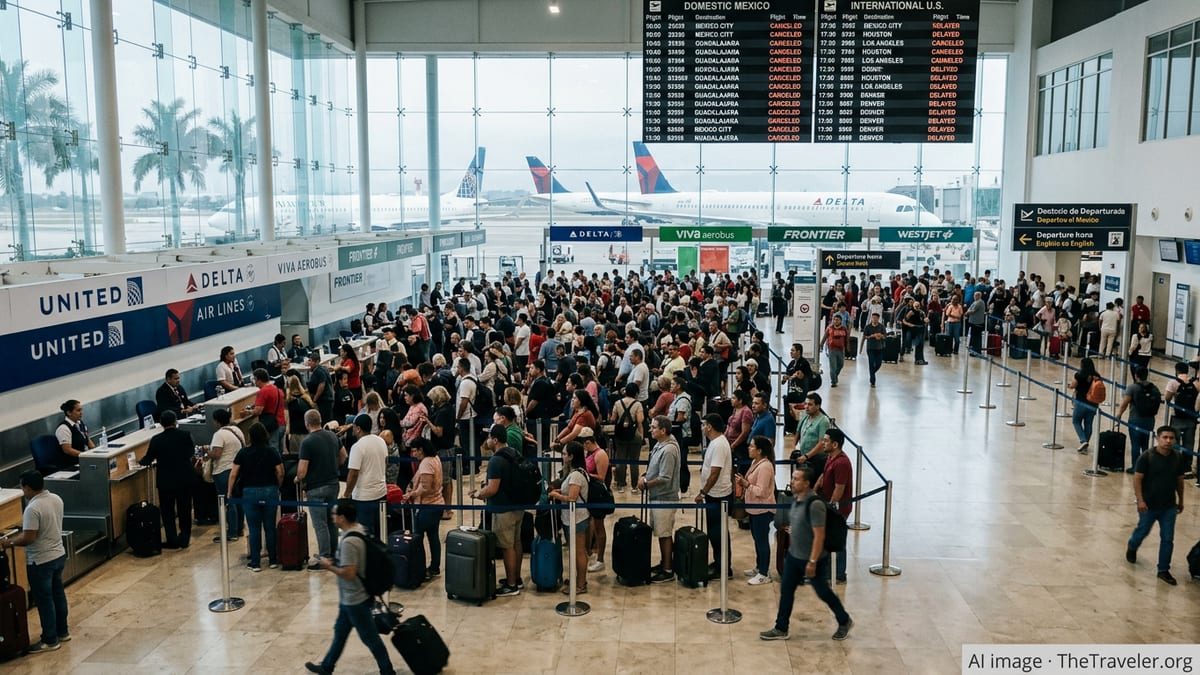
Wave of Cancellations Hits Mexico’s Biggest Tourist Gateways
The latest round of cancellations is concentrated at some of Mexico’s most important leisure and business gateways, including Cancún, Mexico City, Guadalajara, Monterrey, Tijuana, and Puerto Vallarta. Flight tracking data and airline advisories reviewed on Friday indicate that a mix of northbound and southbound services have been pulled from schedules or heavily delayed as carriers respond to ongoing instability in western Mexico and knock-on operational issues.
United Airlines has been among the most affected, trimming departures from Puerto Vallarta and Guadalajara to major hubs such as Chicago, Denver, and Houston as it works through a surge of schedule changes tied to a temporary travel waiver for the Jalisco region. Viva Aerobus, a key low cost player in the Mexico domestic market, has also scrubbed several rotations linking Guadalajara, Monterrey, and Tijuana with coastal destinations and onward connections to U.S. cities.
Delta Air Lines, Frontier Airlines, and WestJet have implemented targeted cuts on routes touching Cancún and western Mexico, particularly where crews and aircraft would otherwise route through affected regions. While many flights are still operating, a patchwork of gaps in the timetable has emerged, leaving passengers with limited options and crowded rebooked services at peak travel times.
Puerto Vallarta and Guadalajara at the Center of the Disruption
The western state of Jalisco, home to Guadalajara and the coastal resort of Puerto Vallarta, remains the epicenter of aviation disruption. In recent weeks, civil unrest and cartel-related violence in parts of the state have prompted airlines and authorities to reassess security conditions on the ground and along key access routes to airports. While terminals themselves continue to function, intermittent road closures and concerns over passenger and crew safety have complicated operations.
United has issued and repeatedly extended a special travel waiver for customers ticketed to and from Guadalajara and Puerto Vallarta, allowing changes without traditional penalties over select February and March travel dates. That flexibility has been accompanied by schedule thinning, including cancellations of select services that typically link these airports to Chicago, Denver, and Houston, along with onward connections across its U.S. network.
Other carriers have followed with a mix of cancellations and schedule adjustments. Delta has reworked some services that connect Seattle and other U.S. gateways with west coast Mexico, while WestJet, a major Canadian operator into Puerto Vallarta and Cancún, has proactively canceled or consolidated flights on days when demand has softened and operational certainty remains limited. Passengers report heavily booked remaining services, and in some cases, diversions of arriving flights from Puerto Vallarta to Guadalajara when conditions deteriorate.
Impact Spreads to Cancún, Mexico City, Monterrey, Tijuana, and Beyond
Although the most acute problems are centered in Jalisco, the ripple effects have spread across the wider Mexican aviation network. Airports such as Cancún, Mexico City, Monterrey, and Tijuana, which serve as critical domestic and international hubs, have each seen clusters of short-notice cancellations as airlines reposition aircraft and crews or seek to avoid routing through affected western corridors.
Viva Aerobus and Frontier Airlines, both known for aggressively priced cross border and domestic services, have each canceled select frequencies that normally feed U.S. markets including Las Vegas, Houston, and Chicago. While many flights on those routes continue to operate, last minute schedule changes have left travelers scrambling to secure replacement itineraries, often involving overnight stays or detours via alternative hubs.
Mexico City and Monterrey, in particular, have absorbed disrupted passengers from Puerto Vallarta and Guadalajara, but that relief valve has also added strain. Rebooked travelers are competing for limited seats to major U.S. gateways, and some flights are departing at or near capacity with long standby lists. Tijuana, an important cross border gateway for travelers connecting into Southern California, has also seen pockets of cancellations affecting both domestic and U.S. bound passengers.
Chicago, Denver, Seattle, Houston and Other U.S. Hubs Feel the Strain
On the U.S. side, major hubs from the Midwest to the West Coast are contending with inbound cancellations and disrupted aircraft rotations. Chicago, Denver, Seattle, Houston, Atlanta, and Las Vegas have all seen arrivals from Mexico pulled from the boards or arrive significantly late, leading in turn to missed connections and pressure on already busy domestic banks of flights.
United’s Chicago and Denver hubs have been particularly exposed given their role in connecting the U.S. interior to Mexican beach destinations such as Puerto Vallarta and Cancún. Passengers booked on those flights report being offered rerouting through Houston or Mexico City, or being pushed back by several days when near term departures are fully booked. For some travelers, that has meant extra hotel nights in Mexico or unexpected overnight stays in U.S. connecting cities.
Delta’s operations in Seattle and Atlanta have had to absorb timetable changes as the carrier adjusts its Mexico flying program in response to the evolving situation. WestJet customers connecting through U.S. hubs from Mexico toward Canada are also encountering disrupted itineraries when southbound flights are canceled or delayed, in some cases forcing complete rebookings on different travel days.
Travelers Face Long Lines, Limited Options and Shifting Guidance
For passengers on both sides of the border, the practical impact of the cancellations has been long lines at airport counters, extended hold times with call centers, and a reliance on airline apps and social media for the latest information. With conditions and schedules changing quickly, travelers are being urged to monitor their flights frequently, even after check in, and to arrive at airports with extra time to clear potential delays on access roads around western Mexico airports.
Most major carriers involved in the disruption have activated flexible travel policies for certain dates and destinations in Mexico, allowing customers to change plans without penalties or, in some cases, fare differences. However, those waivers are often constrained by limited availability on alternative flights, especially on peak days when leisure and visiting friends and relatives traffic is strongest.
Travel advisors recommend that passengers holding near term tickets to Cancún, Mexico City, Guadalajara, Monterrey, Tijuana, or Puerto Vallarta check both their airline’s travel advisory pages and their reservation details daily, consider routing options that avoid the most affected western corridors, and keep hotel and transfer bookings flexible where possible. With civil unrest in western Mexico still evolving and airlines recalibrating schedules frequently, further short notice cancellations and timetable changes remain a real possibility in the days ahead.