

More news on this day
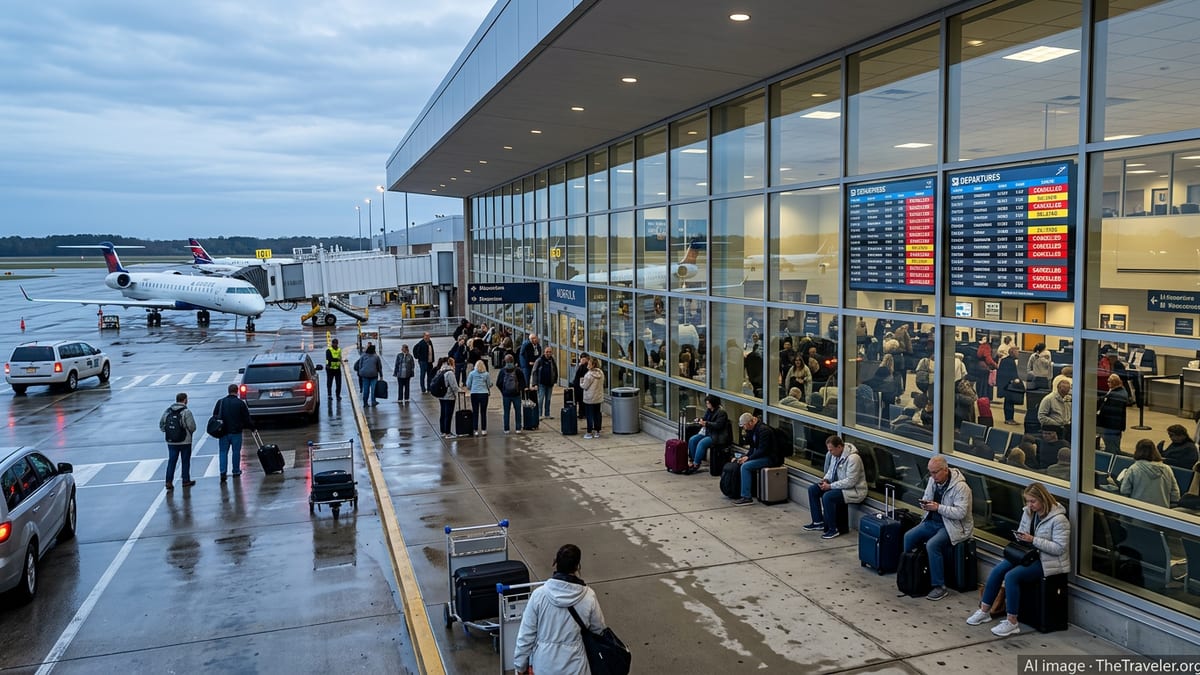
Travelers moving through Norfolk International Airport on March 8 faced a fresh wave of disruption as regional carriers PSA Airlines, SkyWest and Mesa Airlines canceled five flights and posted multiple delays on key routes to Detroit, Washington, Charlotte, Fort Lauderdale, New Haven and other major domestic hubs.
Chain Reaction Across Regional Carriers
The latest disruption at Norfolk International Airport underscored how quickly regional carriers can become a pressure point in the U.S. air travel system. PSA Airlines, SkyWest and Mesa, which collectively operate scores of feeder services for big-brand networks such as American and United, reported five cancellations from Norfolk alongside a string of late departures and arrivals.
While the total number of grounded flights was modest compared with mass weather meltdowns seen at larger hubs, the impact at a mid sized coastal airport like Norfolk was magnified. Many of the affected services were among just one or two daily frequencies on their routes, leaving passengers with limited same day alternatives and longer rebooking windows.
Throughout the day, departure boards at Norfolk showed a growing list of flights pushed back by 45 minutes or more, particularly on regional jets linking the airport to northern and mid Atlantic cities. Airline staff worked to reassign aircraft and crews, but knock on effects from earlier delays at other airports meant some rotations never made it to Virginia.
Major Routes to Detroit, Washington and Charlotte Disrupted
Among the most affected city pairs were Norfolk’s vital links to Detroit, Washington and Charlotte, three airports that function as key connecting hubs for travelers from coastal Virginia. Flights feeding into Detroit and Washington are especially important for connections to the upper Midwest, Northeast and transatlantic services, amplifying the consequences of cancellations.
Passengers on morning and early afternoon departures reported extended waits as ground staff updated gate information and issued new boarding times. Some Detroit bound travelers were rebooked via alternative hubs, such as Chicago or New York, while others were offered next day departures from Norfolk due to tight capacity on remaining flights.
Services to Charlotte, a cornerstone hub for American’s regional network, also faced rolling delays. With several of those flights operated by PSA Airlines and other regional affiliates, any single cancellation could strand connecting passengers attempting to reach smaller communities across the Southeast and Mid Atlantic, stretching the disruption well beyond Norfolk itself.
Florida and New Haven Leisure Links Hit at the Start of Spring Travel
Norfolk’s popular leisure routes to Fort Lauderdale and other Florida points were not spared, frustrating early spring travelers heading to beach vacations and cruises. Fort Lauderdale, a major gateway for both domestic holidaymakers and Caribbean sailings, saw at least one Norfolk service scrubbed and others departing behind schedule.
For families traveling with children at the outset of the spring break period, even relatively short delays produced long lines at customer service desks as travelers sought reassurance on hotel reservations, rental cars and cruise embarkation times. Airline agents fielded questions about compensation policies while trying to secure remaining seats to South Florida.
New Haven, a newer and increasingly popular nonstop option from Norfolk for travelers bound for southern New England, also experienced disruption. With only a handful of daily frequencies on that route, a single cancellation from a regional operator could mean a full twenty four hour gap in service, forcing passengers to consider rerouting via larger Northeast airports or delaying their trips entirely.
Passengers Face Crowded Gates and Tough Choices
Inside the terminal, Norfolk International’s concourses grew noticeably more crowded as delayed passengers accumulated at gates, waiting for revised departure times. Seating near outlets and quieter corners of the terminal quickly filled as travelers attempted to work, entertain children or manage onward plans from their phones.
Some passengers opted to abandon their trips, requesting refunds or travel credits when rebooking options stretched into the following day. Others accepted multi stop routings that added several hours and extra connections in exchange for arriving closer to their original schedule. For travelers with tight schedules, weddings or medical appointments, the trade offs were particularly difficult.
Airport staff increased public address announcements and worked with airline partners to manage boarding flows, especially where multiple delayed flights were competing for the same gate. Although security screening times remained manageable, baggage claim and customer service queues lengthened as more flights were rolled into later evening waves.
Wider U.S. Disruptions Add to Norfolk Pressures
The turbulence at Norfolk did not occur in isolation. Regional carriers PSA, SkyWest and Mesa have been at the center of a broader pattern of disruptions across U.S. airports in recent days, with weather systems and air traffic control programs slowing operations at major hubs such as Detroit, Washington and Charlotte. When aircraft and crews arrive late or are held at congested airports, downstream points on their network, including Norfolk, feel the effects.
Industry analysts noted that the latest setback again highlights the vulnerability of mid size airports that rely heavily on regional jets to connect to larger hubs. When several flights from a single operator are canceled in a short window, the percentage of the day’s schedule affected can be significant, even if the absolute number of flights appears small.
As carriers move into the busy spring and summer period, Norfolk travelers are being urged to build more flexibility into their plans, monitor their flight status closely on the day of travel and consider earlier departures when making time sensitive connections. For now, the latest round of cancellations at the coastal Virginia airport serves as another reminder that even routine regional flights can be caught up in a national web of delays.