

More news on this day
Significant disruption hit Phoenix Sky Harbor International Airport on Friday as dozens of flights to New York, Miami and Los Angeles were cancelled, triggering hours of delays, missed connections and packed customer service lines across one of the Southwest’s busiest hubs.
Get the latest news straight to your inbox!
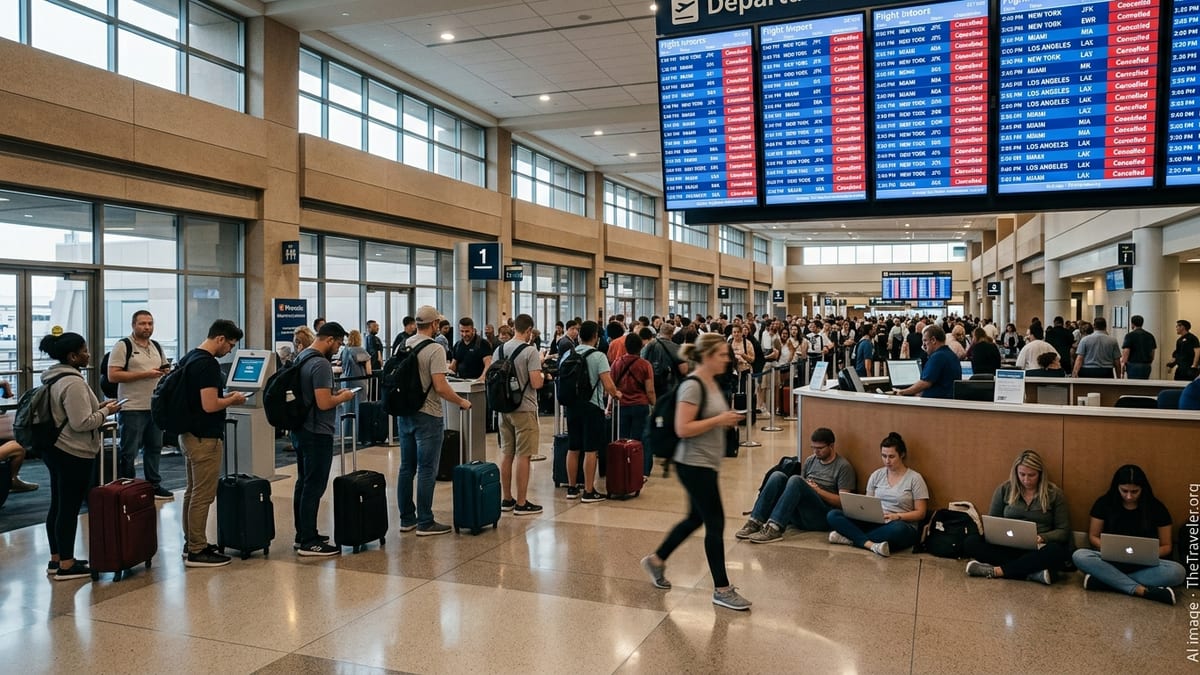
Major Coastal Routes Abruptly Pulled from Departure Boards
Departure boards at Phoenix Sky Harbor showed clusters of red cancellations on routes linking Arizona to key coastal gateways, including New York area airports, Miami International and Los Angeles International. Publicly available flight-tracking data indicated that a substantial share of morning and mid-day departures on these routes were withdrawn from service, with some aircraft never leaving their gates and others returning to stands after initial boarding.
The affected services included a mix of transcontinental flights to New York’s main airports, high-demand leisure and cruise feeder traffic to South Florida, and shuttle-style operations between Phoenix and Los Angeles. These corridors are among Sky Harbor’s most heavily used domestic links, carrying a blend of business travelers, international connections and vacation traffic throughout the year.
Published airline schedules and airport planning documents underline the strategic importance of these routes in the national network. Phoenix consistently ranks among the top domestic spokes feeding coastal hubs such as Miami, Los Angeles and New York, meaning widespread cancellations on a single day can ripple quickly across the country’s already busy air system.
As the day progressed, rolling updates showed some services reclassified as delayed or rerouted through secondary hubs, but many travelers faced outright cancellations and the need to rebook on later flights or alternative routes.
Knock-on Effects Across U.S. Airline Networks
The disruption in Phoenix had immediate consequences well beyond Arizona. According to publicly available industry data, flights between Phoenix, Miami, Los Angeles and New York typically act as high-capacity “bridge” segments, connecting passengers to long-haul international services and to secondary U.S. cities. When those links are severed, airlines must reorganize aircraft, crews and passenger itineraries across multiple hubs at short notice.
Reports from national flight-tracking services showed that aircraft scheduled to operate the affected Phoenix routes were subsequently repositioned, often with significant delays, to cover shortages at other airports. This created a cascade of schedule adjustments, visible in mounting delays on routes that would not normally be directly connected to Phoenix.
The timing of the disruption exacerbated the impact. With many travelers relying on early departures from Phoenix to make same-day evening departures from New York, Miami or Los Angeles, cancellations left limited slack in the system. Reaccommodation options narrowed quickly as remaining flights reached capacity, particularly on routes already running at high load factors in the late winter travel period.
Previous large-scale weather and operational events have demonstrated how vulnerable interconnected hubs can be when a single spoke airport experiences acute schedule disruption. The pattern seen in Phoenix, with concentrated cancellations on a handful of vital domestic corridors, reflected those broader systemic pressures.
Stranded Passengers Face Long Lines and Limited Options
Inside the terminals at Phoenix Sky Harbor, travelers faced long lines at airline counters and customer service desks as they scrambled to salvage weekend plans, cruises departing from Florida and business meetings on the East and West Coasts. Social media images from the airport showed crowded gate areas, passengers clustered around information screens and impromptu queues at rebooking kiosks.
Publicly available consumer guidance from airlines indicates that passengers on cancelled flights are typically offered rebooking on the next available service at no additional charge, or in some cases refunds and travel credits. However, when multiple high-demand flights on the same route are removed in quick succession, remaining seats can be scarce, particularly for larger families or groups traveling together.
Travel advisory information widely shared by airlines and aviation consumer groups emphasizes the importance of checking flight status before leaving for the airport, especially during periods of heightened operational strain. At Phoenix, many passengers appeared to have arrived with little warning of the scale of disruption, compounding the stress of last-minute changes.
Hotels near the airport and in downtown Phoenix also experienced a surge in demand as some stranded travelers were forced to seek overnight accommodation. Travel industry reports regularly note that such sudden spikes in local lodging demand can drive up room prices and reduce availability, particularly on weekends and during major events in the region.
Airlines Adjust Schedules as Phoenix’s Role Comes into Focus
In response to the day’s disruption, airlines with significant operations at Phoenix Sky Harbor began adjusting afternoon and evening schedules, thinning frequencies on some shorter routes in order to free aircraft and crews for the busiest trunk lines. According to published timetable and route data, Phoenix’s connections to coastal hubs are central to several carriers’ domestic strategies, balancing business-focused traffic to New York and Los Angeles with strong leisure demand on links to South Florida.
Airport planning documents and aviation industry analyses show that Phoenix has, in recent years, increased its role as a connecting hub feeding traffic into larger coastal gateways, including Miami, Los Angeles and the New York area. This evolution has made the reliability of those specific corridors more critical, since disruptions can affect not only local origin and destination passengers but also large numbers of travelers making onward connections.
Operational data gathered during previous nationwide disruption events illustrates how quickly airlines must pivot when a hub faces unexpected constraints. Tactics can include temporarily consolidating lightly booked flights, substituting larger aircraft on key city pairs, or redirecting flows through alternative hubs such as Dallas, Denver or Chicago to relieve pressure on the affected airport.
While the full operational and financial impact of the Phoenix cancellations will take time to assess, early indications from schedule changes and aircraft rotations suggest that carriers treated the disruption as a serious constraint on one of the Southwest’s most important connecting nodes.
Planning Ahead: What Travelers Should Expect Next
Travelers with upcoming itineraries through Phoenix Sky Harbor to New York, Miami or Los Angeles are being advised, in publicly available guidance from airlines and travel agencies, to monitor flight-status tools frequently and to enable mobile alerts for real-time updates. When a major hub experiences concentrated cancellations on a given day, knock-on effects can linger for several days as crews and aircraft are repositioned and airlines work through a backlog of displaced passengers.
Industry analysts often recommend that passengers with essential same-day connections build extra time into itineraries during periods of operational uncertainty, particularly when relying on single daily flights or tight evening connections at coastal hubs. For those departing Phoenix, selecting earlier departures to New York, Miami or Los Angeles can provide greater flexibility if rebooking becomes necessary.
Consumer advocates also point to the value of understanding airline policies on cancellations, reaccommodation and overnight stays. Publicly available policy summaries explain when travelers may be eligible for hotel or meal vouchers, and when disruptions are classified as outside the carrier’s control, affecting available compensation.
As Phoenix Sky Harbor works through the immediate backlog created by the day’s cancellations, the episode highlights how central the airport has become to connecting the interior Southwest with both coasts. Any significant disruption on its busiest routes now has the potential to reverberate widely across the U.S. air travel network, affecting travelers far beyond the desert city’s terminals.