

More news on this day
Travellers passing through Singapore Changi Airport are facing a new wave of disruptions as Qatar Airways, Qantas, Gulf Air, Thai Wings and other carriers cancel more than a dozen flights, severing key links to Doha, Sydney, Bahrain, Jeddah, Jakarta, Bali and other destinations amid widening fallout from Middle East airspace closures.
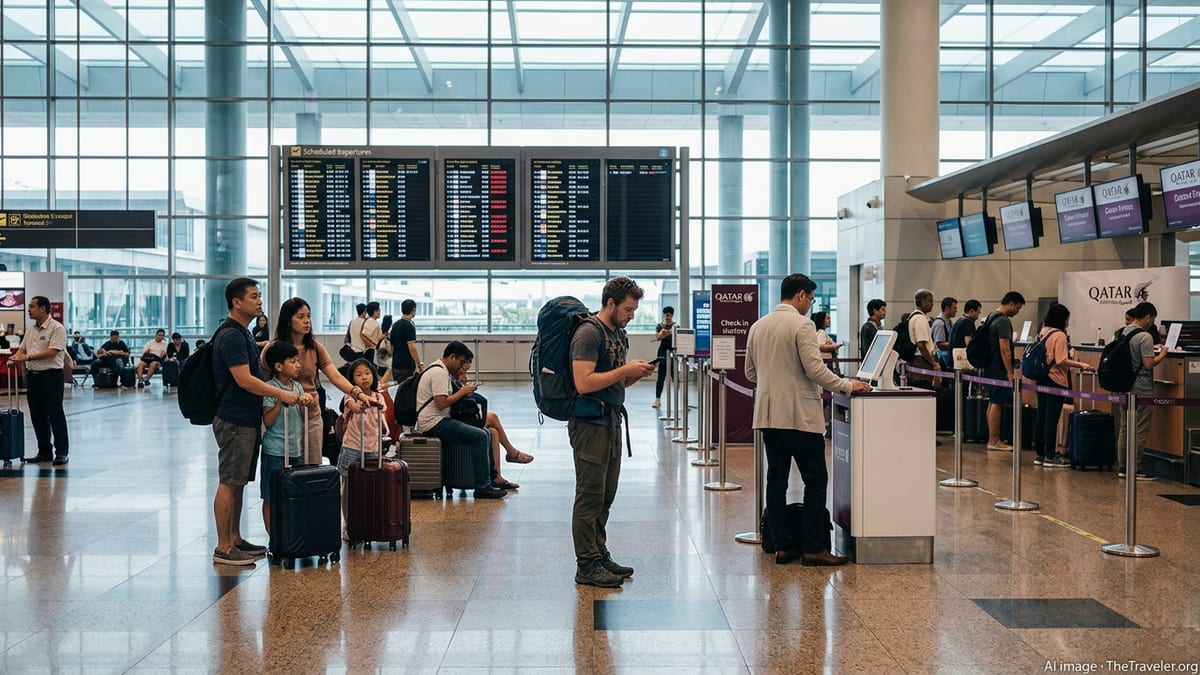
Fresh Cancellations Hit Changi as Middle East Crisis Deepens
Singapore Changi, one of Asia’s busiest transit hubs, has become the latest flashpoint in a fast-moving aviation crisis triggered by airspace closures across parts of the Middle East. Airport departure boards on March 10 showed a growing list of cancelled and heavily delayed services, as airlines recalibrated schedules in response to restricted corridors over Iran, Iraq, Kuwait, Bahrain, Qatar and Jordan.
Qatar Airways, which relies on Doha’s Hamad International Airport as a critical east–west transfer point, continues to run a sharply reduced schedule while standard commercial flights remain largely suspended. Although limited repatriation and relief services have been cleared to operate via special corridors, most passenger itineraries that would usually route from Singapore to Europe or the Middle East via Doha are being cancelled outright or pushed days into the future.
Regional carriers and codeshare partners are now scrambling to adjust, with ripple effects extending far beyond the Gulf. Flights linking Singapore with Jakarta, Bali, and onward to Jeddah and other religious and labour corridors have been hit particularly hard, leaving travellers with few immediate alternatives at the start of a busy spring travel period.
Routes to Doha, Sydney, Bahrain, Jeddah and More Affected
At Changi, Qatar Airways’ services to and from Doha have borne the brunt, with multiple daily flights on key trunk routes cancelled as the airline prioritises scarce slots for repatriation and essential traffic. Passengers bound for onward connections to Europe and the Middle East are reporting short-notice notifications of cancellations, with some learning only hours before departure that their flights will not operate.
Australia-bound traffic is also under strain. Qantas, which uses Singapore as a cornerstone of its “Kangaroo Route” network, has trimmed selected services as partner connectivity through the Gulf deteriorates, affecting itineraries between Singapore and Sydney and complicating rebooking options for travellers originally ticketed on Qatar Airways and other Gulf carriers. While Qantas-operated flights are mostly still running, the loss of partner capacity has tightened seat availability and pushed some fares higher.
Gulf Air’s Singapore–Bahrain services have seen a mix of outright cancellations and rolling schedule changes over the past week, limiting direct access from Southeast Asia to the carrier’s Manama hub. Meanwhile, religious traffic between Southeast Asia and Saudi Arabia has been disrupted as connections through Doha and other Gulf gateways are severed. Pilgrims and workers headed to Jeddah are increasingly forced to seek longer routings via secondary hubs in South Asia or East Asia, often with overnight layovers and uncertain onward connections.
Within Southeast Asia, knock-on disruptions are emerging on busy leisure and labour routes. Flights linking Singapore with Jakarta and Bali are experiencing cancellations and aircraft swaps as airlines reshuffle fleets to cover long-haul gaps, while travellers heading on to the Gulf and beyond find previously seamless one-stop options replaced by multi-stop journeys across several airlines.
Why Flights Are Being Pulled: Airspace Closures and Safety Protocols
The immediate trigger for the cancellations is a series of airspace closures following a sharp escalation in regional tensions after late February. Authorities in multiple Middle Eastern states have restricted or shut key flight information regions, forcing airlines either to suspend operations or to adopt costly and time-consuming detours that in many cases are not commercially viable.
For hub carriers such as Qatar Airways and Gulf Air, the loss or severe curtailment of overflight rights has effectively choked off their ability to operate high-density connecting banks. Even airlines not based in the region, including Qantas and several Asian carriers, are affected when their routings to Europe, the Gulf or North Africa typically pass through or near contested airspace.
Aviation safety regulators and airlines alike stress that flight cancellations, while disruptive, are being made out of caution. Operators must comply with rapidly changing restrictions and ensure that any alternative paths meet strict safety and fuel requirements. In many cases, the operational complexity and cost of extensive rerouting, combined with limited airport slots at alternative hubs, mean that suspending flights is the only short-term option.
Analysts warn that as long as uncertainty persists over when full airspace access will resume, schedules will remain volatile. In practical terms, that means passengers holding tickets in the coming days and weeks should be prepared for further last-minute changes, especially on itineraries that rely on a single Gulf hub connection.
Impact on Travellers: Long Queues, Scrambled Rebookings and Full Hotels
For passengers on the ground at Singapore Changi, the crisis is translating into long waits at airline counters and call centres as they seek rerouting or refunds. Travellers booked on Qatar Airways and Gulf Air report spending hours in line to secure alternative connections via other Asian or European hubs, often only to find that popular alternatives are already heavily booked or significantly more expensive.
Airport hotels and nearby accommodation are under pressure as stranded passengers are forced to extend stays or overnight unexpectedly in Singapore. Travel agents say they are fielding a surge in requests from customers looking to switch from Gulf carriers to alternatives routing through East Asia, such as flights via Tokyo, Seoul or Hong Kong, or via South Asian hubs that still have some westbound capacity.
Corporate travel managers are similarly affected, with many companies temporarily suspending bookings that rely on transits through Doha, Bahrain or nearby hubs. Some are reissuing guidance for staff to avoid itineraries that involve the Middle East altogether, even when limited services are still technically available, in order to reduce the risk of last-minute disruption.
Travel insurers are seeing increased claims activity as passengers attempt to recover costs for unused hotel nights and missed connections. Policy coverage varies widely, however, and many travellers are discovering that standard policies offer only partial protection against large-scale geopolitical events that trigger widespread cancellations.
What Passengers Should Do Now if Flying Via Singapore
With the situation evolving by the day, airlines operating through Singapore Changi are urging passengers not to head to the airport until they have verified that their flight is confirmed to operate. Travellers are being told to monitor airline apps and email notifications closely, as some cancellations are being processed only 24 to 48 hours before departure as carriers wait for regulatory updates and airspace assessments.
Passengers currently ticketed on Qatar Airways, Qantas, Gulf Air, Thai Wings or other affected carriers on routes touching Doha, Sydney, Bahrain, Jeddah, Jakarta, Bali or other points with Gulf connections are being offered a mix of rebooking, credit vouchers or refunds. Availability depends on fare type and the specific airline, and in many cases rebooking on non-partner carriers involves additional costs or longer travel times.
Experts advise that travellers who must fly in the coming days should consider routings that avoid the Middle East altogether where possible, even if this means adding an extra stop in another region. Those with flexible plans may be better served by postponing non-essential trips until airlines publish more stable schedules and authorities in the region clarify the timeline for reopening key airspace corridors.
For now, Singapore Changi remains operational and resilient, but its role as a major interchange has made it a focal point for the global aviation fallout. As airlines and regulators issue further updates, passengers transiting through the city-state are being told to expect a bumpy journey ahead, with more changes likely before normal connectivity is restored.