

More news on this day
Travel plans were upended for scores of passengers at Norfolk International Airport on Sunday as regional carriers PSA Airlines, SkyWest and Mesa recorded five flight cancellations and a series of rolling delays on some of the airport’s busiest routes, including services to Detroit, Washington, Charlotte, Fort Lauderdale and New Haven.
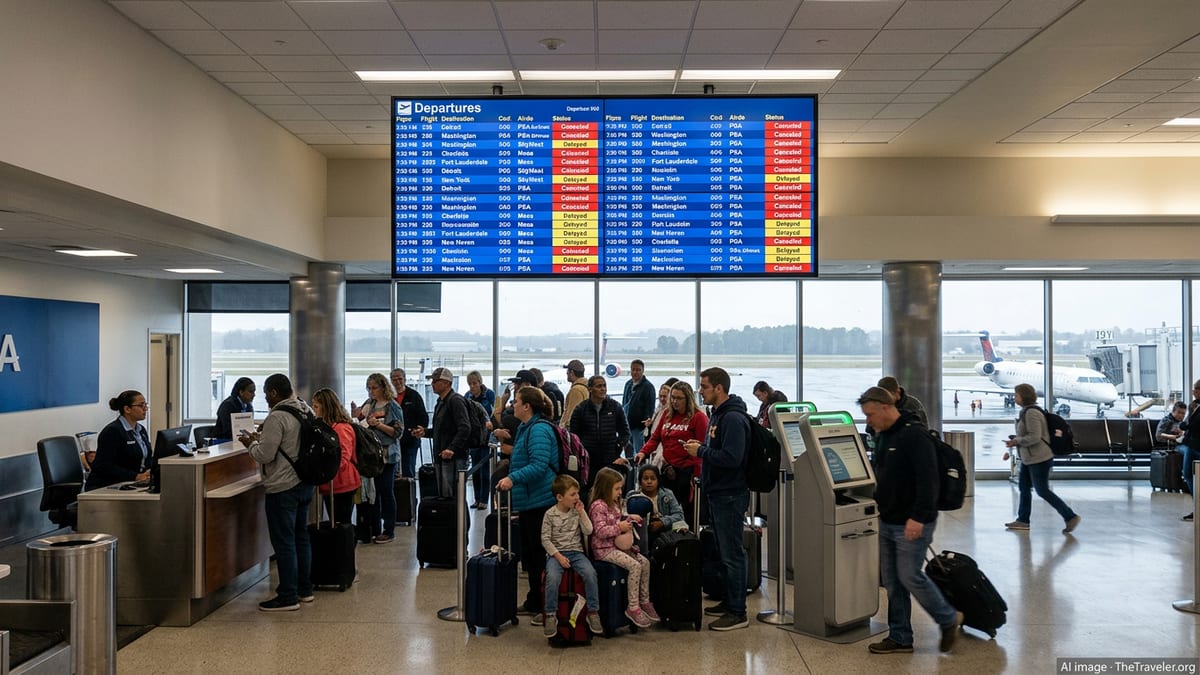
Norfolk Passengers Face Fresh Wave of Disruptions
The latest disruption unfolded as the broader U.S. air network continued to struggle with a mix of weather issues and congestion at major hubs, leaving smaller regional airports particularly vulnerable. At Norfolk, the five cancellations were concentrated among flights operated by PSA Airlines, SkyWest and Mesa, which run many of the airport’s connections under the American and United regional brands.
Throughout the morning and early afternoon, departure boards at Norfolk showed a patchwork of revised timings, gate changes and creeping delays as knock-on disruption from hubs in the Northeast, Midwest and Florida rippled down the network. While some flights eventually departed with moderate delays, others were scrubbed altogether, forcing passengers to scramble for rebooking options on later services or alternative routings through already crowded hubs.
Airport staff reported elevated lines at ticket counters and rebooking desks as travelers sought clarity on whether they would still make evening connections to secondary cities. Families heading out for early spring getaways and business travelers with tight schedules were among those most affected, with some facing overnight stays after missing onward flights from Detroit or Washington.
Though operations at Norfolk remained functional, the cumulative effect of cancellations and delays created visible strain. Gate areas for key regional departures stayed crowded well past scheduled boarding times, and announcements urging passengers to stay close to their gate underscored how quickly departure times were shifting.
Key Routes to Detroit, Washington and Charlotte Hit Hardest
The brunt of the disruption fell on Norfolk’s high-demand regional corridors that feed into major domestic hubs. Morning and midday departures to Detroit and Washington experienced a mix of outright cancellations and extended delays, undermining carefully timed connections onto cross-country and international services. Travelers who had planned to connect in Detroit onto flights to the Upper Midwest and West Coast were particularly exposed to missed onward departures.
Services to the Washington area, long a critical link for Hampton Roads travelers needing access to the nation’s capital and onward global networks, also saw schedule volatility. Some passengers reported last-minute rebookings via alternate hubs such as Charlotte, turning what should have been a short hop into multi-leg journeys with tight connection windows.
Charlotte, a key node for regional feeders operated by PSA and its partners, was another pressure point. Even modest disruption on Norfolk–Charlotte rotations was enough to cause cascading issues for passengers connecting onward to cities across the Southeast and Midwest. Delays of 60 to 90 minutes on these regional segments quickly translated into missed evening departures from Charlotte, with rebooking inventory tightening as the day went on.
While airlines worked to consolidate lightly booked flights and upgauge certain departures where possible, capacity on core routes remained constrained. For many Norfolk-originating travelers, the most realistic options involved traveling a day later or accepting more complex itineraries with additional stops.
Florida and New England Links Also Affected
Beyond the big hub feeders, Norfolk’s leisure-heavy links to Florida and the Northeast were not spared. Flights touching Fort Lauderdale, a major gateway for cruises and South Florida vacations, saw delays that stretched well beyond their original departure slots. Travelers aiming to join cruise departures or time-sensitive events reported particular anxiety as every extra minute on the ground reduced their buffers at the other end.
Seasonal and niche routes, including services connecting Norfolk with New Haven and other New England points, were also swept up in the turbulence. On thinly served city pairs, a single cancellation can effectively wipe out same-day options, and that was the case for some passengers who suddenly found there was no alternative nonstop available until the following day.
These disruptions underscore how reliant regional airports like Norfolk are on a relatively small number of daily flights to key leisure and secondary business destinations. When carriers such as SkyWest and Mesa adjust schedules or cancel rotations, there are often few backup options for travelers who prefer or require nonstop links to specific cities.
As the day progressed, some Florida-bound and Northeast-bound departures did manage to depart close to their revised times, but many passengers arrived several hours later than planned. In a few cases, travelers opted to abandon air plans altogether in favor of driving to nearby hubs in hopes of securing more reliable connections.
Regional Carriers Grapple With Systemwide Strain
The difficulties at Norfolk are the latest illustration of how sensitive regional operators like PSA Airlines, SkyWest and Mesa are to wider system pressures. These carriers operate under the banners of larger airlines but often face sharper operational limits, from crew availability to spare aircraft, when weather or congestion hits multiple hubs at once.
When storms and traffic-management programs slow operations at major airports such as Chicago, Washington or key Florida cities, regional flights often bear the brunt of schedule trimming. Smaller jets serving shorter routes can be easier for airlines to cancel or consolidate than heavily booked mainline services, even though the impact on individual communities can be significant.
Industry observers note that many regional flights function as the first and last links in long, multi-leg journeys. A cancelled morning departure from Norfolk operated by a regional partner can sever a chain of onward connections spanning several time zones. Once that first link breaks, it can be difficult for passengers to reconstruct their itineraries without losing full days of travel time.
For PSA, SkyWest and Mesa, the Norfolk disruptions add to a series of recent challenges across the U.S. network, as the carriers navigate high demand with tight resources. Although the number of cancelled flights at Norfolk remained modest in absolute terms, the concentration on popular routes and departure banks amplified their impact.
What Travelers Through Norfolk Should Do Next
For passengers scheduled to fly through Norfolk over the coming days, airlines and airport representatives are urging proactive steps. The most immediate advice is to monitor flight status frequently via airline apps and notifications, as departure times and gate assignments can change with little notice when upstream hubs are under strain.
Travel experts also recommend building extra time into itineraries that rely on regional connectors to hubs like Detroit, Washington or Charlotte. Where possible, choosing earlier departures can provide more options for same-day reaccommodation if the first leg is delayed or cancelled. Travelers with hard deadlines, such as cruise departures or major events in South Florida or New England, may wish to consider backup plans in case their initial nonstop from Norfolk is disrupted.
At the airport, passengers are being advised to head directly to their gates after clearing security, rather than lingering in common areas, so they are ready to board quickly if airlines seize short operational windows to dispatch delayed flights. Those who experience long delays or cancellations are encouraged to speak with airline agents about meal vouchers, hotel accommodations and rebooking options, especially when disruptions are not directly tied to severe weather.
With regional carriers under sustained pressure and spring travel demand building, Norfolk International Airport is likely to remain sensitive to shocks in the wider U.S. air network. For now, the message for travelers is clear: stay informed, expect potential schedule changes and allow more flexibility than usual when planning trips through this key Virginia gateway.