

More news on this day
Singapore’s role as a key aviation hub is under fresh strain as flight cancellations by TransNusa, Singapore Airlines and Jetstar ripple across the region, disrupting journeys between Singapore, Jakarta, New York, Melbourne and several other major cities.
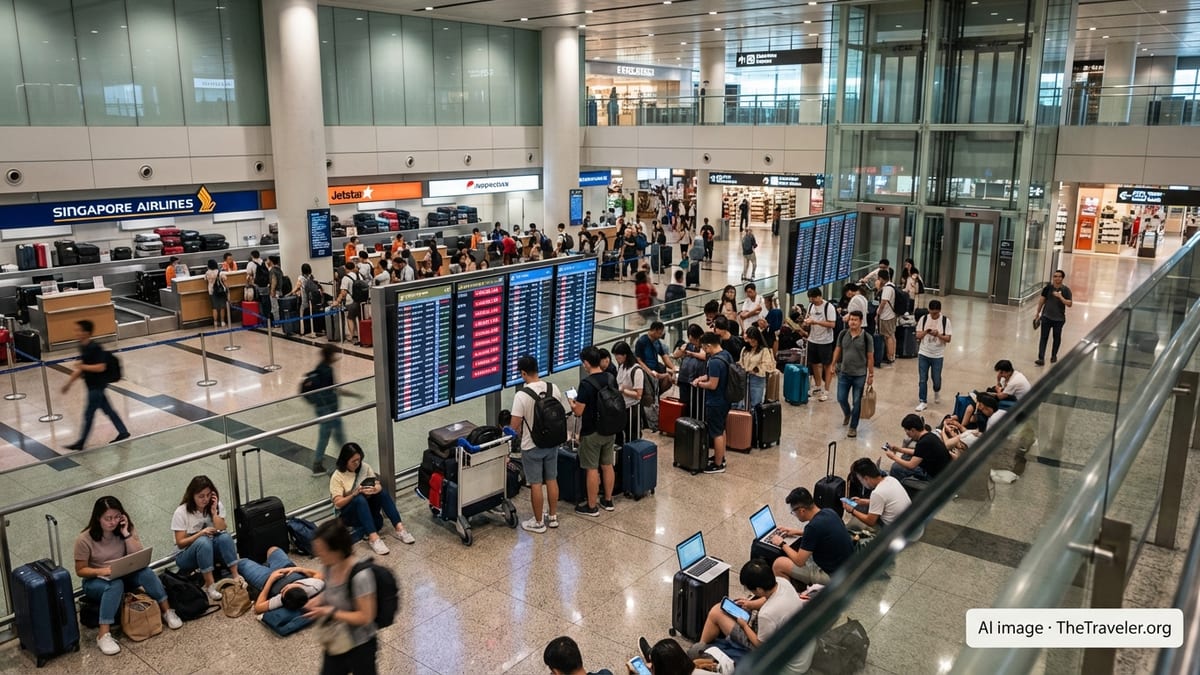
Four High-Profile Cancellations Trigger Wider Travel Turbulence
Air travel across Singapore saw fresh disruption this weekend as at least four flights operated by TransNusa, Singapore Airlines and Jetstar were cancelled, affecting key regional and long-haul routes. While the cancellations represent only a fraction of overall movements at Changi Airport, they come at a time of heightened sensitivity among travelers already grappling with weather-related and operational delays around the region.
Two of the cancellations involved regional services linking Singapore with Jakarta and other Southeast Asian gateways, including a TransNusa service between Jakarta’s Soekarno Hatta International Airport and Singapore Changi that was pulled from the schedule on short notice. Another two cancellations hit longer-haul routes, including flights on Singapore Airlines’ New York services and Jetstar’s Australia links, amplifying the impact on business and leisure travelers with tight onward connections.
Although airlines routinely adjust schedules for a mix of commercial and safety reasons, the clustering of disruptions among three different carriers on the same day underscored how vulnerable interconnected hub networks can be. For passengers flying through Singapore, the result was a familiar pattern of rebookings, missed meetings and last-minute hotel stays.
Airlines have stressed that safety remains paramount and that affected customers are being re-accommodated or refunded. But for many travelers, the cancellations reinforced a perception that reliability in global air travel remains fragile despite traffic volumes returning close to pre-pandemic levels.
Singapore Airlines Cuts New York Services Amid Super Storm in US Northeast
The most far-reaching cancellations involved Singapore Airlines’ flagship routes to New York, which have been heavily disrupted by a powerful winter storm sweeping across the northeastern United States. A so-called “super bomb” blizzard has prompted widespread warnings along the US East Coast, grounding thousands of flights and forcing Singapore’s national carrier to suspend multiple services between Singapore, Frankfurt and New York.
Among the affected services were ultra-long-haul nonstops between Singapore and New York’s John F. Kennedy and Newark Liberty airports, as well as connecting flights via Frankfurt. Over several days, Singapore Airlines cancelled a series of SQ21 and SQ22 services on the Newark route, along with SQ23, SQ24, SQ25 and SQ26 flights on the JFK and Frankfurt sectors, citing the severe weather and safety considerations for passengers and crews.
For travelers who rely on these nonstop flights as a premium, time-saving option between Southeast Asia and the US financial capital, the cancellations were particularly disruptive. Many were forced to re-route through alternative hubs in Europe or the Middle East, with longer journey times and limited availability in premium cabins. Passengers already in New York reported scrambling to secure hotel rooms as the storm intensified and onward connections evaporated.
Singapore Airlines said it is proactively contacting affected customers and offering rebooking onto the next available services or full refunds of the unused portions of their tickets. The carrier has advised passengers bound for the United States to check the latest flight status before heading to the airport and to allow additional time for potential disruption as the weather system moves through the region.
TransNusa Jakarta–Singapore Cancellation Highlights Regional Knock-On Effects
Closer to home, Indonesian carrier TransNusa added to the turbulence with the cancellation of at least one scheduled service between Jakarta and Singapore. Flight-tracking data showed that flight 8B157, due to operate from Jakarta’s Soekarno Hatta International Airport to Singapore Changi, was scrubbed, prompting fresh headaches for passengers traveling between the two major Southeast Asian capitals.
While the Jakarta–Singapore corridor is served by multiple airlines, the short-notice cancellation left some travelers with limited alternatives during already busy travel days. Many passengers use the route not only for point-to-point travel but also as a feeder to long-haul departures from Changi, meaning missed connections can cascade into multi-day delays for those with tight itineraries onward to Europe, North America or Australia.
TransNusa, which has been expanding its presence on niche regional routes and tourism-focused services, has promoted the Jakarta–Singapore link as part of its broader connectivity strategy. The latest disruption will likely sharpen scrutiny of regional carriers’ operational resilience at a time when demand has surged back but margins remain thin and aircraft utilization is high.
Travel agents in both Jakarta and Singapore reported a spike in urgent rebooking requests, with some customers opting to reroute via other Indonesian or Malaysian airports when direct seats were unavailable. For budget-conscious travelers, the shift often meant higher last-minute fares or overnight stopovers that added unexpected costs to what was intended as a straightforward short-haul trip.
Jetstar Passengers to and from Melbourne Face Schedule Shifts
Adding to the pressure on Changi’s operations, Jetstar customers on routes linking Singapore with Australia also faced disruptions. At least one Jetstar service connecting Singapore and Melbourne was cancelled, affecting travelers heading to and from one of the most popular long-haul markets out of Singapore.
Jetstar, which has been reconfiguring its Singapore footprint following the closure of Singapore-based affiliate Jetstar Asia and the move of its operations between terminals at Changi, has had to juggle network and fleet adjustments ahead of the busy northern summer. While the carrier has continued to prioritize core routes such as Melbourne, Sydney and Perth, schedule changes and occasional cancellations have become more visible as it fine-tunes its post-restructuring operations.
Passengers on the latest cancelled flights reported being offered re-accommodation on later services or on alternative routings via other Australian cities, depending on seat availability. Those carrying separate tickets on non-partner airlines, however, faced a more complex journey as missed self-managed connections were generally not protected.
The cancellations serve as a reminder that low-cost and hybrid carriers, which often run tight schedules to maximize aircraft utilization, can be particularly exposed when weather, air-traffic congestion or technical issues arise. With aircraft availability constrained and turnaround times short, a single disruption can quickly ripple through the day’s operations, especially on longer routes such as Singapore–Melbourne.
Changi Hub Feels the Strain Amid Regional Delays and Cancellations
The latest round of cancellation headlines comes as Singapore Changi Airport is already grappling with a broader pattern of delays and schedule adjustments across Asia. Data from regional aviation trackers over the past 48 hours show hundreds of delayed flights and dozens of cancellations at major airports including Jakarta, Kuala Lumpur, Bangkok and Manila, with Singapore also seeing a notable number of delayed departures and arrivals.
While the causes vary from airport to airport, a combination of weather disruptions, air-traffic congestion, tight turnaround schedules and lingering staffing challenges have contributed to what some industry observers describe as a “patchwork” of reliability issues. For Changi, which prides itself on operational efficiency and smooth transfers, the mounting irregularities present both an image challenge and a logistical one.
For transit passengers, the hub’s intricate network means that a cancellation on a single sector can jeopardize onward journeys to destinations as far-flung as Europe, North Asia and North America. Airlines are responding by building slightly longer connection windows into bookings where possible and urging customers to check in online early and monitor their flights via mobile apps.
Airport authorities and carriers have emphasized that they are working closely together to manage peaks, allocate gates and manage passenger flows when last-minute schedule changes occur. On the terminal floors, this has translated into longer queues at transfer counters, more frequent gate changes and, for some unlucky travelers, extended waits in boarding lounges as aircraft reposition or crews are reassigned.
Passengers Confront a Familiar Playbook of Rebookings and Refunds
For those caught up in the cancellations by TransNusa, Singapore Airlines and Jetstar, the immediate priority has been securing a new way to reach their destination. Airlines have been applying a familiar disruption-management playbook that includes fee waivers, complimentary rebookings within a specified time window and, where schedules allow, re-accommodation on partner carriers.
Singapore Airlines has said affected customers on the New York routes can opt for alternative flights later in the week or, if travel plans are no longer viable, apply for a refund of unused ticket segments. Travelers who booked directly with the airline have been encouraged to use online assistance channels, while those who purchased tickets via travel agents have been directed back to their point of sale to process changes.
TransNusa and Jetstar have likewise indicated that passengers impacted by the Jakarta–Singapore and Singapore–Melbourne cancellations will be offered rebooking options or refunds in line with their respective conditions of carriage. However, some customers reported difficulty reaching call centers during peak periods, highlighting the importance of digital self-service tools and proactive communication when multiple carriers are affected at once.
Consumer advocates note that while full-service airlines typically offer more generous protection, even low-cost carriers are increasingly formalizing their policies for significant disruptions, especially where regulatory frameworks mandate minimum assistance. Still, travelers are urged to review fare conditions carefully before booking and to consider travel insurance that explicitly covers missed connections and weather-related cancellations.
What Travelers Through Singapore Should Do Now
In light of the latest cancellations touching Jakarta, New York, Melbourne and other nodes in the Singapore network, travel planners are urging passengers to build additional flexibility into itineraries over the coming days. For those transiting through Changi on long-haul journeys, allowing longer connection times, especially when relying on separate tickets or different alliances, can reduce the risk of being stranded mid-journey.
Experts also recommend that travelers keep contact details up to date in airline booking systems to ensure they receive real-time notifications of schedule changes, and that they download carrier mobile apps where available. In many recent disruptions, rebooking options have been made available digitally before passengers reach airport counters, giving those who act quickly the widest choice of alternative flights.
For departures to weather-prone destinations such as New York during the current blizzard, airlines are advising customers to monitor local forecasts as well as flight-status pages and to avoid scheduling critical commitments within 24 hours of their planned arrival. Flexible or changeable tickets, while more expensive upfront, can offer meaningful peace of mind when storms or operational issues hit.
At the same time, industry analysts stress that the vast majority of flights into and out of Singapore continue to operate as scheduled. For now, the cancellations at TransNusa, Singapore Airlines and Jetstar remain isolated events in an otherwise resilient system, albeit ones that underscore how quickly conditions can change across an interconnected global network.