

More news on this day
Travelers connecting through Doha on Monday faced fresh disruption as 11 flights operated by Gulf Air, Malaysia Airlines, Virgin Australia and Qatar Airways were reportedly cancelled, with additional delays rippling across routes linking Hamad International Airport to Kuala Lumpur, Bahrain, Cairo, Miami and other major hubs.
Get the latest news straight to your inbox!
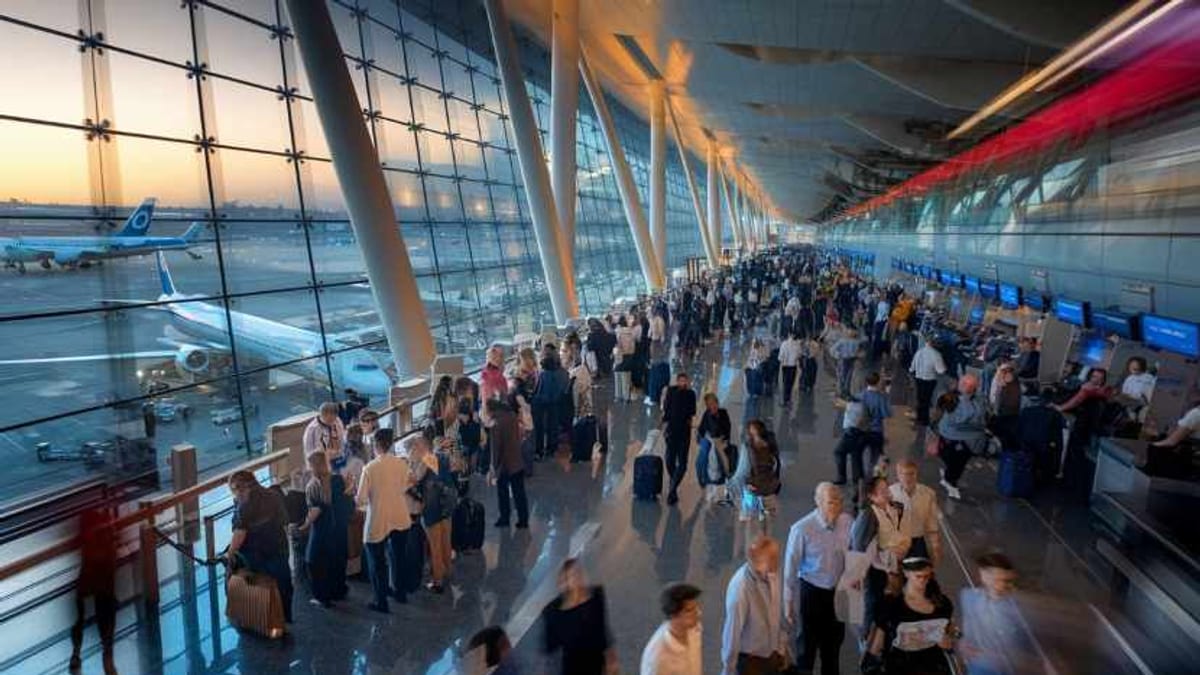
Image by Global Travel Alerts, Advisories, International Travel Alerts
Cancellation Wave Adds Strain to Hamad International
The latest round of disruption at Hamad International Airport comes at a sensitive moment for regional aviation, with flight schedules already under pressure from recent airspace restrictions and operational constraints across parts of West Asia. Publicly available tracking data and schedule advisories indicate that a cluster of 11 cancellations in a single operational window affected services tied to Doha, compounding delays for onward connections.
Qatar Airways, which uses Doha as its primary global hub, has been operating on an adjusted schedule in recent weeks, with industry coverage noting that the carrier has already removed thousands of flights from its network since late February as it responds to airspace closures and rerouting requirements. This backdrop has made the hub more vulnerable to knock-on effects whenever additional cancellations occur.
Passengers transiting through Hamad International reported altered departure times, last-minute rebookings and extended layovers as ground handlers and airline operations teams worked to reassign travelers to later services or alternative routings. The resulting congestion in transfer areas and airline service centers added to the sense of uncertainty for those attempting to reach destinations across Asia, Europe, Australia and North America.
While the airport itself remains open and handling traffic, the pattern of targeted cancellations and rolling delays underscores how even a limited number of flights removed from the schedule can significantly impact a tightly banked hub system where many journeys depend on precise connection windows.
Regional Turbulence Hits Gulf and Asia-Pacific Carriers
The disruption has not been confined to Qatar’s flag carrier. Gulf Air, Malaysia Airlines and Virgin Australia each saw flights affected in the latest episode, reflecting how operational challenges in Doha can quickly spread through a broader alliance and codeshare network. Gulf Air’s links between Bahrain and Doha, for example, form part of a dense corridor of short-haul connections that feed long-haul services further afield.
Published aviation analyses over recent weeks have described how Gulf-based and Asia-Pacific carriers have had to repeatedly redraw their route maps following a series of airspace closures and military tensions across parts of the Middle East. Qatar Airways has been among the most exposed due to its reliance on overflying some of the most restricted corridors, while other airlines such as Gulf Air and Malaysia Airlines have been adjusting schedules, swapping aircraft types and consolidating frequencies to maintain connectivity where possible.
Virgin Australia’s involvement in the latest cancellations reflects the global reach of these interruptions. Although the airline does not use Doha as a primary hub, codeshare arrangements and interline agreements with long-haul partners mean that disruptions at Hamad International can affect itineraries that begin or end in Australian cities. Passengers on multi-leg journeys connecting via the Gulf often discover that a single cancelled Doha segment can unravel an entire long-distance itinerary.
Industry commentators note that airlines are increasingly juggling aircraft positioning challenges, crew duty-time limits and complex rerouting around closed or congested airspace. In that environment, selective cancellations are sometimes used as a pressure-release valve, with carriers prioritizing routes that carry the highest volume of connecting passengers or serve critical markets.
Long-Haul Routes to Kuala Lumpur, Cairo and Miami Disrupted
Among the routes most visibly affected by the latest cancellations are services connecting Doha with Kuala Lumpur, Cairo and Miami, each of which plays a distinct role in the global network centered on Hamad International. Kuala Lumpur is a key Southeast Asian gateway, Cairo is an important bridge between the Middle East and North Africa, and Miami serves as a major entry point to the Americas.
Previously published schedule filings and aviation data have highlighted that flights on the Doha to Kuala Lumpur sector were already operating at reduced frequency compared with pre-crisis norms, with some days operating as a single daily service. The loss or delay of one of those flights can leave limited immediate alternatives for passengers, increasing reliance on rebooking via other Asian hubs or extended stopovers in Doha.
Services touching Cairo and Bahrain are particularly sensitive within the current regional context, as Egypt and other neighboring states have become vital corridors for rerouted traffic between Europe and Asia. Analysts have observed that even small interruptions on these links can tighten capacity on parallel routes, raising fares and limiting last-minute options for travelers attempting to bypass affected airspace.
On the transatlantic side, Miami features in Qatar Airways’ long-haul network as a link between Doha and the southeastern United States, with connections onward into Latin America. When a Doha–Miami rotation is cancelled or heavily delayed, travelers may have to be rebooked via European hubs or alternate North American gateways, potentially adding hours or even a full day to their journeys.
Knock-On Delays and a Mounting Passenger Backlog
Even when the number of outright cancellations remains relatively contained, the secondary impact on delays can be considerable. Aircraft scheduled for one route often operate multiple legs in a single day, and the removal of a flight from the roster can disrupt aircraft and crew positioning for subsequent services. This can contribute to rolling delays that persist well beyond the initial cancellation window.
Reports from flight-tracking services and traveler accounts on social platforms indicate that many of Monday’s disrupted flights were accompanied by revised departure times for related services later in the day. Some passengers described being moved to overnight departures or next-day flights, an outcome that adds pressure to hotel availability and raises questions about additional costs for affected travelers.
Airlines active at Hamad International have been using waivers and flexible rebooking policies to manage the situation, with several carriers in the region previously announcing broader refund and change options for journeys scheduled during March and April. Public advisories emphasize that passengers with non-essential travel may wish to consider deferring trips or routing via airports less exposed to current airspace and scheduling constraints.
The operational backlog also has implications for cargo flows. Qatar Airways and partner airlines move significant volumes of freight in the bellies of passenger aircraft, and each cancelled sector represents lost capacity for goods moving between Asia, the Gulf and the Americas. Logistics specialists have warned that ongoing unpredictability in passenger schedules may translate into higher shipping costs and longer transit times for certain commodities.
Travelers Urged to Monitor Schedules as Situation Evolves
With regional aviation still adapting to fast-changing geopolitical and operational realities, industry observers suggest that further schedule adjustments at Hamad International are likely in the short term. Airline advisories and published travel guidance repeatedly stress the importance of closely monitoring flight status, particularly for itineraries involving tight connections through Doha.
Passengers booked on services operated by Qatar Airways, Gulf Air, Malaysia Airlines or Virgin Australia are being encouraged in public guidance to check their bookings frequently via official apps, airline websites or departure boards, and to ensure that contact details are up to date so that any schedule changes or cancellations can be communicated swiftly.
Travel agents and online booking platforms report heightened demand for backup options routed through alternative hubs such as Dubai, Abu Dhabi, Istanbul and key European gateways. While these airports are also facing increased traffic and occasional disruptions, they currently provide some of the main workarounds for travelers seeking to avoid potential bottlenecks in Doha.
For now, the cluster of 11 cancellations and associated delays at Hamad International serves as a reminder of how fragile long-haul connectivity can be when a major transit hub is exposed to overlapping operational and geopolitical pressures. As airlines continue to recalibrate networks and adjust capacity, passengers planning trips through Doha in the coming days are likely to face a travel environment where flexibility and real-time information are more important than ever.