

More news on this day
Air passengers across Asia faced significant disruption today as 63 flights were canceled and 854 delayed at six key airports in mainland China and Indonesia, stranding travelers and triggering knock-on delays across regional networks.
Get the latest news straight to your inbox!
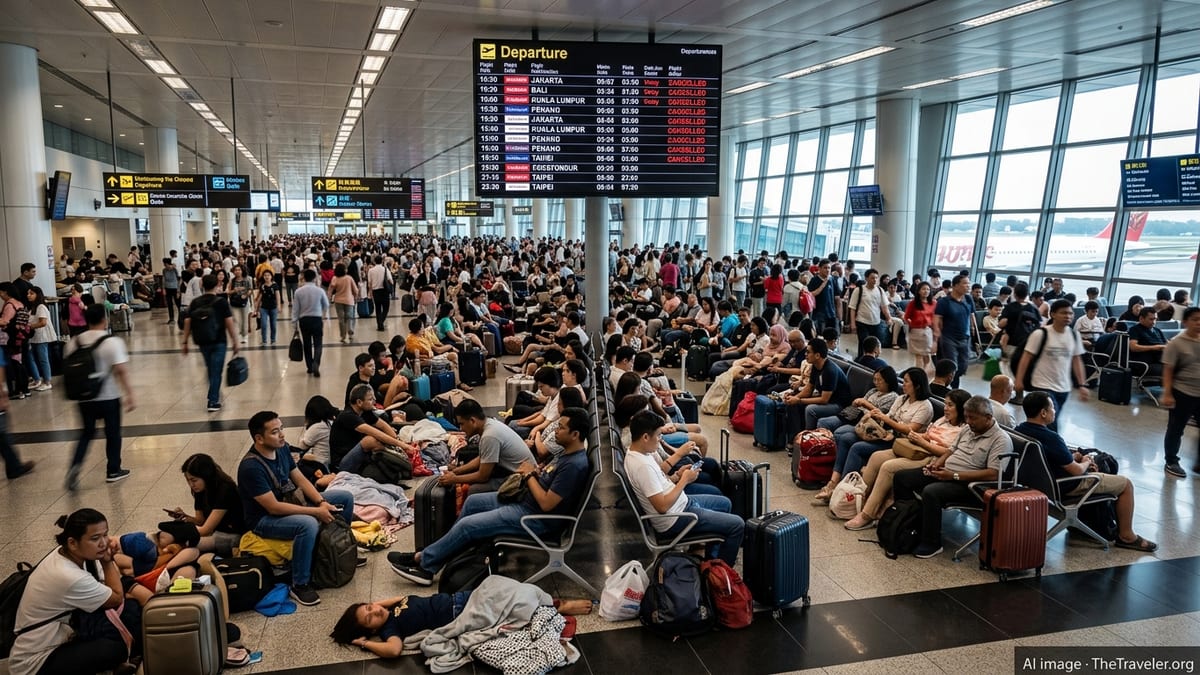
Major Asian Hubs Struggle With Cascading Disruptions
The latest disruption centers on Changsha Huanghua, Shanghai Hongqiao, Shenzhen Bao’an, Guangzhou Baiyun, Tianjin Binhai and Jakarta Soekarno Hatta international airports, all of which play critical roles in short and medium haul connectivity across East and Southeast Asia. Publicly available flight tracking data and industry reports indicate that a combined 63 cancellations and 854 delays were recorded at these hubs within a relatively short reporting window, concentrating stress on already busy schedules.
These airports link major business and population centers in China with regional capitals in Southeast Asia. As a result, even a few dozen cancellations can quickly radiate outward, affecting connections to cities such as Singapore, Bangkok and Kuala Lumpur, and onward links into Japan, South Korea and Australia. The pattern observed today reflects how sensitive regional air travel remains to localized disruption at a small number of high volume hubs.
Published coverage of the situation notes that some of the affected flights involve trunk routes between coastal Chinese cities and inland centers such as Changsha and Tianjin, as well as cross border services to and from Jakarta. With aircraft and crews tied up on the ground, delays at one end of a route are feeding into schedule challenges several sectors later, a familiar scenario on dense intra Asian networks.
While the number of outright cancellations remains below the levels seen during major typhoon events or large scale technical outages, the combination of numerous delays and a geographically dispersed set of airports has made recovery more complex for airlines attempting to reposition aircraft and accommodate passengers.
Weather, Congestion and Operational Strain Combine
Recent days have brought bouts of severe weather across parts of southern China, including thunderstorms, hail and low visibility conditions around Guangzhou and Shenzhen. Regional media and aviation bulletins describe how these conditions have periodically slowed movements at Guangzhou Baiyun and Shenzhen Bao’an, forcing temporary ground stops and approach restrictions that compress schedules and leave little margin for on time performance.
Jakarta Soekarno Hatta has also experienced intermittent convective weather patterns, with heavy rainfall and reduced visibility contributing to flow control measures. When combined with the already high utilization of runways and taxiways at Soekarno Hatta, even short weather related slowdowns can produce queues of departing and arriving aircraft, which in turn increase turnaround times and push departure slots later into the day.
Operational data published over recent months for Chinese hubs such as Shanghai Hongqiao, Guangzhou Baiyun, Shenzhen Bao’an and Tianjin Binhai show that these airports regularly operate close to capacity during peak hours. Aviation research pointing to the sensitivity of these hubs to small disruptions suggests that any blend of weather, airspace restrictions or technical issues can quickly translate into multiple minor delays that accumulate into a broader wave of late running services.
Unlike large scale, single cause events, the current pattern appears to be a product of overlapping pressures: unstable weather patterns in parts of southern China and Indonesia, tight scheduling of aircraft and crews, and the continuing rebound in passenger traffic across domestic and regional markets. Together, these factors have produced a fragile operating environment in which small shocks can generate disproportionate impacts.
Passengers Face Long Queues and Missed Connections
For passengers caught in the disruption, the practical consequences have included lengthy queues at check in counters and transfer desks, extended waits on board aircraft, and a scramble to secure alternative itineraries. Travel and aviation outlets report that some travelers at Guangzhou Baiyun and Shenzhen Bao’an have faced multiple hour delays, with onward connections through Shanghai, Beijing or Southeast Asian hubs missed as a result.
At Changsha Huanghua and Tianjin Binhai, which act as important secondary hubs within China’s domestic network, canceled flights have left some travelers with limited same day options, particularly on less frequent routes. Where services are heavily booked due to school holidays or weekend travel peaks, rebooking onto later departures has proven challenging, pushing some passengers to accept refunds and rearrange trips entirely.
In Jakarta, disruption at Soekarno Hatta has affected both domestic travelers heading to islands such as Bali and Sumatra and international passengers using Jakarta as a gateway between Southeast Asia and Australia or the Middle East. Social media posts and local reports describe crowds around airline customer service points and baggage carousels, reflecting the ripple effect that even a moderate cancellation tally can have at such a large hub.
Airlines are generally encouraging passengers to monitor their flight status closely and to use digital channels for rebooking where possible. However, when large numbers of passengers seek changes at the same time, apps and call centers can quickly become congested, leaving many to rely on in person assistance at already busy terminals.
Knock On Effects for Regional Schedules
The concentration of delays and cancellations at these six airports is also affecting operations well beyond China and Indonesia. Aircraft scheduled to operate multi leg rotations across Asia are arriving late into subsequent departure points, compressing turnaround times and increasing the risk of further delays on later sectors.
For example, flights originating at Shenzhen Bao’an or Guangzhou Baiyun may feed into routes serving Japan, South Korea or Southeast Asian capitals after only short ground times. When inbound services arrive significantly behind schedule, airlines face a choice between reducing turnaround activities to preserve departure slots or accepting later departures that keep crews and passengers on the ground for longer than planned.
Aviation analytics covering on time performance in the region indicate that such rolling delays can persist for several days after an initial shock, especially when aircraft utilization is high and spare capacity is limited. With many Asian carriers still fine tuning schedules following the post pandemic recovery in demand, there is little slack in the system to absorb repeated weather or congestion related disruptions.
Regional tourism markets are particularly exposed to this kind of operational volatility. Delays at Chinese and Indonesian hubs can unsettle carefully timed itineraries connecting beach destinations, city breaks and business travel, adding uncertainty for both leisure and corporate travelers who rely on reliable short haul links across the region.
What Travelers Can Expect in the Coming Days
Industry observers expect airports and airlines to work through the immediate backlog within the next one to two operating days, provided weather conditions stabilize and no additional technical or airspace issues emerge. However, the underlying pressures on capacity at major Asian hubs mean that periods of disruption are likely to recur, especially during seasonal peaks and adverse weather windows.
Publicly available guidance from airports and carriers emphasizes the importance for passengers of checking flight status frequently before departing for the airport, allowing additional time for check in and security, and being prepared for possible gate or schedule changes at short notice. Travelers with tight connections, particularly on separate tickets, may face elevated risk when transiting heavily affected hubs in the short term.
The latest round of cancellations and delays also underscores the growing relevance of travel insurance products that cover missed connections and extended delays, as well as the value of flexible ticket options that permit changes without high penalties. Many travelers booking complex, multi stop journeys across Asia are increasingly weighing these factors alongside price and schedule when choosing itineraries.
For now, the situation at Changsha Huanghua, Shanghai Hongqiao, Shenzhen Bao’an, Guangzhou Baiyun, Tianjin Binhai and Jakarta Soekarno Hatta serves as a reminder that, despite the strong recovery in demand, the regional air travel system remains vulnerable to compounded shocks, and that both operators and passengers need to remain adaptable when conditions deteriorate unexpectedly.