

More news on this day
Prince Mohammad Bin Abdulaziz International Airport in Medina faced a fresh wave of disruption on Saturday as at least 15 flights operated by Qatar Airways, flydubai, IndiGo, Emirates and Gulf Air were cancelled, severing key links to Dubai, Doha, Mumbai, Cairo and other major cities across the Middle East and South Asia.
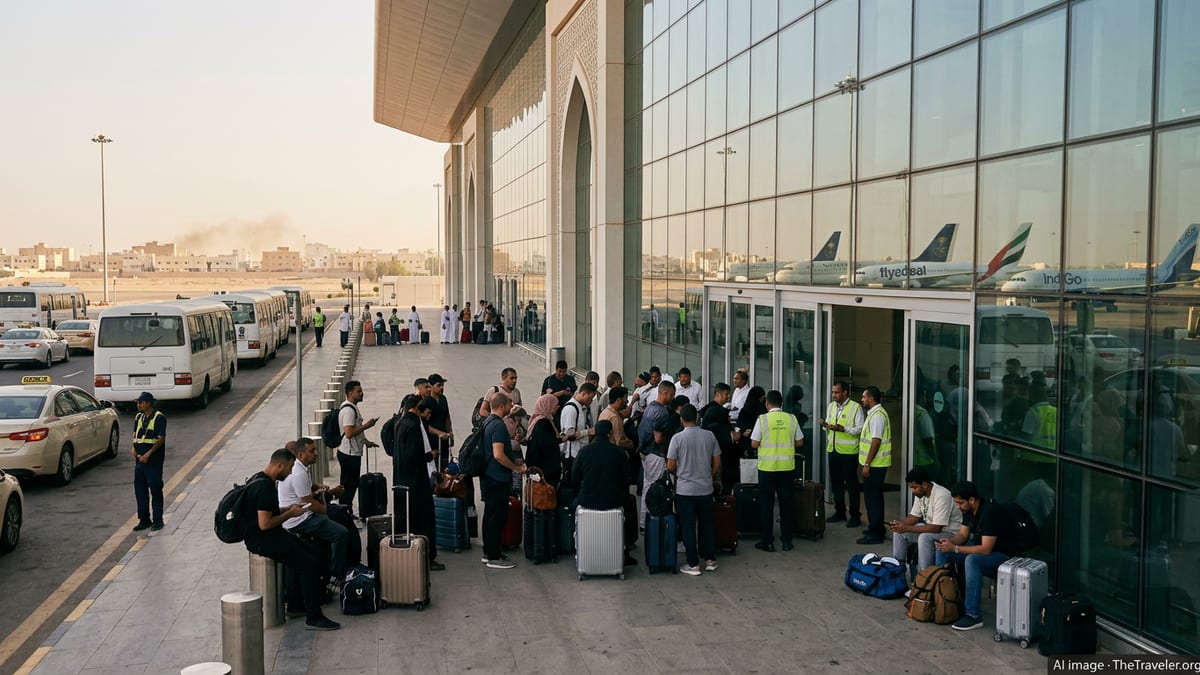
Ripple Effects of Regional Airspace Turmoil
The latest cancellations in Medina come amid ongoing regional airspace restrictions triggered by the wider Middle East conflict, which has already forced Gulf and Asian carriers to slash schedules, reroute long haul services and mount limited relief operations. While some hubs such as Dubai and Abu Dhabi have begun to see a gradual restoration of flights, airport data and airline advisories indicate that services to and from Medina remain fragile and subject to last minute changes.
At Prince Mohammad Bin Abdulaziz International Airport, departures and arrivals involving major Gulf connectors were among those hit, with Saudi authorities prioritising safety assessments on corridors linking the kingdom to neighboring airspaces. Travelers booked on Qatar Airways services to Doha, Emirates and flydubai flights to Dubai, IndiGo rotations to Indian metros including Mumbai, and Gulf Air links toward Bahrain and beyond reported receiving overnight notifications that their journeys had been scrubbed or shifted to undefined future dates.
Airport officials have not disclosed a full breakdown of the Medina cancellations, but industry analysts note that even a cluster of 15 flights in a single day can translate into several thousand disrupted passengers when taking into account connecting itineraries and onward segments. With many travelers relying on Medina as a seasonal gateway for religious trips and family visits, the impact is magnified across regional networks already operating below normal capacity.
The affected airlines have advised passengers not to proceed to the airport without confirmed rebookings, a policy that has become standard practice this week as carriers attempt to avoid large crowds in terminal buildings when schedules are volatile. Instead, customers are being directed to manage bookings through apps and call centers, though many report long waits and limited alternative options.
Major Gulf Carriers Forced to Trim Reboot Plans
Saturday’s Medina cancellations arrive just as several Gulf airlines were attempting to slowly rebuild their networks after days of near total shutdowns. Emirates and flydubai have publicised the gradual return of select services from Dubai, while Qatar Airways, still constrained by Qatari airspace limitations, has pivoted toward tightly controlled repatriation and relief flights and has kept much of its regular schedule on hold.
For passengers in Medina, that uneven recovery has translated into a patchwork of possibilities. Some Emirates flights connecting through Dubai have reappeared on global trackers, yet rotations linking Medina to key Asian and European destinations remain absent or heavily reduced. Flydubai, which usually plays an important role in short haul traffic between Saudi Arabia and the United Arab Emirates, has prioritised core trunk routes as it rebuilds its timetable, leaving secondary cities like Medina exposed to last minute consolidation.
IndiGo, India’s largest carrier, has also been forced to juggle its Middle East portfolio. The airline has announced widespread cancellations across its Gulf network in recent days while simultaneously operating limited special services on select sectors. That dual strategy has allowed IndiGo to move stranded passengers out of certain high demand locations, but it has also meant that standard commercial links between Medina and cities such as Mumbai are frequently withdrawn with little advance warning.
Gulf Air, which uses Bahrain as a connecting hub for traffic from Saudi Arabia to Europe and Asia, is similarly operating under tight constraints. The carrier has trimmed its schedule and focused on maintaining a skeletal network out of its home base, leaving some feeder routes from Saudi gateways vulnerable to cancellation when airspace conditions change or when aircraft and crew must be redeployed.
Stranded Passengers Face Uncertain Timeframes
Among the most acute consequences of Saturday’s cancellations at Prince Mohammad Bin Abdulaziz International Airport are the hundreds of passengers left in limbo with little clarity on when they will be able to travel. With major hubs such as Doha and parts of UAE airspace only partially open, rebooking options are often limited to long and indirect journeys involving multiple stops, extended layovers or waits of several days.
Travelers attempting to reach Mumbai, Cairo, Istanbul and other onward destinations from Medina have described a patchwork of solutions, from overnight drives to alternative Saudi airports to last minute purchases of one way tickets on remaining available routes. For many families and workers, the added costs of accommodation, ground transport and reissued tickets are compounding the stress of being far from home or work obligations.
The situation is particularly challenging for pilgrims and religious visitors who often travel on tightly scheduled itineraries and group bookings. Operators that had planned departures via Medina are now working to secure seats out of Jeddah and Riyadh, but those airports are also under pressure as demand outstrips the gradually returning supply of flights. Industry observers note that while airlines are generally waiving change fees, they are not always able to guarantee near term alternatives.
Airlines have urged patience as they coordinate with civil aviation authorities to secure safe flight corridors and slot allocations. However, with operational decisions frequently being updated hour by hour, many travelers say they feel compelled to monitor airline apps, social media feeds and departure boards almost constantly in case a viable seat becomes available.
Authorities Balance Safety With Connectivity
Saudi aviation officials are attempting to strike a delicate balance between restoring connectivity and maintaining rigorous safety standards amid a volatile regional security environment. While Prince Mohammad Bin Abdulaziz International Airport remains open, authorities have retained the option to suspend individual routes or restrict operations at short notice in response to developments beyond the kingdom’s borders.
Analysts say that Medina’s reliance on external hubs, especially Dubai and Doha, makes it especially vulnerable during periods of regional turmoil. When those hubs reduce capacity or operate under special restrictions, feeder routes like those cancelled on Saturday are often the first to be cut as airlines concentrate aircraft on the most critical long haul services and national priorities.
Within Saudi Arabia, internal air links and alternative gateways such as Jeddah and Riyadh provide some redundancy, but rerouting passengers there requires significant logistical coordination. Ground transport convoys, hotel arrangements and staggered departures must all be synchronised if large groups of stranded travelers are to be moved efficiently without overwhelming terminal infrastructure.
Industry commentators note that the experience of this week is likely to prompt a broader review of contingency planning at Medina and other regional airports. Topics expected to feature in that discussion include clearer communication protocols with airlines, capacity for surge accommodation, and the potential to diversify connectivity so that passengers are less dependent on a small number of vulnerable regional hubs.
What Travelers Through Medina Should Expect Next
With the regional flight picture still evolving, travelers due to pass through Prince Mohammad Bin Abdulaziz International Airport in the coming days should brace for further short notice changes. Airlines have indicated that schedules will remain under constant review, and that additional cancellations or restorations are possible as airspace conditions and operational clearances shift.
Passengers holding tickets on Qatar Airways, flydubai, IndiGo, Emirates and Gulf Air are being advised to confirm their flight status repeatedly before departure, to ensure contact details are up to date in airline systems, and to allow extra time at the airport should check in and security procedures be adjusted to manage irregular operations. Those with critical travel dates, such as medical appointments or fixed work start times, may also wish to discuss alternative routings with carriers or travel agents while limited inventory remains.
Travel experts caution that even as headline hubs highlight progress in restoring services, the recovery at secondary airports such as Medina is likely to lag. Aircraft and crew shortages, coupled with the need to prioritise repatriation and essential travel, mean that full pre disruption schedules are unlikely to return immediately, and that selective cancellations like the 15 flights lost on Saturday could recur.
For now, Medina’s role as a vital religious and regional gateway underscores how interconnected the Middle East’s aviation system has become, and how quickly developments in distant airspace can cascade into local disruptions. Until a more stable operating environment emerges, passengers and airlines alike will be navigating a travel landscape defined by uncertainty, frequent updates and the constant need for contingency plans.