

More news on this day
Passengers across Saudi Arabia, India, the United Arab Emirates, Bahrain and Kuwait are facing another difficult travel weekend as regional carriers Saudia, FlyDubai, Gulf Air and Air Arabia cancel at least 35 flights and delay more than 80, disrupting journeys through major hubs including Riyadh, Dubai, Mumbai and Chennai.
Get the latest news straight to your inbox!
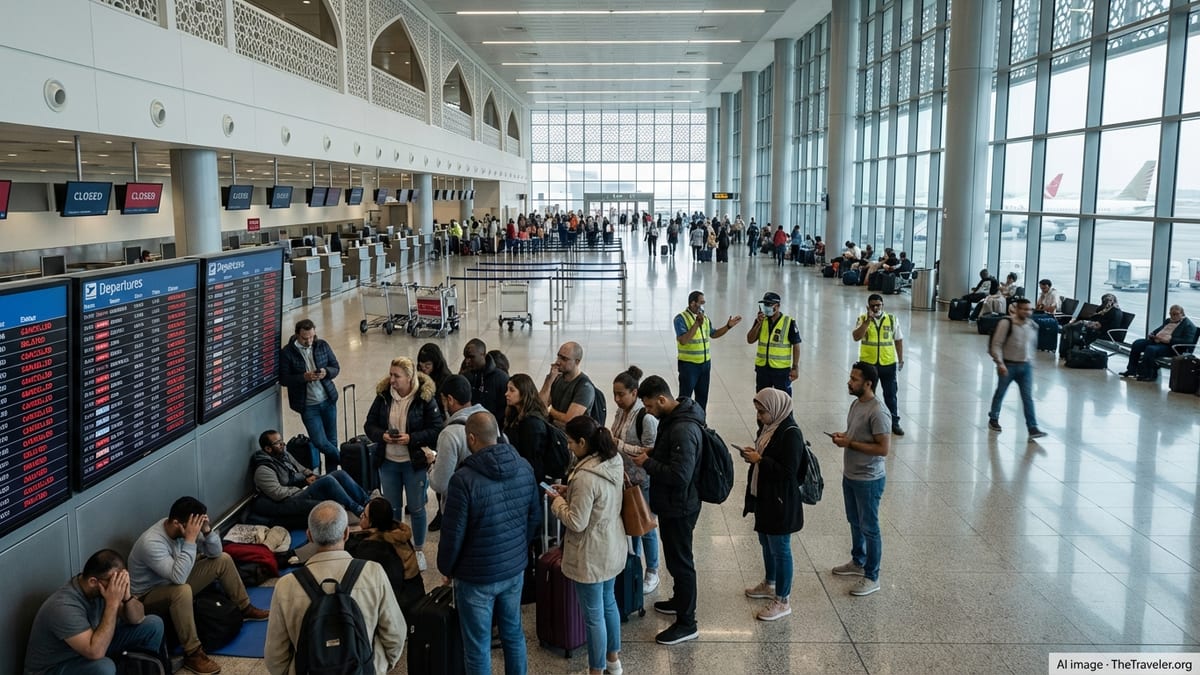
Widespread Disruptions at Key Middle East and Indian Hubs
Published coverage of current airline operations in the Gulf and South Asia indicates that flight schedules remain fragile following weeks of instability in regional airspace and airport operations. The latest wave of cancellations and delays affecting Saudia, FlyDubai, Gulf Air and Air Arabia is rippling through some of the busiest corridors linking the Gulf with Indian metropolitan centers.
Riyadh and Jeddah in Saudi Arabia, Dubai and Sharjah in the UAE, and Manama in Bahrain are seeing a cascade effect as disrupted rotations force airlines to trim schedules or retime services. On the Indian side, Mumbai and Chennai are among the primary gateways feeling the strain, as connections to and through Gulf hubs are reduced or subject to rolling delays.
A tally of current flight-status information and timetable adjustments shows that across this group of four carriers, at least 35 flights have been canceled and a further 83 delayed over a short operational window. The impact stretches beyond the headline cities into secondary routes and feeder services, leaving passengers stranded mid-journey or facing missed onward connections.
Travel tracking platforms and airport operations summaries suggest that disruption levels vary by hub, with some airports handling mainly schedule shuffles while others continue to face outright suspensions on selected routes. The uneven pattern is making it difficult for travelers to predict whether their services will operate as planned.
Operational Factors Behind the Wave of Cancellations
Publicly available information points to a mix of operational and regional factors behind the fresh wave of cancellations and delays. Airlines across the Middle East have been adjusting routings and frequencies in response to airspace restrictions and evolving security assessments, which in turn complicate aircraft and crew positioning.
For Saudia, which relies heavily on Riyadh, Jeddah and Dammam as connecting hubs, even small shifts in allowable routings can cascade into schedule gaps, forcing cancellations on routes to South and Southeast Asia. When aircraft and crews cannot complete rotations on time, subsequent departures, including services to Indian cities such as Mumbai and Chennai, may be retimed or scrubbed.
FlyDubai and Air Arabia, both important low cost players in the UAE market, have been operating with tight utilization patterns designed around quick turnarounds at Dubai and Sharjah. Industry tracking data shows that when arrival banks are delayed by upstream constraints, departure waves are pushed back, producing clusters of late departures and missed slots on routes across the region.
Gulf Air, based in Bahrain but also using Saudi airports such as Dammam for some temporary operations in recent weeks, is adjusting to shifting demand and route permissions. Changes to airspace availability and airport capacity have prompted rapid timetable revisions, with some services retimed at short notice and others removed from sale, contributing to the broader count of cancellations and extended delays.
Passengers Stranded and Itinerary Changes Across the Network
Reports from passengers, travel forums and airport departure boards describe a patchwork of experiences for those caught up in the latest disruptions. Some travelers have been stranded overnight in intermediate hubs such as Dubai, Riyadh or Manama after onward legs were canceled, while others have seen their journeys extended by long layovers due to missed connections.
In India, passengers flying from Mumbai and Chennai toward Gulf destinations have reported last minute schedule changes and rebookings on alternative departures. These disruptions have knock-on effects for those using Gulf hubs as gateways to Europe, North America or Africa, where missed connections can mean lengthy delays before the next available seat.
Travelers in Kuwait and Bahrain have encountered similar uncertainty, with modified Gulf Air and other regional services altering planned itineraries. Because many of these routes operate only a limited number of times per day, any cancellation or significant delay can leave passengers with few same day alternatives, especially during busy travel periods.
Available information from airline customer updates and traveler accounts suggests that rebooking options are often constrained by already full flights on parallel routes. In some cases, passengers are being offered routings through alternative Gulf or South Asian hubs, extending total journey times but providing a path to final destinations.
Guidance for Affected Travelers Navigating the Disruptions
Travel advisories and airline notices issued in recent days emphasize that passengers should not rely on earlier booking confirmations alone when planning trips through the affected region. Schedules remain fluid, and public flight status tools are being updated frequently as airlines adjust to day to day operational conditions.
Prospective travelers on Saudia, FlyDubai, Gulf Air and Air Arabia are being encouraged, through published guidance, to verify their flight status repeatedly in the 24 hours before departure and again shortly before leaving for the airport. Because some services are retimed rather than canceled outright, an early check can help avoid missing an unexpectedly advanced or delayed departure.
Passenger rights and options vary by ticket type and point of purchase, but many carriers in the region have introduced flexible policies in response to ongoing disruption. These may include date changes without additional fees, partial or full refunds in the event of cancellations, or the possibility of rerouting via different hubs, subject to seat availability.
Travel planners recommend that those with essential connections, such as long haul onward flights or time sensitive commitments at their destination, consider adding extra buffer time, especially when routing via congested hubs in the Gulf. Booking longer connections and avoiding tight self transfers can reduce the risk of being stranded mid journey if delays compound.
Outlook for Schedule Stability in the Coming Weeks
Industry observers note that while the most acute phase of recent regional airspace closures and schedule upheavals has passed, the network remains in a sensitive state. Airlines are rebuilding frequencies and adjusting rotations, but even moderate new disruptions can quickly translate into clusters of cancellations and delays such as those now affecting Saudia, FlyDubai, Gulf Air and Air Arabia.
In the near term, passengers traveling through Riyadh, Jeddah, Dubai, Sharjah, Manama, Kuwait City, Mumbai and Chennai can expect an operating environment marked by continued caution and occasional last minute changes. Carriers are likely to prioritize core trunk routes and high demand waves, potentially leaving thinner regional links more vulnerable to cuts when aircraft or crew availability tightens.
Analysts following Gulf and South Asian aviation trends suggest that a return to consistently reliable schedules will depend on a combination of stable regional conditions and the restoration of normal aircraft deployment patterns. Until that happens, the possibility of further clusters of cancellations and prolonged delays will remain an ongoing risk for travelers across the network.
For now, the experience of passengers stranded across Saudi Arabia, India, the UAE, Bahrain and Kuwait underlines how interconnected the region’s aviation system has become. A disruption affecting a handful of flights at a single hub can quickly spread across multiple cities and carriers, leaving thousands of itineraries in flux and underscoring the importance of flexibility for anyone planning to fly through the area.