

More news on this day
Passengers travelling through the United Arab Emirates on Monday faced fresh disruption as at least 15 flights operated by FlyDubai, Air Arabia, BeOnd, IndiGo, Etihad Airways and Airblue were grounded, with further delays rippling across Dubai, Sharjah and Abu Dhabi’s key airports.
Get the latest news straight to your inbox!
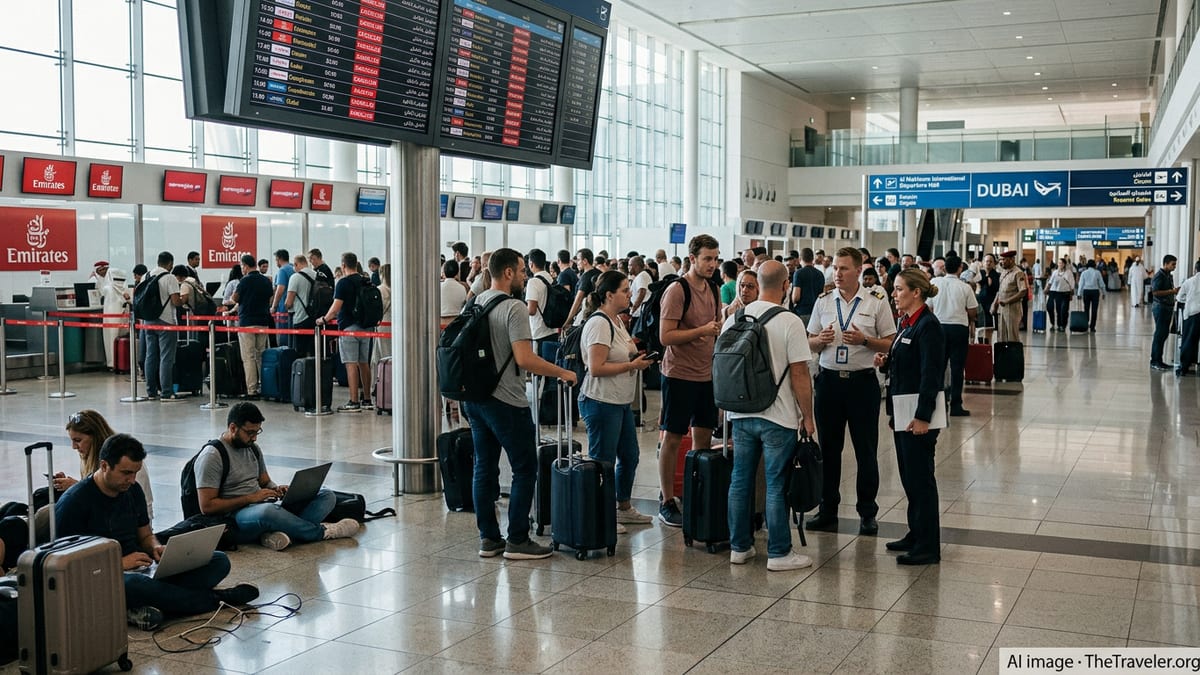
Grounded Flights Add New Strain to Already Disrupted Skies
According to multiple airport operations updates and live flight-tracking data on 6 April, a cluster of cancellations affected short and medium-haul services linking the UAE with South Asia, the wider Gulf and select European destinations. While the total number of flights impacted across the region runs far higher, at least 15 departures and arrivals involving FlyDubai, Air Arabia, BeOnd, IndiGo, Etihad Airways and Airblue were confirmed as cancelled or grounded across the three emirates.
The latest disruption comes on top of a month of turbulence for Gulf aviation following regional conflict and temporary airspace closures that have forced extensive rerouting, trimmed schedules and, in some cases, multi-day suspensions of services to and from the UAE. Published coverage indicates that overall Gulf airline capacity is still operating at just over half of pre-crisis levels, underscoring how fragile the recovery remains.
At Dubai International, one of the world’s busiest hubs for international traffic, the grounded flights primarily affected high-frequency regional routes where carriers typically rely on tight turnarounds. In Sharjah and Abu Dhabi, the impact was more concentrated but still significant for passengers connecting to and from South Asia and the Levant.
BeOnd, a boutique premium leisure carrier, was among those hit, with selected flights linking the UAE and Indian Ocean destinations showing as cancelled in live schedules. Regional low-cost players FlyDubai and Air Arabia, along with India’s IndiGo and Pakistan’s Airblue, also recorded grounded services, illustrating how disruption has cut across both budget and full-service segments.
Dubai, Sharjah and Abu Dhabi Grapple With Rolling Delays
While outright cancellations dominated headlines, rolling delays at Dubai, Sharjah and Abu Dhabi compounded the impact for travellers. Airport boards on Monday showed a pattern of departures pushed back by between one and three hours, particularly on services crossing or skirting restricted airspace.
Publicly available information indicates that Dubai International has been handling more than a thousand flights a day during the recovery phase, but with airlines forced to operate shortened or altered routings, small operational issues can quickly cascade into missed slots and ground holds. Even a handful of grounded aircraft can tighten the squeeze on gate space and crew rotations across the day’s schedule.
Sharjah International, a key base for Air Arabia and a growing low-cost gateway for the northern Emirates, has in recent weeks seen a stop-start pattern of operations as carriers adjust capacity in line with evolving risk assessments. Reports from travellers and regional media describe days of near-normal activity followed by sudden pockets of cancellations, including Air Arabia and Airblue services, as conditions shift.
In Abu Dhabi, Etihad Airways has been rebuilding its network after earlier suspensions and is now operating a limited but expanding schedule. Even so, the airline’s timetable on 6 April reflected several cancelled or retimed flights, with connections into Europe, the Indian subcontinent and the wider Middle East most exposed to knock-on delays from congested corridors and altered routings.
Regional Conflict and Airspace Restrictions Remain Central Factors
The backdrop to the latest wave of disruption is the ongoing regional conflict that escalated in late February, prompting temporary airspace closures and tighter military oversight across parts of the Gulf and wider Middle East. Aviation data providers and industry analyses highlight that, at the height of the crisis in early March, tens of thousands of flights worldwide were cancelled or rerouted as carriers avoided affected skies.
Even as some airspace has gradually reopened, published flight statistics show that traffic over the Gulf and adjacent regions remains well below pre-conflict levels. Many airlines are still flying longer diversionary routes or capping frequencies in order to preserve crew duty limits and manage fuel planning, leaving less room in timetables to absorb further shocks.
The UAE, home to major global hubs in Dubai and Abu Dhabi as well as an important regional base in Sharjah, has been particularly exposed to these shifts. When airspace restrictions tighten or conflict flares, flights into and out of the country can face extended ground holds, inflight diversions or last-minute rerouting that reverberate across entire networks.
For carriers like FlyDubai, Air Arabia, BeOnd, IndiGo, Etihad Airways and Airblue, which rely heavily on connecting flows into and through the Gulf, each incremental adjustment can trigger downstream schedule changes. Monday’s cancellations across the three emirates reflect that ongoing recalibration rather than a return to normal operations.
Passengers Face Long Queues, Rebookings and Uncertain Plans
For travellers caught in the latest disruption, the practical impact ranged from missed holidays and business meetings to unexpected overnight stays. Passenger accounts circulated via regional media and social platforms described crowded check in halls, long queues at transfer desks and difficulty securing alternative seats on already busy flights.
In several cases involving IndiGo, Air Arabia and FlyDubai, passengers reported receiving rebookings on later services within 24 to 48 hours, or being rerouted via alternative Gulf gateways. Some itineraries were shifted onto partner airlines or indirect routings, lengthening travel times significantly compared with original non stop or short-connection plans.
Published guidance from consumer advocates and travel advisories continues to urge passengers with upcoming journeys through Dubai, Sharjah or Abu Dhabi to monitor their booking status closely and allow extra time at the airport. With schedules still in flux and day-to-day adjustments common, even flights that remain on the board can experience significant departure or arrival delays.
Travel insurance policies, fare rules and airline waivers play a crucial role in determining whether stranded passengers can claim refunds, rebook at no extra cost or access hotel and meal support. Industry commentators note that many carriers serving the region have introduced temporary flexibility measures, but that the exact entitlements vary widely by airline and ticket type.
Outlook: Slow Normalisation With Ongoing Volatility
Industry data released in early April suggest that Gulf airlines have clawed back a portion of the capacity lost during the most intense phase of the crisis, with overall flight activity across the region recovering to just over half of late February levels. However, the grounding of 15 flights across Dubai, Sharjah and Abu Dhabi on 6 April underscores that the system remains vulnerable to renewed shocks.
Analysts tracking aircraft movements and booking patterns expect a gradual improvement through the second quarter of 2026 if regional security conditions do not deteriorate further. That timeline could accelerate if more airspace is fully reopened and carriers gain confidence to restore higher frequencies on core routes linking the Gulf with Europe, Asia and Africa.
For now, travellers planning to fly with FlyDubai, Air Arabia, BeOnd, IndiGo, Etihad Airways or Airblue into or out of the UAE are being advised by travel consultants and online booking platforms to build flexibility into their itineraries. Recommended measures include avoiding tight self made connections, favouring fully changeable tickets where possible and checking flight status repeatedly in the 24 hours before departure.
With the UAE’s major hubs still operating under constrained conditions, Monday’s disruptions serve as a reminder that the path back to stable, predictable schedules in the Gulf is likely to be uneven, with further pockets of cancellations and delays a realistic prospect in the weeks ahead.