

More news on this day
Travel across the United States faced fresh disruption on March 22 as Hartsfield-Jackson Atlanta International Airport reported 41 flight cancellations involving major carriers, affecting busy routes to and from New York, Chicago, Los Angeles, Miami, Orlando and other key destinations.
Get the latest news straight to your inbox!
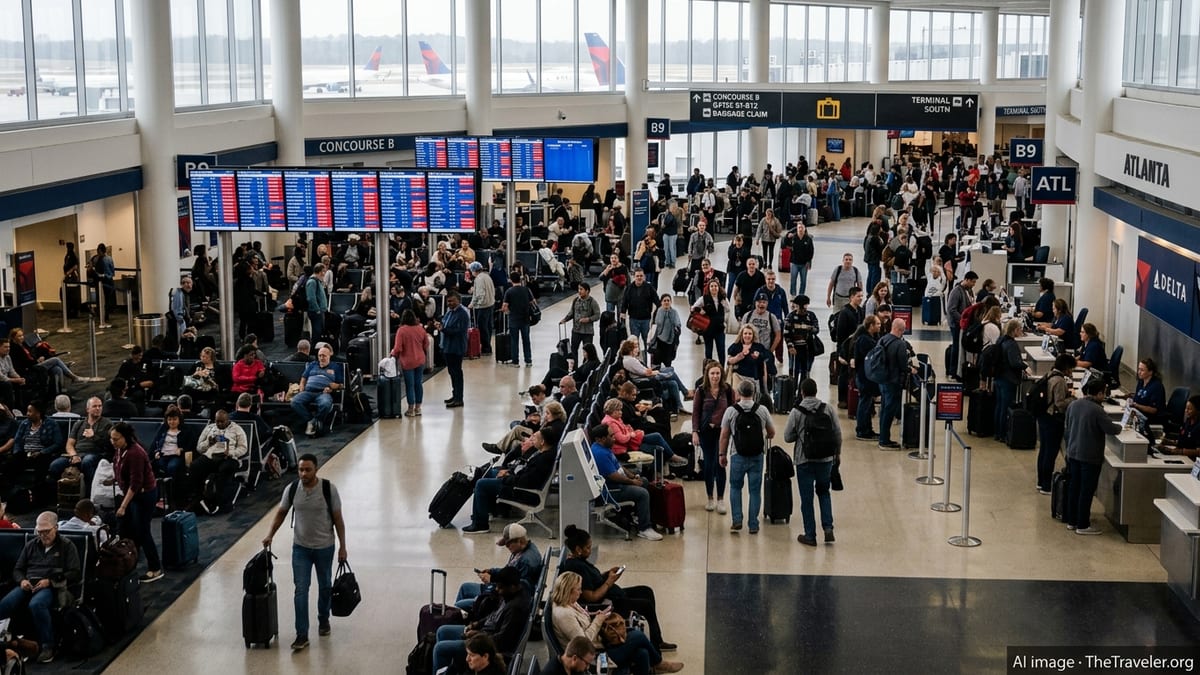
Fresh Wave of Disruptions at the Nation’s Busiest Airport
Hartsfield-Jackson Atlanta International Airport, consistently ranked as the busiest passenger hub in the United States, experienced a focused but disruptive cluster of 41 cancellations on March 22. Publicly available tracking data showed that the cancellations were concentrated among large U.S. airlines, including Southwest, Delta Air Lines, American Airlines, United Airlines and JetBlue Airways, which collectively operate hundreds of daily departures through Atlanta.
While the total number of cancellations was far smaller than the mass groundings seen during major winter storms earlier in 2026, the impact was amplified by Atlanta’s role as a central transfer point. Even a limited number of cancellations at such a hub can lead to missed connections, extended layovers and rebookings across the broader national network.
Reports from recent days already indicated a strained system, with airlines working to stabilize schedules after a powerful March storm disrupted thousands of flights nationwide and placed additional pressure on airport operations. The latest round of cancellations at Atlanta added a new layer of complexity for travelers at the height of spring break season.
Key Routes Affected: New York, Chicago, Los Angeles, Miami and Orlando
According to flight-status dashboards reviewed on March 22, the 41 cancellations at Hartsfield-Jackson primarily affected major domestic corridors linking Atlanta with other high-traffic hubs. Flights to and from New York area airports, Chicago, Los Angeles, Miami and Orlando were among the most visible casualties, reflecting how tightly connected these markets are to the Atlanta network.
New York and Chicago serve as critical northern gateways for both business and leisure travelers, while Los Angeles connects Atlanta to the West Coast’s largest aviation market. Miami and Orlando remain key entry points for Caribbean and Latin American connections as well as theme-park and beach tourism, meaning schedule disruptions on these routes can quickly affect family trips and holiday plans.
In several cases, travelers faced not only outright cancellations but also rolling delays as airlines attempted to reposition aircraft and crews. Publicly available information indicated that some passengers were shifted to later departures or rerouted through alternative hubs, underscoring how even modest schedule changes at Atlanta can cascade into complex itineraries across the country.
Multiple Airlines Struggle to Rebalance Operations
The cancellations were distributed across several leading U.S. carriers, highlighting how shared reliance on the Atlanta hub can expose multiple brands to the same operational stresses. Delta, which maintains its largest hub at Hartsfield-Jackson, featured prominently among the affected flights, but cancellations and schedule adjustments also appeared for Southwest, American, United, JetBlue and other operators serving the airport.
In recent days, published coverage and aviation data have documented how airlines have been working through a backlog of disruptions tied to severe weather in the Midwest and East, as well as the ongoing effects of a partial federal government shutdown that has strained airport security staffing. Those overlapping pressures have left carriers with reduced flexibility when responding to fresh issues such as crew time limits, aircraft positioning or localized thunderstorms.
Industry analysts have noted that, under such conditions, airlines often consolidate lightly booked services, adjust frequencies on short-haul routes and prioritize maintaining core long-haul and hub-to-hub operations. The pattern of cancellations and schedule shifts visible at Atlanta on March 22 appeared to reflect that kind of triage, with some shorter domestic segments dropped to preserve network connectivity elsewhere.
Travelers Face Long Lines, Rebookings and Uncertain Connections
For passengers on the ground, the operational decisions translated into longer-than-usual queues at check-in counters, customer service desks and gate podiums. Social media posts and community reports from the week surrounding March 22 have described crowded concourses, full security lanes and travelers camping in seating areas as they wait for updated departure times or new itineraries.
Travelers connecting through Atlanta on their way to New York, Chicago, Los Angeles, Miami, Orlando and other large destinations have reported missed onward flights and overnight stays due to gaps in the schedule. Some accounts indicated that passengers were rebooked on alternative routings through other airline hubs, increasing total journey times but preserving eventual arrival.
Publicly available information from recent disruption periods suggests that same-day recovery options can be particularly limited when cancellations occur during already busy travel windows such as March weekends and spring break. In those circumstances, even a relatively small number of flight cancellations can leave some travelers waiting many hours, or until the following day, for open seats.
What the Latest Cancellations Signal for Spring Travel
The 41 cancellations at Hartsfield-Jackson on March 22 fit into a broader pattern of volatile U.S. air travel conditions in early 2026, shaped by severe weather events, a federal budget impasse affecting aviation security and high seasonal demand. Data from recent government and industry reports show that major hubs such as Atlanta, New York, Chicago, Los Angeles, Miami and Orlando have all experienced elevated levels of delays and cancellations at various points over the winter and early spring.
For travelers planning trips in the coming weeks, the disruptions in Atlanta serve as a reminder that even routine journeys can be affected by sudden schedule changes at key transfer points. Travel experts often recommend measures such as allowing longer connection times, booking earlier flights in the day, monitoring flight-status tools closely and keeping flexible options in mind when transiting major hubs.
With airlines continuing to adjust networks and staffing in response to both operational and policy challenges, conditions at large airports are likely to remain dynamic. The focused wave of cancellations at Hartsfield-Jackson demonstrates how quickly those dynamics can translate into tangible impacts for passengers moving between some of the nation’s most important travel markets.