

More news on this day
Travellers across Labrador and Newfoundland faced major disruptions after 13 flights operated by Air Borealis and PAL Airlines were cancelled at CFB Goose Bay Airport, with additional services delayed on key routes linking remote communities including Nain, Natuashish, Rigolet, Churchill Falls and St. John’s.
Get the latest news straight to your inbox!
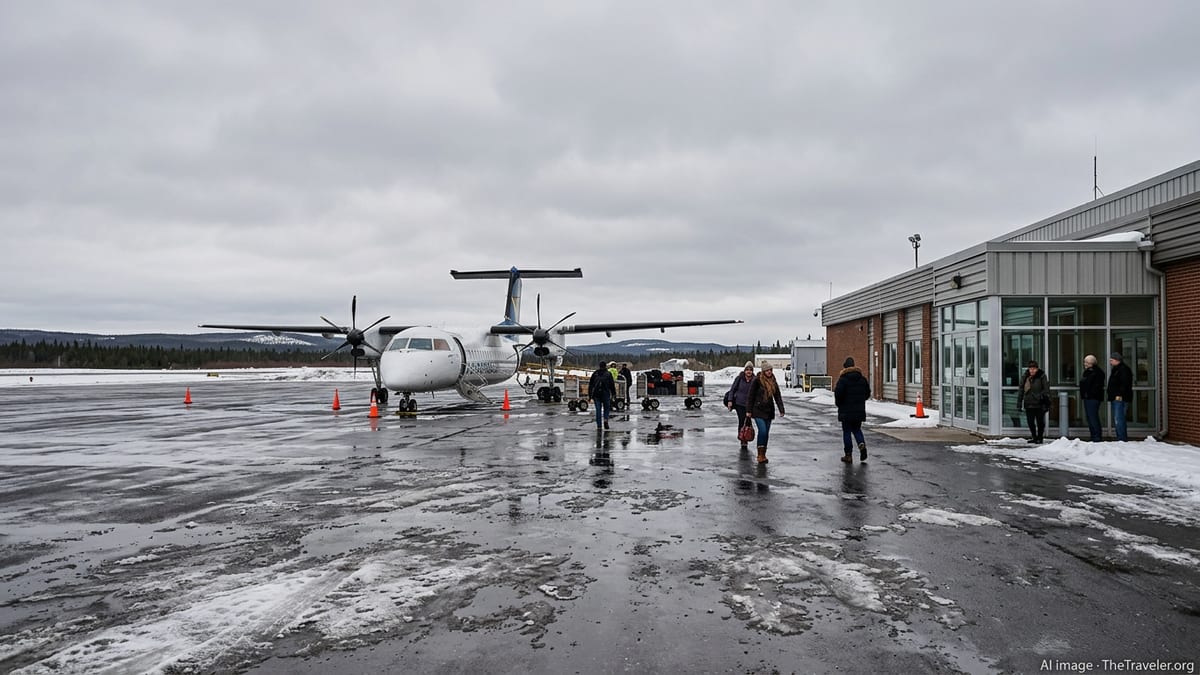
Remote Communities Cut Off as Essential Flights Grounded
The cancellations at Goose Bay, a critical hub for air travel in Labrador, affected a network of routes that serve as lifelines for food, medical travel and essential supplies. With no road access to many of the communities, residents depend heavily on regional carriers Air Borealis and PAL Airlines for routine movement in and out of the region.
Flights between Goose Bay and coastal communities such as Nain, Natuashish and Rigolet were among the hardest hit, leaving residents scrambling to rebook and in some cases forced to delay medical appointments and work trips. Services to Churchill Falls, a key industrial community, and to St. John’s, the provincial capital, were also disrupted, compounding the knock-on effects across the provincial network.
At Goose Bay’s small terminal, travellers reported lineups at check-in counters and customer service desks, with some passengers told they could not be rebooked until later in the week because of limited seats and aircraft availability. Others chose to wait out lengthy delays in hopes their flights would eventually depart once operational issues were resolved.
Operational Strain on Air Borealis and PAL Airlines
Air Borealis, which is based in Goose Bay and specializes in serving remote Labrador communities, and PAL Airlines, a regional carrier with a broader Atlantic Canada footprint, both experienced a cascade of schedule disruptions as the day unfolded. With small fleets and tightly timed rotations, the loss of aircraft from the schedule quickly translated into widespread delays.
Industry observers note that regional airlines operating in harsh northern conditions face a narrow margin for error. Any combination of mechanical checks, crew availability issues or adverse weather can ripple through a schedule that is already operating at high utilization, particularly on heavily used corridors such as Goose Bay to Nain or Goose Bay to St. John’s.
Because aircraft are often routed through Goose Bay multiple times in a single day, the cancellation of an early flight can knock out subsequent legs to multiple communities. Passengers on later flights frequently find themselves affected even if their own departure was not initially listed among the cancellations.
Human Impact on Passengers and Local Economies
For travellers, the immediate impact was a mix of uncertainty, out-of-pocket costs and anxiety over missed commitments. Families attempting to return home after medical treatment in St. John’s reported difficulty securing accommodation in Goose Bay while they waited for new departure times, with some forced to split up across multiple hotels or guesthouses.
In communities like Nain and Natuashish, local businesses and service providers braced for delays in shipments and staff arrivals. Grocery stores in coastal communities typically rely on frequent flights for fresh produce and time-sensitive goods, and even short interruptions can reduce stock on the shelves. Workers commuting to rotational jobs in Churchill Falls or connecting onward to southern Canada faced potential loss of pay and complex rebooking across multiple carriers.
Community leaders in Labrador have long emphasized that reliable air service is not simply a matter of convenience. For many residents, air links represent the only practical way to access specialized health care, government services and educational opportunities that are concentrated in larger centres such as Goose Bay and St. John’s.
Limited Alternatives Highlight Infrastructure Challenges
The disruption highlighted the limited alternatives available when regional flights are grounded. Several affected communities have no year-round road connection to Goose Bay, making air travel the primary mode of transportation outside seasonal marine services. Winter conditions further constrain options, as sea routes are not reliably available.
Travellers with urgent needs explored charter options or standby seats on remaining flights, but high demand and the small size of aircraft serving these routes left little excess capacity. Some passengers considered rerouting through other Labrador hubs, but with the majority of regional connections funnelling through Goose Bay, workarounds were scarce.
The situation once again brought attention to the broader question of transportation resilience in northern and coastal regions. Advocates point to the need for stronger contingency planning, additional spare capacity in regional fleets and greater investment in infrastructure that can withstand the operational and weather-related pressures common in Labrador.
Airlines Work to Clear Backlog and Restore Confidence
As the day progressed, operations teams for Air Borealis and PAL Airlines focused on repositioning aircraft and crews to clear the backlog of passengers. Priority was given to routes where travellers were connecting to medical appointments or where supply chains for small communities were most vulnerable to interruption.
Airline representatives at Goose Bay worked with customers to arrange rebookings, provide information on changing departure times and assess eligibility for compensation or hotel vouchers where applicable. Staff encouraged passengers to monitor their flight status closely and to stay in contact with the carriers’ call centres if they were travelling from outlying communities.
While most travellers expressed understanding that regional flying in Labrador presents unique challenges, the wave of cancellations and delays has renewed calls for improved communication and more robust scheduling buffers. For the communities that depend on Goose Bay as their gateway to the rest of the province and country, the episode underscored just how quickly a handful of cancelled flights can disrupt daily life across a vast northern region.