

More news on this day
Travelers moving through Detroit Metropolitan Wayne County Airport faced a difficult day as 11 regional flights operated by SkyWest Airlines, Delta Air Lines and Endeavor Air were cancelled and several more delayed, disrupting connections to mid-sized cities including Omaha, Burlington, Marquette, Albany and Rochester.
Get the latest news straight to your inbox!
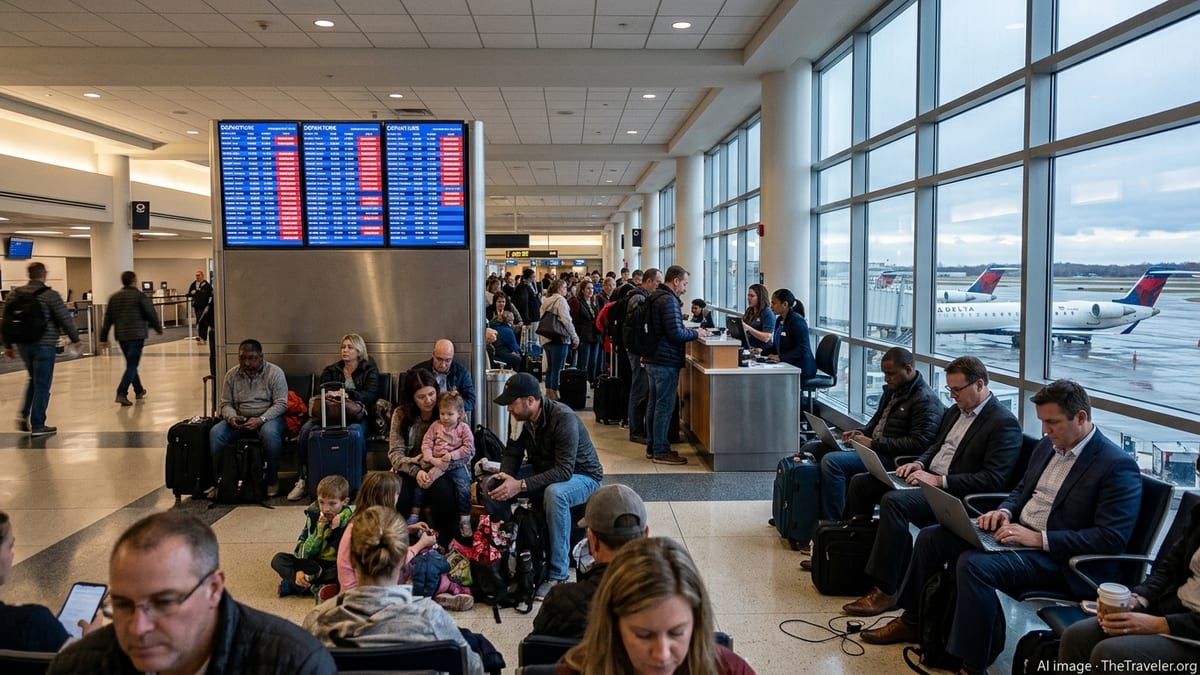
Disruptions Spread Across Detroit Metro’s Regional Network
The wave of cancellations at Detroit Metropolitan Wayne County Airport concentrated on regional routes that serve as vital connectors between major hubs and smaller cities across the Midwest and Northeast. Publicly available tracking data showed flights scrubbed on routes linking Detroit to Omaha, Burlington, Marquette, Albany and Rochester, leaving some passengers stranded and others facing lengthy rebookings.
The affected services were largely operated by SkyWest Airlines and Endeavor Air on behalf of Delta Air Lines, a common arrangement in the U.S. regional airline market in which smaller carriers fly under the branding of larger network airlines. The cancellations were accompanied by a series of rolling delays, compounding congestion at departure gates and increasing pressure on already busy rebooking desks and customer service channels.
While the number of cancelled flights was limited compared with total daily operations at Detroit Metro, the impact was amplified because many of the affected routes provide key onward connections. Travelers heading to or from secondary markets such as Marquette in Michigan’s Upper Peninsula or Burlington in Vermont often rely on a single daily or near-daily flight, leaving few immediate alternatives when a service is cut.
Operational schedules indicated that knock-on effects extended beyond Detroit. Aircraft and crew typically rotate among several cities in a given day, meaning a cancellation at Detroit Metro can ripple outward, reshaping departure times and availability in multiple locations across the domestic network.
Weather and Operational Factors Add to a Difficult Travel Day
The latest disruption at Detroit comes during a period of unsettled weather across parts of the Midwest and Great Lakes, with recent storm systems bringing heavy snow, strong winds and low visibility to sections of Michigan and surrounding states. According to aviation and meteorological coverage, carriers have been preemptively adjusting schedules in some markets to keep aircraft and crews out of the worst conditions.
Publicly accessible flight and weather data suggest that a mix of factors likely contributed to the Detroit turmoil, including residual weather impacts along certain routes, air traffic control programs designed to safely manage traffic flows in challenging conditions and routine operational constraints such as crew duty-time limits. When several of these elements intersect around a major hub on a busy travel day, cancellations can cluster quickly on regional routes where schedule margins are often thinner.
Airlines have increasingly used advance schedule reductions and day-of-flight adjustments as tools to maintain reliability during periods of weather volatility. That approach can reduce the risk of prolonged tarmac delays but can leave passengers facing sudden changes to their itineraries, especially in smaller markets without extensive backup options.
In this case, Detroit’s role as a major connecting hub meant that some travelers passing through the airport, not just those starting or ending their journey there, were swept up in the disruption. Missed connections can trigger a cascade of rebookings across an airline’s network, as available seats on later departures are quickly filled.
Impact Felt in Omaha, Burlington, Marquette, Albany and Rochester
The cancellations had an outsized impact in several regional cities that depend on Detroit Metro for connectivity to the wider national and international network. Omaha, a key Midwestern business and logistics center, saw Detroit-linked travelers facing schedule reshuffles, which in some cases meant re-routing through alternative hubs or shifting travel to later dates.
In Burlington, Vermont, and Albany, New York, which both serve as important gateways for their respective regions, disruptions on Detroit-bound or Detroit-originating flights narrowed options for travelers seeking to connect onward to the Upper Midwest or beyond. Publicly available schedules show that, on many days, only a handful of nonstop flights link these cities with large hub airports, limiting the flexibility to absorb last-minute schedule changes.
Marquette and Rochester, which rely heavily on regional jets for connections to larger hubs, were also affected. In markets like Marquette, where passenger volumes are modest and weather in winter and early spring can be severe, even a single cancellation can translate into missed medical appointments, delayed business trips and interruptions for students and seasonal workers commuting between home and school or job sites.
Travel forums and social media monitoring indicated that some passengers reported long hold times on airline call centers and challenges securing same-day alternatives, particularly in smaller cities where competing carriers offer limited overlapping service. Others reported being automatically rebooked through different hubs, adding flight segments and travel time to already long itineraries.
Airlines Lean on Rebooking, Vouchers and Limited Spare Capacity
In response to the Detroit-area disruptions, airlines turned to standard mitigation tools such as rebooking travelers on later flights, routing passengers through alternative hubs and, in some cases, providing meal or travel vouchers where policies allowed. However, constrained seat availability on popular routes limited the number of same-day options, especially for groups and families traveling together.
Publicly available policy information for Delta and its regional partners outlines that when cancellations are caused by uncontrollable factors such as weather or air traffic control initiatives, compensation options can be narrower than for purely operational issues. Nonetheless, carriers typically prioritize reaccommodating affected travelers at no additional fare cost, and may work with partner airlines on interline agreements in particularly tight markets.
With regional aircraft fleets operating close to capacity on many days, spare planes and crews are often not readily available to mount extra sections at short notice. That reality can turn what might otherwise be a short-lived disruption into a day-long challenge, as airlines balance the need to recover schedules with the practical limitations of aircraft positioning and crew rest requirements.
Airline operations teams typically review disrupted schedules late into the evening to reduce further knock-on effects, which can include adjusting early-morning departures the following day and repositioning aircraft overnight. Travelers with early flights in the day or two after a major disruption are often advised, through public-facing guidance, to check their flight status frequently for any last-minute changes.
What Travelers Through Detroit Metro Can Expect Next
In the short term, passengers traveling through Detroit Metropolitan Wayne County Airport are likely to continue seeing pockets of disruption as airlines work to normalize schedules and reposition aircraft and crews. Industry reporting suggests that once a hub experiences a burst of cancellations, it can take several scheduling cycles for operations to fully stabilize, particularly if unsettled weather persists in other parts of the network.
Travel experts frequently advise passengers connecting through large hubs such as Detroit to build in additional time between flights during periods of active weather, and to monitor airline apps and airport information displays for real-time updates. Same-day adjustments, including voluntary moves to earlier flights when seats are available, can sometimes reduce the risk of missed connections if later services encounter delays.
For travelers heading to or from cities like Omaha, Burlington, Marquette, Albany and Rochester, flexibility remains important. Options such as accepting connections through alternative hubs, adjusting travel dates by a day on either side, or considering nearby airports can provide additional resilience when specific Detroit routes encounter problems.
As airlines continue to refine their schedules and recovery strategies, the situation at Detroit Metro will remain a focal point for travelers reliant on the hub for regional connectivity. How quickly operations settle will depend on a combination of weather patterns, air traffic conditions and the ability of carriers to restore aircraft and crew rotations to their planned positions.