

More news on this day
Travelers at Detroit Metropolitan Wayne County Airport faced another day of frustration as regional partners of Delta Air Lines, including SkyWest Airlines and Endeavor Air, canceled 11 flights and delayed many more, disrupting key routes to mid-sized markets such as Omaha, Burlington, Marquette, Albany and Rochester.
Get the latest news straight to your inbox!
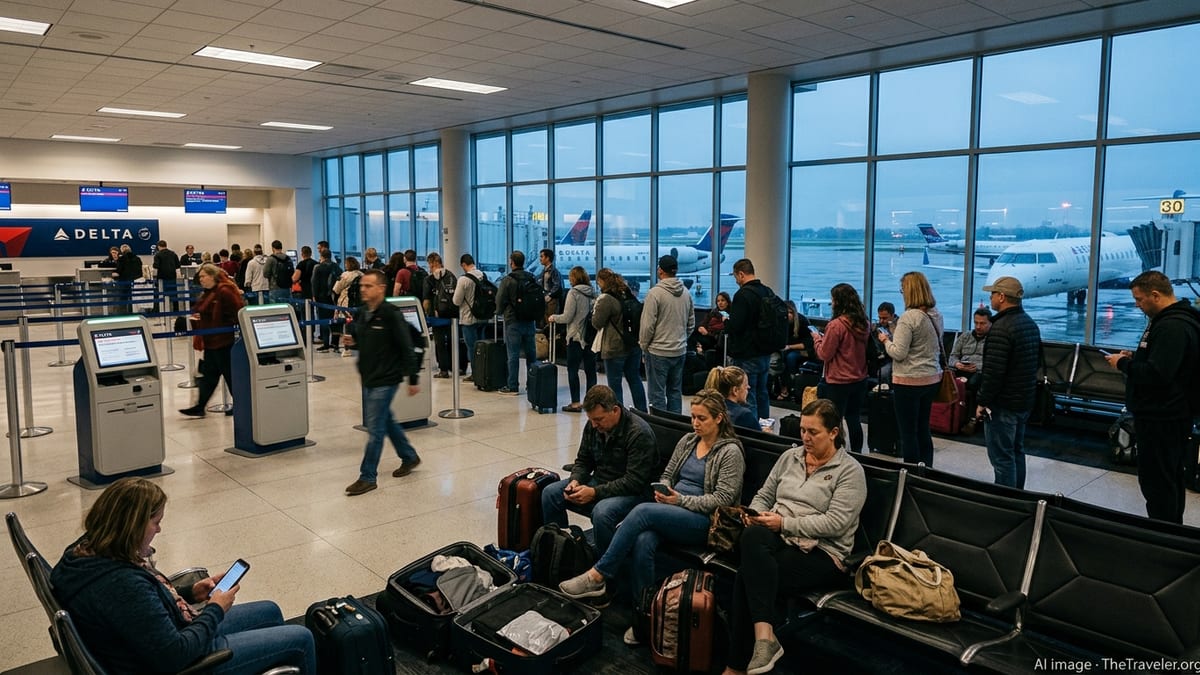
Operational Disruptions Ripple Across Delta’s Regional Network
Publicly available flight-tracking data for Sunday shows a cluster of cancellations and delays centered on Detroit Metropolitan Wayne County Airport, one of Delta’s largest hubs and a critical connecting point for the carrier’s regional partners. SkyWest Airlines, Endeavor Air and other contract carriers that operate as Delta Connection account for a significant share of feeder traffic through Detroit, linking major cities and smaller communities across the Midwest and Northeast.
The 11 canceled flights involving SkyWest, Delta Air Lines and Endeavor Air represent only a portion of the day’s broader operational challenges but have had outsized impact on travelers relying on Detroit as a connection point. Reports from airline-status dashboards indicate that affected services include departures and arrivals between Detroit and mid-sized cities such as Omaha, Nebraska, Burlington, Vermont, Marquette in Michigan’s Upper Peninsula, and the New York state capitals region via Albany and Rochester.
While the total number of disrupted flights at Detroit remains modest compared with peak holiday or major-storm events, the concentration on regional routes has left travelers with fewer alternative options. Many of the affected airports are primarily served by regional jets with limited daily frequencies, which can quickly turn a single cancellation into an all-day, or even multi-day, setback for passengers.
Airline scheduling information shows that SkyWest and Endeavor operate a large number of Delta-branded regional flights in and out of Detroit using smaller aircraft configured for short- and medium-haul routes. When one rotation is canceled or significantly delayed, knock-on effects often cascade across the day’s schedule, particularly on routes with only one or two daily frequencies.
Passengers Confront Missed Connections and Limited Rebooking Options
Travelers connecting through Detroit reported missed onward flights, lengthening layovers and last-minute aircraft swaps as the cancellations took effect. With several regional flights scrubbed and others delayed by more than an hour, passengers aiming to reach secondary markets such as Burlington, Marquette, Albany and Rochester found rebooking options constrained by limited remaining seat availability.
Publicly available information from airline booking channels suggests that some passengers were re-routed through other Delta hubs, including Minneapolis and Atlanta, extending overall travel times by several hours. In a number of cases, travelers bound for cities like Omaha or Albany were offered overnight connections or next-day departures, reflecting the limited number of remaining same-day options once multiple regional flights were disrupted.
Travel forums and social media posts describe a familiar pattern during regional disruptions: long lines at customer service counters, congested phone lines and heavy use of mobile apps as passengers attempt to secure alternate itineraries. Some travelers reported opting to cancel their trips altogether or seeking ground transportation for the final leg, particularly on routes within a day’s drive of Detroit.
Although the scale of today’s disruptions is smaller than during past nationwide events, the concentration of issues on regional connectors again highlights the vulnerability of smaller communities that depend heavily on a single hub-and-spoke network for air access.
Detroit’s Role as a Regional Gateway Magnifies the Impact
Detroit Metropolitan Wayne County Airport functions as a primary Midwestern gateway for Delta Air Lines, channeling passengers between major coastal centers and a wide constellation of secondary and tertiary cities. Airport authority and airline financial disclosures show that regional carriers such as SkyWest and Endeavor handle a substantial share of Delta-branded departures at Detroit, particularly to smaller markets in the Great Lakes region and the Northeast.
These partners operate flights under the Delta Connection banner, typically using regional jets that provide crucial connectivity between Detroit and communities that could not support frequent mainline jet service. Cities such as Marquette, in Michigan’s Upper Peninsula, and several New York and New England markets rely on this regional network to maintain direct or one-stop links to the broader U.S. and international air system.
When even a small number of regional flights are canceled, the effect can be amplified because replacement options are limited. On some thinner routes, missing a single daily Detroit-bound or Detroit-originating flight can strand travelers until the next day. For business travelers and those connecting to long-haul international services from Detroit, such disruptions can lead to missed meetings, lost vacation time and added accommodation costs.
Detroit’s importance as a connecting hub means that disruptions do not remain local. Cancellations originating in Michigan can quickly affect travelers originating in Omaha, Burlington, Albany, Rochester and other cities whose only practical path to their destination runs through Detroit’s terminals.
Multiple Factors Cited in Ongoing Regional Reliability Challenges
Industry reporting and prior operational patterns suggest a mix of contributing factors that often underlie days like this one at Detroit Metro. Regional carriers have grappled with ongoing pilot and crew availability constraints, tight aircraft utilization schedules and seasonal weather variability, any of which can trigger targeted cancellations or rolling delays across a hub’s schedule.
Because SkyWest and Endeavor operate under capacity-purchase agreements for major airlines, decisions to preemptively cancel or consolidate flights are often used to stabilize the day’s remaining schedule and reduce the risk of extended delays. While this strategy can limit widespread knock-on disruptions, it tends to concentrate the impact on specific regional routes, as appears to be the case with today’s cancellations touching Omaha, Burlington, Marquette, Albany, Rochester and several additional cities.
Operational data from previous months shows that regional carriers have generally improved reliability compared with the height of the post-pandemic recovery, but they remain more sensitive to staffing gaps and aircraft availability than larger mainline operations. The smaller size of regional fleets and tighter route structures leave less room to substitute aircraft or reposition crews when irregular operations arise.
As a result, travelers on regional connections are frequently advised by public travel guidance to build longer buffers between flights, particularly when connecting through busy hubs such as Detroit, and to monitor flight status closely in the 24 hours leading up to departure.
What Travelers Can Do When Detroit Connections Go Wrong
Consumer travel resources emphasize several practical steps for passengers caught up in disruptions like those unfolding at Detroit Metro. Checking flight status early and often through airline apps or airport departure boards remains one of the most effective ways to detect problems before arriving at the terminal. If a cancellation or long delay appears likely, passengers may have a better chance of securing alternative itineraries by rebooking through digital channels before customer service queues lengthen.
For travelers booked on regional flights to cities with limited service, such as Marquette or Burlington, guidance from travel advisors often recommends considering backup options, including alternative airports within driving distance or later flights that still allow key onward connections. Some passengers choose to search for open seats on different routings, such as connecting through another hub, to avoid long gaps in Detroit.
Publicly available airline policies outline options that can include same-day rebooking at no additional cost, travel credits or refunds in certain circumstances. However, the specifics vary by carrier and by the reason for disruption, and passengers are encouraged to review the terms attached to their ticket type before making decisions.
As Detroit Metropolitan Wayne County Airport works through today’s round of cancellations and delays, the episode underscores the ongoing fragility of regional air networks. For travelers moving between major hubs and smaller cities such as Omaha, Burlington, Marquette, Albany and Rochester, a single day of irregular operations in Detroit can quickly reshape entire itineraries.