

More news on this day
Air travelers across the United States faced mounting frustration on Friday as 66 flights were canceled and 294 delayed at major hubs including Boston, Chicago, Philadelphia, Nashville, Washington, Atlanta and San Francisco, creating knock-on disruptions throughout airline networks.
Get the latest news straight to your inbox!
Targeted Hubs See Disproportionate Disruption
The latest wave of cancellations and delays has been concentrated at a cluster of high-traffic airports that play an outsized role in the national air system. Boston Logan, Chicago Midway, Philadelphia International, Nashville International, Ronald Reagan Washington National, Hartsfield-Jackson Atlanta and San Francisco International all reported disrupted operations, with 66 flights canceled outright and 294 delayed.
Publicly available flight-tracking data indicates that even relatively modest cancellation counts at multiple hubs can combine to create a significant nationwide impact when they occur at airports that function as key transfer points. Atlanta and San Francisco serve as major connection centers for coast-to-coast and international itineraries, while Boston, Philadelphia and Washington handle dense business and government traffic along the Northeast corridor.
Chicago Midway and Nashville add further complexity because of their roles in point-to-point and low-cost carrier networks, where a single aircraft may operate numerous legs over the course of a day. When one departure is scrubbed or heavily delayed, subsequent segments are often affected, leading to rolling disruptions that extend far beyond the original airport.
In aggregate, the latest figures represent a relatively small fraction of daily U.S. departures, but their concentration at such strategically important airports has magnified the effect on passengers, particularly those connecting between regions rather than starting or ending their journeys at the affected hubs.
Weather, Congestion And Network Fragility
The interruptions come against a backdrop of persistent operational stress in the U.S. aviation system, where adverse weather, airspace congestion and tight scheduling frequently intersect. Recent forecasts and observational data point to changing conditions over parts of the country, and in several cases even modest wind, low clouds or convective activity have been enough to trigger spacing requirements that slow traffic into major hubs.
Industry and government statistics compiled over the past year highlight how sensitive these airports are to even slight deterioration in conditions. Studies of delay performance show that large hubs such as Hartsfield-Jackson Atlanta, Boston Logan, Chicago Midway, Philadelphia International and San Francisco International consistently appear among facilities with notable shares of late arrivals and departures, underscoring the limited margin for error in their daily operations.
When flight schedules are built with minimal slack, any necessary reduction in arrival or departure rates at one or more busy airports can quickly force carriers to hold or reroute aircraft. The result is often a mix of ground delays, airborne holding patterns and, when recovery becomes difficult, outright cancellations aimed at resetting the system.
Operational data from recent storm systems illustrate how quickly disruptions can escalate. During severe weather events in March, for example, national cancellations and delays numbered in the thousands as hubs from Atlanta to Chicago and Washington reduced or paused traffic. The current figures, while smaller in scale, follow a similar pattern in which a cluster of geographically dispersed but operationally linked airports experience strain at the same time.
Stranded Passengers Face Missed Connections And Overnight Stays
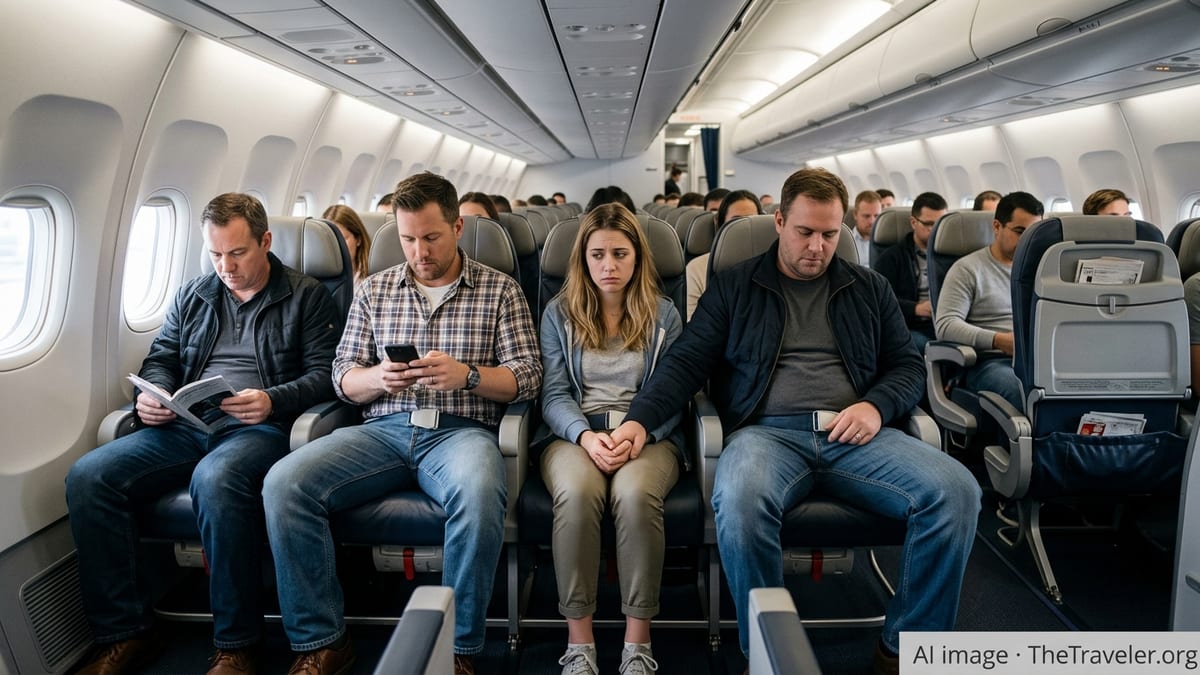
The immediate impact for travelers has been a familiar mix of missed connections, long customer-service lines and unexpectedly extended airport stays. With flights pulled from the schedule and others departing late, many passengers have found themselves rebooked through alternative hubs or pushed to next-day departures when same-day options are exhausted.
Because Atlanta, Boston, Washington and San Francisco in particular serve as major connection points, passengers whose flights were neither canceled nor significantly delayed have still been caught in the fallout when their inbound aircraft or connecting segment was affected elsewhere in the network. This cascading effect is especially pronounced on itineraries involving tight layovers or multiple stops.
Public guidance from travel experts and consumer advocates generally urges passengers in such situations to check their flight status repeatedly, use airline mobile apps and airport display boards, and consider contacting carriers through multiple channels at once to secure alternative arrangements. The Department of Transportation’s published consumer information also notes that travelers whose flights are canceled and who choose not to travel at all are typically entitled to a refund of the unused portion of their ticket, regardless of the cause of the cancellation.
With hotel availability near some of the affected hubs already tight due to conventions and spring events, disrupted travelers in cities such as Boston, Washington and Nashville have also faced challenges securing last-minute accommodation. Many have opted to remain in terminals overnight or seek out airport rest areas while awaiting morning departures.
Airlines Adjust Schedules To Restore Stability
Airlines operating at the impacted airports have been working to re-sequence aircraft and crews in an effort to restore normal operations. Publicly available scheduling data and airline advisories show a pattern of strategic cancellations, in which carriers remove select flights to create additional buffer time and free up aircraft for routes with heavy demand or limited alternative service.
Such targeted cuts are a common tactic when weather, congestion or staffing constraints make it impossible to operate the full published schedule. By canceling some departures well in advance and consolidating passengers onto remaining flights, carriers can reduce the risk of extended tarmac delays and last-minute disruptions that are more difficult for travelers to manage.
However, these adjustments can also generate gaps in service on shorter regional routes, particularly those connecting smaller cities to hubs like Philadelphia, Nashville or Boston. Passengers on those flights may face longer rebooking times, since replacement options are less frequent than on trunk routes between major metropolitan areas.
Operational updates from flight-tracking platforms suggest that while delays have moderated at some airports over the course of the day, recovery remains uneven, with residual congestion persisting into evening hours at busy hubs. The combination of limited spare aircraft, crew duty-time limits and already tight schedules means that full normalization may take until the following day, particularly for later-night and early-morning operations.
Ongoing Strain Highlights Systemic Vulnerabilities
The disruptions at Boston Logan, Chicago Midway, Philadelphia, Nashville, Reagan National, Hartsfield-Jackson Atlanta and San Francisco come as policymakers and industry stakeholders continue to debate how to make the U.S. air travel system more resilient. Recent government analyses of on-time performance data have pointed to chronic congestion at large coastal and hub airports, along with weather-related vulnerabilities and aging infrastructure.
Proposals under discussion include expanding the use of advanced air traffic management tools, adjusting peak-period schedules to better match airport capacity, and accelerating terminal and runway upgrades at high-growth facilities. Some studies also emphasize the need to build more flexibility into airline networks, so that a localized disruption at one airport does not propagate as extensively through the national system.
For travelers, the events of the day serve as another reminder that even a relatively contained set of cancellations and delays can have outsized consequences when they occur at pivotal hubs. Consumer advocates frequently recommend that passengers planning time-sensitive trips consider booking earlier departures, choosing longer connection windows and avoiding itineraries that rely on multiple tight transfers through delay-prone airports.
With peak spring and summer travel seasons approaching, the performance of these key hubs will remain under close scrutiny. The latest wave of cancellations and delays underscores how closely interconnected the nation’s airports have become and how quickly strain at a handful of facilities can ripple across the broader map of U.S. air travel.