

More news on this day
Passengers at Prince Mohammad Bin Abdulaziz International Airport in Medina faced mounting frustration on March 7 as at least 15 flights operated by Qatar Airways, flydubai, IndiGo, Emirates and Gulf Air were cancelled amid the wider Middle East airspace crisis, severing key links to Dubai, Doha, Mumbai, Cairo and other major cities.
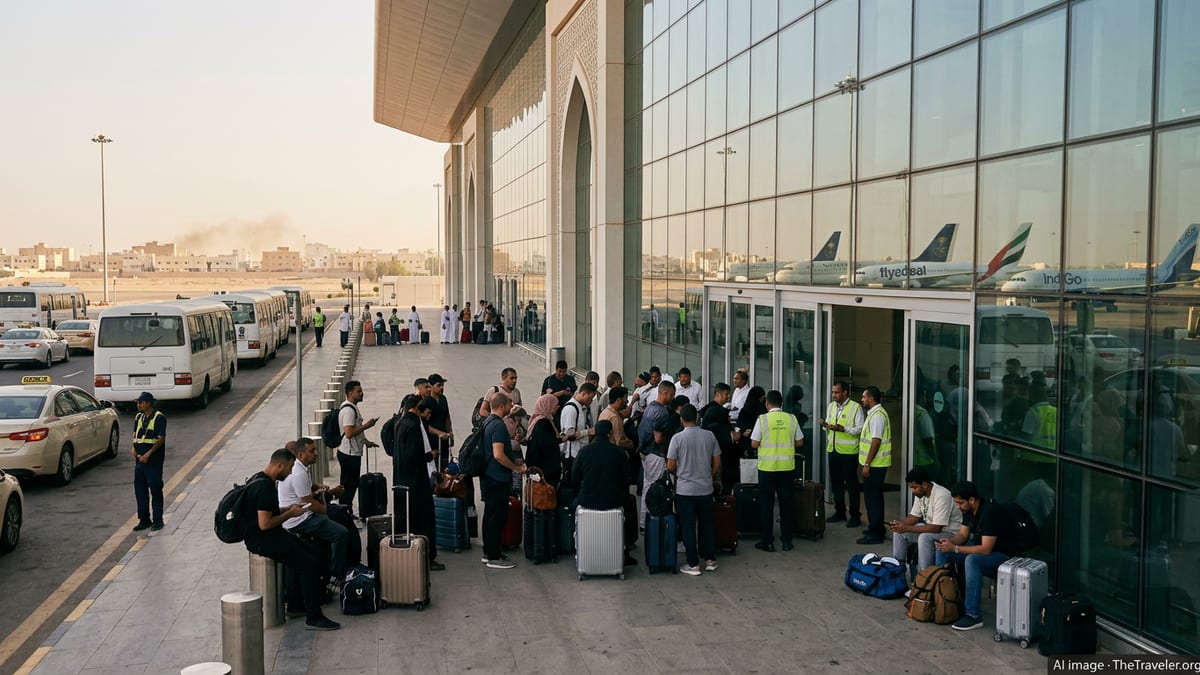
Regional Airspace Crisis Reaches Medina Hub
The wave of cancellations at Medina’s Prince Mohammad Bin Abdulaziz International Airport comes as much of the region’s aviation network struggles to recover from sweeping airspace closures triggered by the recent Iran war and retaliatory strikes across the Gulf. Authorities in several countries, including Qatar, Bahrain and the United Arab Emirates, have imposed tight restrictions on civilian flights, forcing airlines to ground aircraft, divert routes and sharply cut schedules.
While Saudi Arabia has kept limited corridors open for domestic and select international services, Medina’s role as a key gateway for religious pilgrims and migrant workers has made today’s disruption particularly acute. Airport officials said the cancellations were concentrated on high-demand routes connecting Medina with regional hubs such as Dubai and Doha, as well as onward links to South Asia and North Africa that typically feed through Mumbai and Cairo.
Airlines across the Middle East have spent the past week adjusting schedules on a near-daily basis, with some carriers resuming a handful of services even as others extend suspensions. The result for passengers in Medina on March 7 was a confusing patchwork of operational updates, with electronic departure boards showing long lines of “cancelled” notices alongside a small number of flights still scheduled to depart.
Qatar Airways, Emirates and Gulf Carriers Forced to Cut Services
Qatar Airways, Emirates and Gulf Air were among the hardest hit at Medina, where they typically operate as crucial connectors for travelers heading to Europe, Asia and Africa. With Qatari and Bahraini airspace only partially available and key Gulf hubs still operating under military and regulatory constraints, the three airlines have prioritized limited repatriation and relief flights from select airports while trimming many regional links.
At Prince Mohammad Bin Abdulaziz International Airport, this translated into multiple last-minute cancellations to and from Doha and Dubai, as well as onward sectors that would normally be served via those hubs. Emirates and flydubai have begun restoring some flights from the United Arab Emirates in recent days, but the overall capacity remains far below normal, and point-to-point services into Medina continue to face constraints tied to routing, crew positioning and safety approvals.
Gulf Air, based in Bahrain, has also been operating only a skeleton schedule, deploying aircraft that were outside its home base when airspace closures took effect and focusing on select intra-regional links. The airline’s reduced operations have left Medina with fewer options for reaching Bahrain and connecting onward to Europe and South Asia, compounding the impact of cancellations by its larger Gulf competitors.
Indian Low-Cost Links Disrupted as IndiGo Adjusts Network
India’s IndiGo, which has become an important player on routes between Saudi Arabia and the Indian subcontinent, cancelled several services touching Medina as it reshuffled its broader Middle East network. The carrier has been progressively restoring flights to certain destinations such as Jeddah and other Gulf cities where corridors are deemed safe, but schedules on the Madinah route and other sensitive sectors remain fluid.
For Indian expatriate workers and families who rely on affordable, high-frequency connections between Medina and cities like Mumbai, the disruption has been particularly painful. Many travelers reported having to accept multi-stop routings via secondary hubs, often at much higher fares, or postpone their trips entirely while waiting for clearer guidance from the airline.
Travel agents in both Saudi Arabia and India say they have been inundated with requests to rebook or reroute passengers away from Gulf transit points perceived as vulnerable to further closures. With fares on alternative corridors climbing, some Medina-based travelers are choosing to wait out the disruption rather than commit to complex and costly replacement itineraries.
Passengers Face Long Queues, Limited Options and Unclear Timelines
Inside Medina’s compact terminal, scenes on March 7 reflected the broader regional uncertainty. Long check-in and ticketing queues formed at airline counters as passengers sought clarity on whether their flights would operate, be delayed or be cancelled outright. Many travelers reported receiving short-notice text messages or app notifications informing them of cancellations only after they had already arrived at the airport.
Airport staff urged passengers to remain patient and stay in close contact with their airlines rather than relying solely on generic online schedules, which in some cases lagged behind the latest operational decisions. Information boards were updated throughout the day as airlines coordinated with regulators and air navigation authorities to confirm which routes could safely operate.
Hotels around Medina reported an uptick in last-minute bookings from stranded travelers, including pilgrims who had timed their stays tightly around previously confirmed departure dates. With religious travel to the holy cities remaining a priority for many families, local tour operators said they were scrambling to rearrange ground transfers, accommodation and return flights at short notice.
Authorities and Airlines Urge Travelers to Stay Flexible
Saudi aviation authorities and airport management in Medina have reiterated that safety remains the overriding concern as they navigate the evolving regional situation. They have encouraged airlines to communicate proactively with affected passengers and to honor flexible rebooking and refund policies introduced in response to the crisis.
Qatar Airways, Emirates, flydubai, IndiGo and Gulf Air have all expanded their waiver programs in recent days, allowing eligible passengers to change travel dates without penalty or request refunds if their flights fall within the affected period. However, the high volume of cases and pressure on customer service centers means many travelers are still waiting for confirmations of new arrangements or refunds.
Looking ahead, industry analysts expect a gradual normalization of services through Medina once airspace restrictions ease further and military tensions recede. For now, though, Prince Mohammad Bin Abdulaziz International Airport remains a vivid example of how quickly a regional security crisis can ripple through global travel plans, as cancellations by a handful of major carriers disrupt journeys linking Medina not only to Dubai, Doha, Mumbai and Cairo, but also to a far wider web of destinations beyond.