

More news on this day
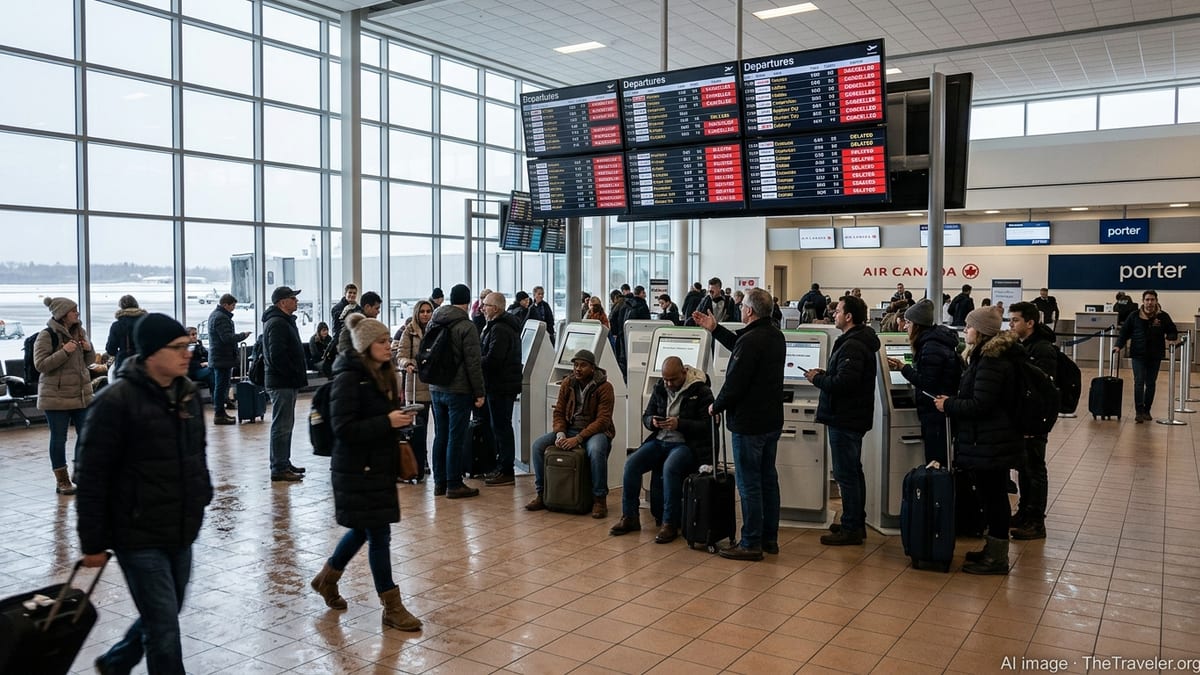
Travelers at Ottawa Macdonald–Cartier International Airport faced mounting disruption on Friday as at least nine Air Canada and Porter Airlines flights were grounded, triggering knock-on delays across key routes to Toronto, Fredericton, Halifax, Quebec City, Sudbury and other destinations.
Get the latest news straight to your inbox!
Wave of Cancellations Hits Key Domestic Routes
Publicly available flight-status boards and traveler reports on Friday indicated that a cluster of morning and mid-day departures from Ottawa were cancelled or significantly delayed, affecting a mix of Air Canada mainline, Air Canada Express and Porter Airlines services. The heaviest impact appeared on short-haul links that funnel passengers into larger hubs, including Toronto Pearson and Billy Bishop Toronto City Airport, as well as regional routes into Atlantic Canada and northeastern Ontario.
The grounded services included multiple rotations normally operating between Ottawa and Toronto, which serve as vital feeder flights for connections across Canada, the United States and Europe. Disruptions on this corridor quickly spilled over to regional routes, with cancellations and long delays reported on flights to Fredericton, Halifax, Quebec City and Sudbury. Travelers attempting to rebook faced squeezed seat availability as remaining departures filled up.
Information published by the airport and airline trackers showed a patchwork of causes, ranging from knock-on effects of earlier weather systems to operational and crew-related limitations. While the scale of disruption at Ottawa was modest compared with major winter storm events that have affected Toronto Pearson and other Canadian hubs earlier in 2026, the concentration of cancellations on thinly served regional routes left some passengers with limited same-day alternatives.
Regional Travelers Face Long Delays and Rerouting
The impact was especially acute for passengers booked on routes where Ottawa functions as a primary connection point. Public traveler accounts described itineraries between Fredericton and other Canadian cities being pushed back by many hours or shifted to next-day departures when Ottawa legs were removed from schedules. Similar experiences were reported for passengers flying between Halifax and interior points such as Sudbury and northern Ontario communities, with Ottawa acting as a key intermediate stop.
In some cases, publicly shared rebooking confirmations showed travelers being moved onto multi-stop routings through larger hubs such as Toronto Pearson or Montreal, adding significant travel time to journeys that are typically completed in a few hours. On lightly served routes like Ottawa–Sudbury or Ottawa–Fredericton, the cancellation of a single rotation substantially reduced same-day options, pushing some travelers to consider rail or long-distance driving as alternatives.
Historic disruptions in Canada, including previous winter storms and labor actions, have demonstrated how quickly regional connectivity can fray when a mid-sized hub experiences concentrated cancellations. Ottawa’s role as both a destination and a connecting point for government, academic and business travel means that even a small set of grounded flights can generate outsized ripple effects across multiple provinces.
Operational Strains Add to a Year of Aviation Volatility
The latest disruptions at Ottawa come during a period of heightened volatility for Canadian air travel. Earlier in 2026, severe winter systems and a major blizzard in central Canada and the Great Lakes region led to thousands of cancellations over several days, particularly at Toronto Pearson and other large hubs. Those events strained crew and aircraft positioning, with airlines taking days to fully restore normal schedules.
Air Canada has also been recovering from broader operational pressures linked to high demand, weather volatility and a complex regulatory environment governing passenger protection. Recent analyses of national air transportation performance from Transport Canada have highlighted ongoing variability in on-time performance and cancellation rates at major airports, including Ottawa, Halifax and Toronto, even as overall volumes recover.
Porter Airlines, which has been expanding its jet network from Ottawa and other eastern Canadian cities, has faced its own operational challenges as it juggles new routes, fleet growth and shifting demand patterns in Atlantic Canada and Quebec. Public discussion among frequent flyers has pointed to schedule adjustments and reduced frequencies on some routes, particularly in and out of Halifax, making ad hoc recovery from day-of disruption more difficult when flights are removed from the timetable.
Knock-On Effects for Connections in Toronto and Beyond
The grounding of several Ottawa departures to Toronto created further complications for passengers with onward connections to Western Canada, the United States, Europe and sun destinations. Flight-status tools showed delayed arrivals from Ottawa cascading into missed connections at Toronto Pearson, with some travelers forced onto later departures or rebooked for the following day when long-haul services were fully booked.
On the Toronto city-center corridor, disruptions to Porter’s Ottawa–Billy Bishop flights had an outsized impact on business and government travelers who rely on the short hop for same-day meetings. Published schedules already show that some frequencies on this route are tightly timed to align with morning and evening peaks; when one or two of these departures are removed, the remaining flights can quickly reach capacity.
These knock-on effects extended along the network to Quebec City, Sudbury and other spoke destinations. Publicly available data from previous months illustrate how cancellations on feeder routes can depress overall on-time performance metrics for entire regions, as late-arriving passengers and aircraft cascade through the system. Friday’s concentrated disruption in Ottawa followed this familiar pattern, with small schedule changes triggering widespread itinerary reshuffling.
Passengers Navigate Rights, Refunds and Limited Options
As the day progressed, affected travelers turned to airline apps, call centers and social media to share experiences and seek alternatives. Some reported automatic rebookings onto later flights from Ottawa, while others described being offered itineraries a day or more after their original departure time, particularly on routes to smaller destinations with limited frequency.
Canada’s Air Passenger Protection Regulations set out compensation and assistance requirements when flights are cancelled or significantly delayed for reasons within an airline’s control, though weather and certain safety-related issues are excluded. Publicly available guidance from regulators and consumer advocates emphasizes that passengers may be entitled to rebooking on another carrier or to refunds when schedules change significantly. In practice, travelers often face long wait times to reach customer-service agents, especially during periods of widespread disruption.
Reports from earlier mass-disruption events involving Canadian carriers suggest that accommodation, meal vouchers and ground transportation are not always provided consistently, particularly for domestic passengers on short-haul routes. With Ottawa’s latest wave of cancellations affecting many regional travelers, consumer groups are likely to scrutinize how airlines apply the rules and support stranded passengers at a time when confidence in the reliability of air travel remains fragile.