

More news on this day
Raleigh–Durham International Airport is facing a new wave of travel disruption as 17 flights operated by Endeavor Air, Republic Airways, Delta Air Lines, PSA Airlines and Breeze Airways were grounded alongside numerous delays, disrupting major routes to New York, Philadelphia, Fort Myers, London, Nashville and other key destinations.
Get the latest news straight to your inbox!
Grounded Flights Ripple Across Key Domestic and International Routes
The latest disruption at Raleigh–Durham International Airport, unfolding amid a volatile winter and early spring travel period in North America, has hit a cross section of regional and mainline operators that together handle a substantial share of the airport’s traffic. Endeavor Air and Republic Airways, both serving as regional partners for larger network carriers, were among those grounding flights, alongside PSA Airlines, Breeze Airways and Delta Air Lines. Together, their cancellations removed 17 departures and arrivals from the schedule, with knock-on delays affecting many more services throughout the day.
The impact was most visible on high-demand corridors linking Raleigh–Durham with New York area airports, including LaGuardia and John F. Kennedy, as well as Philadelphia. These routes are critical for both business and connecting traffic, and they rely heavily on regional jets flown by Endeavor, Republic and PSA under major-carrier brands. Disruptions on these links can quickly cascade across the network, leaving travelers stranded or forced into lengthy rebookings.
Leisure routes into and out of North Carolina were also affected. Breeze Airways, which has been expanding from secondary markets and has added service at Raleigh–Durham in recent seasons, saw flights to sun destinations such as Fort Myers come under pressure. Delays and cancellations on these flights add strain during a period when many travelers are heading south for school breaks or late winter getaways, compounding frustration at both ends of the route.
International connectivity from Raleigh–Durham also felt the strain, particularly services tied into transatlantic networks via major hubs. Cancellations and delays on feeder flights to New York and other East Coast gateways have implications for onward journeys to London and Europe, with some passengers facing missed long-haul connections and overnight stays. For an airport that has steadily grown its international reach in recent years, such interruptions underscore how dependent those links remain on the smooth functioning of domestic feeder traffic.
Weather, Congestion and Operational Strain Combine
The latest round of turbulence at Raleigh–Durham comes against the backdrop of a disruptive 2025–26 winter season across North America. A series of powerful storms has produced heavy snow, ice and strong winds from the Mid-Atlantic through the Northeast, impacting airports in New York, Philadelphia and the surrounding region and driving widespread cancellations and delays. When conditions deteriorate at congested East Coast hubs, regional spokes like Raleigh–Durham often experience secondary disruption as airlines reposition aircraft and crews.
Operational data and recent coverage highlight that regional carriers such as Endeavor, Republic and PSA have been under particular strain when disruptive weather coincides with tight aircraft utilization and crew scheduling. These operators, which provide feeder services for major airlines, typically run dense schedules with limited slack. When severe weather or air traffic control constraints trigger cascading delays, they can rapidly reach the point where grounding a cluster of flights is the only viable option to reset their operations.
Delta Air Lines, which maintains a strong presence at Raleigh–Durham, has also been affected in recent disruption cycles as it attempts to balance safety margins, crew duty limits and aircraft availability across its network. Groundings of regional partners feeding into Delta’s system can have outsized effects, particularly on routes into New York and other slot-constrained airports where recovery options are limited and rebooking windows are tight.
Breeze Airways, a newer entrant focused on point-to-point leisure and niche business routes, has been navigating the same challenging environment. With a growing network linking mid-sized cities and vacation destinations, any sustained bout of East Coast weather or airspace congestion can play havoc with schedules. Passengers traveling between Raleigh–Durham and Florida, or connecting on to other Breeze services, have encountered a mix of outright cancellations and multi-hour delays as the carrier works through its rotations.
Passenger Experience: Missed Connections and Packed Gates
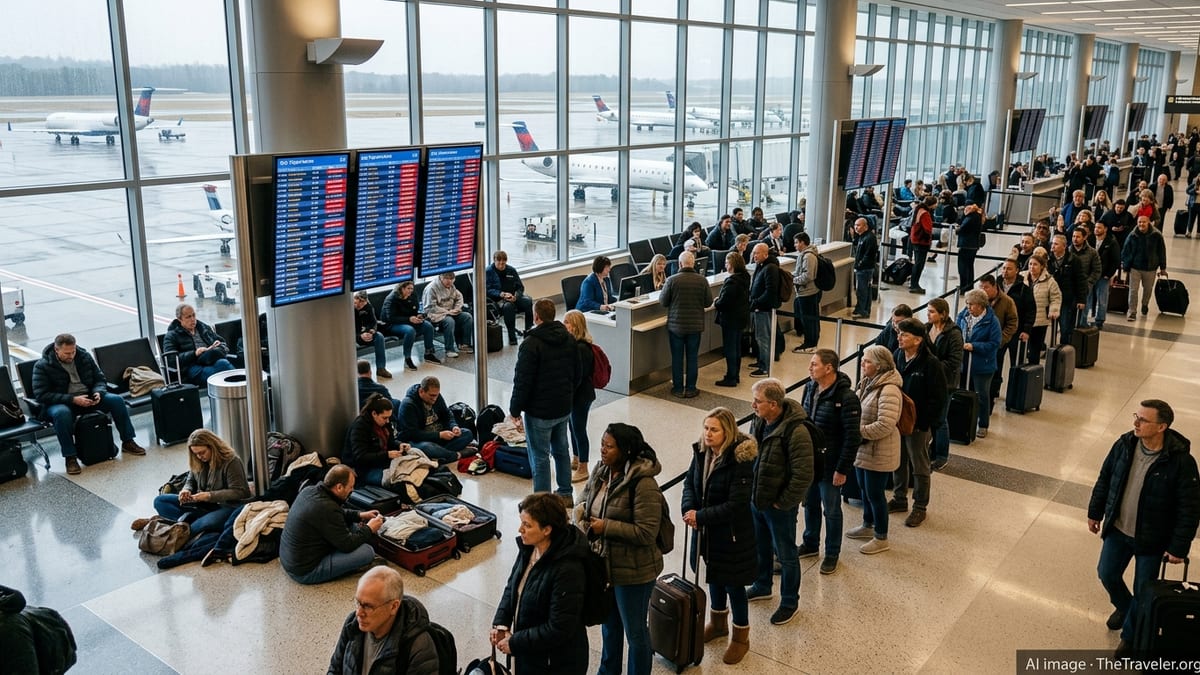
For travelers on the ground at Raleigh–Durham, the immediate experience of this latest disruption has been familiar: crowded departure halls, long lines at service counters and packed gate areas as passengers wait for new departure times or scramble for scarce seats on alternative flights. Publicly available accounts from recent storms and systemwide travel waivers indicate that many travelers faced missed connections, particularly those relying on tight turnarounds in New York, Philadelphia or other East Coast hubs.
Passengers bound for London and other international destinations have been especially vulnerable to knock-on effects. When short-haul flights from Raleigh–Durham into major gateways are delayed or canceled, travelers can miss once-daily long-haul departures, forcing rebookings that may stretch into the following day. This dynamic not only disrupts personal and business plans but also places additional pressure on airport hotels and ground transportation at both origin and connection points.
On popular domestic routes, particularly to leisure markets such as Fort Myers and to music and convention hub Nashville, the disruption has translated into full alternate flights and longer-than-expected layovers. Travelers reported having to consider circuitous routings through multiple hubs or even different airlines, as capacity on remaining flights quickly filled. Families traveling for school breaks and weekend events have found themselves weighing the cost of extended stays against the difficulty of reaching their destinations on schedule.
Airlines have pointed customers toward mobile apps and websites for rebooking and notifications, reflecting a broader shift in how irregular operations are managed. However, when simultaneous disruptions occur across multiple carriers, digital systems can become overwhelmed, and many passengers continue to seek in-person assistance at Raleigh–Durham’s terminals. The resulting queues and congestion add to the perception of turmoil even when flight operations are slowly recovering.
Raleigh–Durham’s Growing Role Amplifies Disruption
The scale of the current disruption at Raleigh–Durham is magnified by the airport’s growing importance within the U.S. air travel network. In recent years, the airport has expanded to serve dozens of domestic and international destinations, with both legacy and low-cost carriers adding routes and, in some cases, establishing crew or operating bases. Public documents show that regional operators serving Delta and other majors, as well as newer entrants like Breeze, have deepened their commitments in the market, reflecting strong demand from the Research Triangle region.
As Raleigh–Durham’s route map has broadened, its function has evolved from a largely regional facility into a key connecting point for both business travelers and leisure passengers. The airport now provides direct links not only to major hubs such as New York, Atlanta and Philadelphia, but also to a growing roster of secondary cities and vacation destinations. When a cluster of carriers grounds flights on the same day, this diversity of service means a wider spectrum of travelers and trip types are affected, from international conferences and university events to family holidays.
The presence of multiple regional affiliates at Raleigh–Durham also complicates recovery when disruption strikes. Endeavor, Republic and PSA each operate under different major-carrier brands while sharing airspace, gates and, in some cases, similar aircraft types. Coordinating recovery across these interlocking networks requires complex decisions about where to deploy limited crews and aircraft, which can prolong irregular operations even after weather or air traffic constraints have improved.
Local transportation patterns in the Raleigh–Durham area can further shape the experience of disruption. When multiple days of weather-related issues hit both the airport and surrounding highways, travelers may find it difficult not only to leave by air but also to reach alternate airports by road. This dynamic has led some passengers during recent events to opt for overnight stays and rebooked flights rather than attempting long diversions to other regional gateways.
What Travelers Can Do as Irregular Operations Persist
The recent turmoil involving Endeavor Air, Republic Airways, PSA Airlines, Breeze Airways and Delta at Raleigh–Durham underscores how quickly conditions can change for air travelers, particularly during a volatile weather season. While airlines and airport operators work within complex constraints, passengers can take steps to reduce the risk of severe disruption, especially on routes known to be sensitive to winter storms and congestion in the Northeast corridor.
Travel industry guidance consistently emphasizes monitoring flight status early and often, ideally beginning 24 to 48 hours before departure. On days when multiple carriers are grounding flights at Raleigh–Durham, travelers who move quickly to rebook may have a better chance of securing seats on remaining services. Choosing earlier flights in the day and allowing longer connection windows in cities like New York and Philadelphia can also provide a buffer when operational issues accumulate.
For those traveling on critical itineraries, including onward connections to London and other long-haul destinations, building in an overnight stop at a major hub is one strategy that some travelers use to minimize the risk of missed departures. Others choose to purchase fares that permit more flexible changes, accepting a higher upfront cost in exchange for greater freedom to adjust when widespread cancellations emerge.
As Raleigh–Durham continues to grow and attract new domestic and international routes, periods of disruption such as the latest grounding of 17 flights serve as reminders of both the airport’s rising prominence and the vulnerabilities inherent in a tightly interconnected air travel system. For the region’s travelers, staying informed and planning conservatively remain key tools for navigating an environment where weather, congestion and operational pressures can quickly converge.