

More news on this day
Travel through Oman has been hit by a fresh wave of disruption as Gulf Air, Flydubai, Pegasus Airlines and Qatar Airways cancel more than a dozen services at Muscat International Airport, interrupting vital links between the sultanate and major regional hubs such as Bahrain, Dubai, Istanbul and Doha.
Get the latest news straight to your inbox!
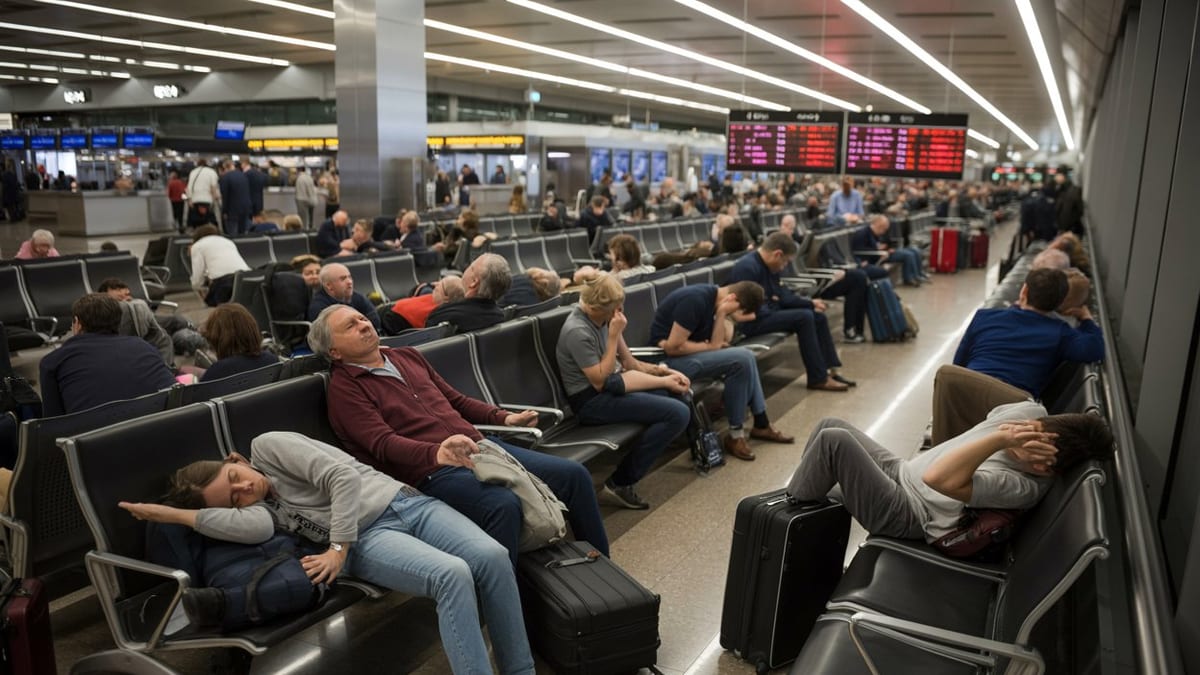
Image by Travel And Tour World
New Wave of Cancellations at Muscat International Airport
Published coverage from regional travel outlets and aviation tracking data indicate that at least a dozen flights involving Gulf Air, Flydubai, Pegasus Airlines and Qatar Airways have been cancelled or heavily disrupted at Muscat International Airport in recent days. These cancellations follow an earlier cluster of six flight cancellations involving Gulf Air and Pegasus that left passengers stranded at the airport, affecting services to Bahrain, Dubai, Istanbul and several other destinations.
The latest updates suggest the pattern has now broadened to include additional departures and arrivals to and from Muscat, particularly on routes connecting Oman with Bahrain’s capital Manama, Dubai in the United Arab Emirates, Istanbul in Turkey, and Doha in Qatar. While exact tallies continue to shift as airlines adjust their schedules hour by hour, publicly available information points to more than a dozen affected services across these four carriers alone.
Oman’s airspace and airports remain technically open, but advisory bulletins circulated to shipping and aviation clients describe a situation in which “some airlines have cancelled their flights” to or from Oman, contributing to an increasingly patchy regional network. For passengers, that has translated into last minute cancellations, extended layovers in Muscat, and diversions to alternative hubs.
Conflict and Airspace Restrictions Behind the Disruption
The cancellations in Muscat are unfolding against the backdrop of a wider regional crisis in the Gulf, with ongoing military tensions and reported strikes affecting multiple countries. Briefings on the Strait of Hormuz and Gulf airspace describe heightened security risks and a sharp reduction in traffic across several corridors that commercial airlines typically rely on for routing between Europe, Asia and the Middle East.
In parallel, reports on recent Iranian strikes and retaliatory actions across the region note that airspace closures or severe restrictions have been imposed at various times over countries including Qatar, Bahrain and parts of the United Arab Emirates. Major hubs such as Dubai and Doha have experienced waves of cancellations and delays, forcing airlines to replan routings, extend flying times, or suspend certain links entirely.
Qatar Airways has issued multiple service updates this month stating that it is operating only a limited schedule on selected routes as a result of airspace constraints and security considerations. Regional media and passenger accounts also describe large numbers of cancellations and rebookings involving services to and from Doha, with some travellers being routed via alternative gateways such as Muscat when operationally possible.
Industry analysts point out that airlines such as Gulf Air, Flydubai and Pegasus, which normally run dense schedules across the Gulf and into Europe and South Asia, are especially exposed when key airspace segments suddenly become unavailable or risky. The result is a rolling series of cancellations and timing changes at secondary hubs such as Muscat, even when local infrastructure in Oman itself has not been directly damaged.
Impact on Routes to Bahrain, Dubai, Istanbul and Doha
According to recent travel industry coverage focused on Oman, Gulf Air and Pegasus have already cancelled multiple rotations linking Muscat with Bahrain and Istanbul, while Flydubai services between Muscat and Dubai have experienced both cancellations and extended delays. These route disruptions have effectively thinned out some of the most heavily used short haul links in the region, cutting capacity between Oman and neighbouring countries at a time when many travellers are trying to reroute around closed or constrained hubs.
For passengers, the most immediate impact has been uncertainty at the airport. Reports from those travelling through Muscat describe day of departure cancellations announced at check in or shortly before boarding, as well as aircraft being held on the ground for extended periods while airlines seek confirmation that planned routings remain viable. Some travellers heading to long haul destinations beyond the Gulf have seen their connecting itineraries unravel as a knock on effect.
Services involving Doha are especially complicated. Qatar Airways has been operating a reduced network following earlier strikes that disrupted operations at its home hub, and some of the limited flights that are running have been retimed, consolidated or rerouted. This has created a moving target for passengers attempting to travel between Muscat and Doha or to use either city as a connection point to longer haul destinations in Europe, Asia or Africa.
With Bahrain, Dubai, Istanbul and Doha all playing critical roles as regional connectors, any reduction in frequencies or sudden cancellation of even a handful of flights can quickly cascade across multiple markets. Travel planners in the region note that a cancelled Muscat to Dubai flight, for instance, can cause missed onward connections on separate tickets, complicating rebooking and raising out of pocket costs for travellers.
How Airlines and Passengers Are Responding
Publicly available information from airline advisories and travel industry briefings suggests that carriers are taking a day by day approach to Muscat operations, often loading tentative schedules and then adjusting them closer to departure as the regional security picture and airspace availability become clearer. In some cases, aircraft are being rerouted along longer paths that avoid sensitive areas, increasing flight times and operational costs.
Gulf Air, Flydubai, Pegasus and Qatar Airways have all encouraged passengers, through their official channels and public statements, to monitor flight status closely and to ensure contact details are up to date in booking records. Travel agents and online booking platforms are likewise advising customers bound to or from Muscat to allow additional time for connections and to consider more flexible ticket options where possible.
In Oman, travellers posting on social media and travel forums report a mixture of experiences, from relatively smooth rebookings onto later flights or different airlines, to lengthy waits for alternative arrangements or refunds. Some accounts describe passengers choosing to drive or take buses across borders to catch flights from other airports in the region that currently have more stable schedules, although this option may not be practical or advisable for everyone.
Insurance providers and consumer travel advocates are also reminding passengers to review their policy details carefully, as coverage for disruptions linked to conflict or airspace closures can vary widely. In some cases, travellers may be able to claim partial reimbursement for additional accommodation, meals or ground transport, while in others they may have to rely primarily on the rebooking and refund policies of the airlines involved.
What Travellers Need to Know Now
For those with upcoming trips involving Muscat, the key message from aviation advisories and current media reporting is to prepare for continued volatility. While there is no indication that Oman’s airports are closing, the combination of regional conflict, shifting airspace restrictions and operational pressures on Gulf carriers makes further short notice schedule changes likely in the near term.
Travel experts recommend checking bookings at least 24 to 48 hours before departure, reconfirming any separate connecting flights, and keeping digital copies of tickets and receipts in case claims need to be filed later. Passengers booking new itineraries through Muscat may wish to opt for itineraries on a single ticket and within the same airline group where feasible, as this can simplify rebooking if disruptions occur.
Those already in transit through Muscat are advised by publicly available guidance to stay alert to airport announcements and airline app notifications, and to budget extra time in case security measures or altered routings lengthen the journey. Given the fast changing nature of the situation, travellers are also encouraged to monitor reputable news outlets for broader regional developments that could influence airline operations.
Although airlines have begun to restore some routes across the Middle East after the initial wave of airspace closures, industry observers caution that the network remains fragile. For now, the cancellations affecting Gulf Air, Flydubai, Pegasus and Qatar Airways services at Muscat illustrate how quickly conditions can shift, and why travellers bound for Bahrain, Dubai, Istanbul, Doha and other major cities through Oman should remain flexible and informed.