

More news on this day
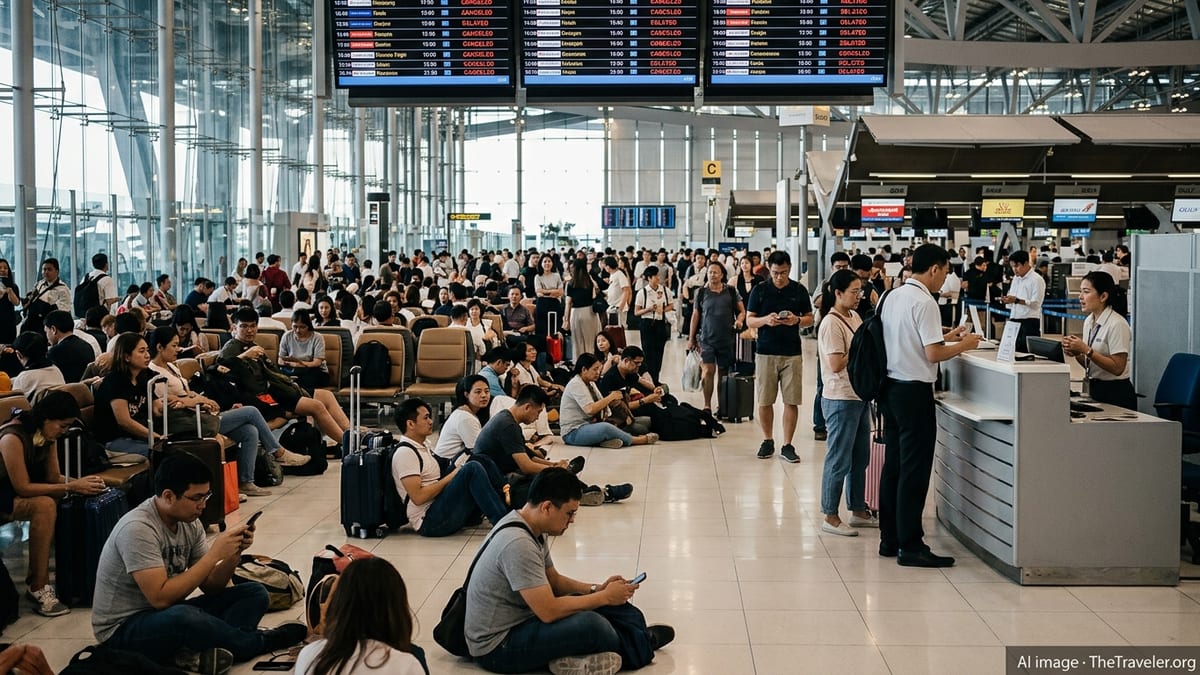
Travelers across Asia are facing fresh disruption as more than 65 flights have been canceled or heavily rerouted on key routes touching Indonesia, Malaysia, Hong Kong, and Taiwan, with Qatar Airways, Batik Air, Malaysia Airlines, and several partner carriers adjusting schedules and leaving many passengers stranded in regional hubs.
Get the latest news straight to your inbox!
Regional Airspace Shockwaves Reach Southeast and East Asia
Published coverage and passenger accounts indicate that the continuing airspace disruption affecting Qatar Airways operations is now rippling across major Asian gateways, disrupting itineraries that rely on Doha as a key transit hub. While the core restrictions center on Gulf-region routes, the effects are being felt thousands of kilometers away in Jakarta, Bali, Kuala Lumpur, Taipei, and Hong Kong as feeder and onward services are canceled or reshaped at short notice.
Flight tracking snapshots and airline schedule data referenced in regional newspapers and aviation forums show dozens of services either canceled outright or operating with amended routings in recent days. Many involve itineraries originally booked on Qatar Airways that now depend on substitute legs operated by carriers such as Malaysia Airlines, Batik Air, Garuda Indonesia, and other regional partners or non-partner airlines.
These cascading changes have produced a patchwork of cancellations and last-minute rebookings across Asia, with some airports handling stranded passengers whose Doha-bound or Doha-originating flights no longer operate as planned. Reports from local media in Indonesia and Malaysia describe crowded terminals, extended queues at transfer desks, and passengers attempting to stitch together new itineraries that avoid affected corridors.
Available information suggests that while core long-haul sectors to and from Doha remain the most severely impacted, the knock-on impact on intra-Asia connections is growing. Travelers transiting through Southeast Asia to reach Europe and Africa are particularly exposed, since their journeys often hinge on a single disrupted Qatar Airways leg.
Jakarta and Bali See Growing Knock-On Disruptions
Indonesia’s key gateways at Jakarta Soekarno Hatta and Bali Ngurah Rai are among the most visible pressure points. Regional outlets focusing on the current wave of cancellations report that flights feeding passengers into Qatar Airways’ long-haul network have been scaled back or retimed, while some codeshare arrangements have been temporarily suspended or replaced.
Publicly available flight status boards show that several departures involving Qatar Airways ticketed passengers no longer operate under their original flight numbers. In some cases, affected travelers from Jakarta or Bali have been offered alternative routings on Indonesian and foreign carriers via East Asian or European hubs instead of Doha, often adding extra stops and hours of travel time.
The situation has been compounded by capacity constraints on popular substitute routes. Services via Singapore, Hong Kong, and Tokyo are appearing close to full on many dates, based on online booking engines and aggregator searches, making it challenging for stranded passengers in Indonesia to secure near-term alternatives at reasonable fares.
Travel advisories circulated through airline trade portals emphasize that passengers beginning their journeys in Indonesia should monitor their bookings closely, particularly where any sector involves a Doha transit. Many are being urged by travel agents to consider proactively rebooking through different hubs if their plans are time-sensitive.
Kuala Lumpur and Malaysia Airlines Under Rebooking Strain
Kuala Lumpur International Airport has emerged as a critical rerouting node as Qatar Airways and affected travelers look for viable detours around the current airspace constraints. According to airline trade updates shared through online agent portals, Malaysia Airlines is among the carriers handling an uptick in passengers originally booked on Qatar Airways itineraries.
Social media and travel community posts describe cases in which itineraries from Denpasar to Europe or the Middle East have been partially rebooked on Malaysia Airlines between Bali and Kuala Lumpur, with onward connections shifted to other long-haul carriers. In many of these instances, passengers report that only portions of their original tickets can be checked in online, reflecting complex reissued tickets that span multiple airlines.
This surge in rebooking activity is putting pressure on Kuala Lumpur’s transfer facilities and call centers, as customers seek clarity on baggage handling, minimum connection times, and ticket validity. Some travelers report spending days attempting to reach airline support lines to secure reroutes that avoid Doha while still honoring original fare conditions.
Industry commentary appearing in Malaysian business and aviation coverage suggests that the country’s flag carrier and regional low cost and hybrid operators are walking a fine line between accommodating disrupted passengers and preserving capacity for their own point to point customers. As a result, not all requests for rerouting away from Qatar Airways are being granted, especially when alternative paths are already heavily booked.
Hong Kong and Taiwan Feel the Effects on Transit Flows
Further north, Hong Kong and Taiwan are also experiencing secondary disruption as travelers recalibrate their journeys. Hong Kong International Airport, a long established transit hub, is seeing increased interest from Asia to Europe passengers who previously relied on Doha. Travel search data and booking platform signals indicate higher demand on routes funneling through Hong Kong, placing strain on limited remaining seats during popular travel days.
Media coverage from Hong Kong highlights a broader reshuffle of regional connectivity, with some travelers choosing to route via Northeast Asia instead of the Gulf. While direct cancellations linked specifically to Qatar Airways are fewer in number at Hong Kong than in Southeast Asian gateways, the airport is absorbing overflow demand from disrupted itineraries elsewhere, leading to higher fares and fewer last minute options.
In Taiwan, reports from local travel agents and consumer news outlets describe a similar pattern. Taipei Taoyuan Airport is serving as an alternative bridge for travelers who have been unable to maintain itineraries via Doha or Kuala Lumpur. Some passengers originally ticketed on Qatar Airways are being rebooked onto combinations involving regional Asian carriers and European or North American airlines that do not transit the Gulf.
These adjustments are creating a less predictable operating environment for both airlines and travelers in Hong Kong and Taiwan. Even where flights are not canceled, last minute schedule tweaks and equipment changes are more frequent, prompting advisories for passengers to reconfirm departures and allow extra time at the airport.
Passenger Rights, Refunds, and What Travelers Can Do Now
For travelers caught up in this latest wave of disruption, one of the most pressing questions concerns their rights to refunds, rerouting, or compensation. Publicly available guidance on Qatar Airways’ own trade and customer information pages outlines an extended disruption policy window covering late February through late March, allowing affected passengers to request rebooking, vouchers, or refunds when their flights are canceled or significantly changed.
Legal interpretations shared by consumer advocates and travel law specialists in Europe and Asia emphasize that passengers traveling to or from the European Union or the United Kingdom may have additional protections when disruptions involve departures from EU or UK airports. However, the application of these rules is complex when itineraries combine multiple airlines and non European segments, prompting many travelers to seek independent advice or review regulator websites.
Travel industry analysis suggests that passengers currently in Asia and holding tickets involving Doha should treat any unconfirmed near term departure as subject to change and plan accordingly. Recommendations circulating in travel forums include checking booking status daily, confirming any reissued tickets directly on the operating carrier’s website, and documenting all communications for potential claims.
Forward looking commentary from aviation analysts indicates that flight patterns across Asia may remain unstable for several more weeks as airlines adjust capacity and rerouting options around the ongoing airspace situation. Travelers heading to or from Jakarta, Bali, Kuala Lumpur, Hong Kong, Taipei, and other key Asian hubs are being advised to build flexibility into their plans, consider alternative routings that bypass heavily constrained corridors, and stay alert to rapid developments that could affect their journeys with little warning.