

More news on this day
Thousands of travelers across Asia and beyond are facing missed connections, overnight airport stays, and scrambled itineraries after a new wave of flight cancellations by Batik Air, Cathay Pacific, EVA Air, China Airlines, Malaysia Airlines, United, and other carriers disrupted key routes linking Indonesia, Hong Kong, Taiwan, Laos, Malaysia, and long haul destinations such as New York, Boston, Los Angeles, and Honolulu.
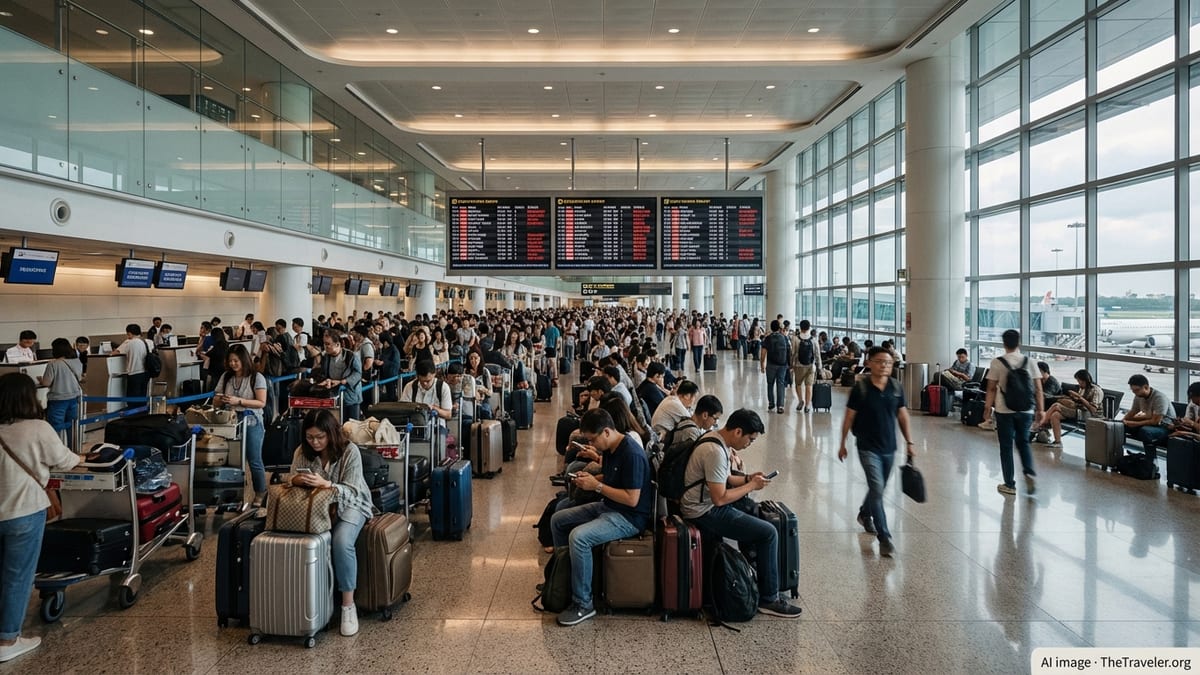
Wave of Cancellations Hits Major Asian Gateways
Fresh disruption has swept through the Asia Pacific aviation network over the past several days, as airlines scrapped more than 50 flights and triggered knock on delays at some of the region’s busiest hubs. Data compiled from airport operations and airline schedules shows cancellations concentrated in Indonesia, Malaysia, Taiwan, Hong Kong, and Laos, with ripple effects spreading across Southeast and East Asia.
In Indonesia, cancellations at Jakarta’s Soekarno Hatta and Surabaya’s Juanda Airport have particularly affected domestic and regional links, while in Malaysia, Kuala Lumpur International has again emerged as a hotspot for operational disruption. Taiwan Taoyuan International near Taipei and Hong Kong International have also reported clusters of cancellations, many tied to long haul services and key regional trunk routes.
The latest figures follow several days of mounting disruption across Asia. Flight operations data from multiple airports indicates that, taken together, recent cancellations and delays have impacted thousands of passengers in Jakarta, Kuala Lumpur, Hong Kong, Taipei, Bangkok, Manila, Singapore, and beyond, underscoring the fragility of tightly timed airline schedules at the tail end of the busy Lunar New Year travel period.
While airlines have not cited a single overarching cause, a mix of adverse weather in parts of East Asia, aircraft rotations under strain, and ongoing crew availability challenges appear to be driving the sudden gaps in schedules. For passengers, the exact trigger has mattered far less than the immediate reality of grounded flights and uncertain alternatives.
Batik Air and Indonesian Travelers Bear the Brunt
Indonesia’s Batik Air has emerged as one of the carriers most visibly affected, with multiple cancellations recorded at Jakarta’s Soekarno Hatta and at regional hubs such as Makassar and Surabaya. In Jakarta, all cancellations logged on one of the worst affected days were linked to Batik Air flights, according to airport operational tallies, compounding an already heavy load of delays.
At Soekarno Hatta, long lines have formed at ticketing and customer service counters as passengers from canceled Batik Air services seek rebooking or refunds. Travelers bound for domestic destinations like Surabaya and Bali, as well as onward regional flights to Singapore, Bangkok, and Kuala Lumpur, have reported receiving last minute reassignments to alternative departures, only to discover that connecting services downstream were already close to full.
Some stranded passengers have chosen to abandon multi segment itineraries entirely, opting instead for same day point to point tickets on competing carriers or even long distance rail and bus services within Java. Others have had no choice but to spend the night in airport hotels or on terminal benches while waiting for the next available flight with open seats.
Indonesian aviation authorities and airport operators have urged airlines to improve the timeliness and clarity of their communication with passengers, emphasizing that early warnings of potential cancellations or major delays can significantly reduce the knock on impact to travel plans. Batik Air, for its part, has encouraged customers to monitor their bookings and has reiterated that affected travelers can seek rebooking or refunds through official channels, though contact centers and online portals have at times struggled to keep pace with demand.
Hong Kong and Taipei See Flag Carrier Disruptions
In the Chinese Special Administrative Region of Hong Kong and in Taiwan’s capital Taipei, the current disruption has centered on flagship full service airlines that anchor long haul and regional connectivity. At Hong Kong International Airport, Cathay Pacific has been responsible for all of the cancellations recorded on one of the recent high impact days, airport statistics indicate, on top of dozens of separate delays.
Those cancellations have affected flights both into and out of Hong Kong, including key services to cities across Southeast Asia and mainland China, and have complicated travel for passengers connecting between Asia and North America or Europe via the carrier’s Hong Kong hub. Travellers have reported packed transfer areas, queues at rebooking desks, and difficulty securing seats on alternative departures for popular routes to Singapore, Bangkok, and Manila.
In Taiwan, EVA Air and China Airlines have also faced operational headaches at Taoyuan International. While the raw number of outright cancellations has been lower than in some neighboring markets, even a handful of scrapped departures can ripple widely when load factors are already high. Flights to and from Taipei that connect to longer haul services bound for cities like New York, Boston, and other North American gateways have been particularly sensitive, with some passengers missing onward transpacific connections despite only modest delays on their initial legs.
Travel advisers in both Hong Kong and Taipei say that premium cabin passengers and those with airline status have generally found it easier to secure last minute rebookings, while economy class travelers on discounted tickets have often faced longer waits and more circuitous routing options. With capacity on some trunk routes still tight, a single cancellation may leave very few same day alternatives for displaced passengers.
Malaysia, Laos, and Regional Hubs Struggle With Knock On Effects
Further south, Malaysia’s main international gateway near Kuala Lumpur has again found itself at the center of regional turbulence. Malaysia Airlines, Batik Air Malaysia, and other carriers experienced a mix of cancellations and extended delays as crew and aircraft positioning challenges reverberated across their networks. Some flights from Kuala Lumpur to Hong Kong, Taipei, Bangkok, and Singapore were grounded, affecting onward connectivity throughout Asia and onwards to Europe and Australia.
Secondary airports and smaller markets have not been spared. In Laos, Vientiane’s Wattay International Airport saw several cancellations tied to services linking the capital with Kuala Lumpur, Bangkok, and other regional cities. For travelers who rely on relatively limited schedules in and out of such smaller hubs, a single cancellation can mean waiting an extra day or more for the next available departure.
Across the region, airlines that code share or interline with the likes of Cathay Pacific, EVA Air, China Airlines, Batik Air, Malaysia Airlines, and United have also felt the strain, as missed connections have forced them to accommodate disrupted passengers. Carriers serving Singapore, Bangkok, and Manila have reported heavier than usual loads on some services as stranded travelers purchase last minute tickets in search of any route that will move them closer to their destination.
Airport authorities in Kuala Lumpur and other affected hubs have reiterated calls for passengers to arrive early, build in longer connection windows where possible, and remain alert for schedule updates. With weather patterns and operational pressures continuing to shift, they warn that further adjustments to timetables cannot be ruled out in the coming days.
Long Haul Routes to the United States Also Affected
Although the majority of the latest disruption has been concentrated on intra Asian and regional flights, long haul services to North America have not escaped unscathed. Flight data shows that cancellations touching Hong Kong, Taipei, and other Asian hubs have affected links to Los Angeles and Honolulu, while operational strains elsewhere in the network have spilled over into services involving New York and Boston.
United and other transpacific carriers operating to and from Hong Kong, Taipei, and major Southeast Asian gateways have had to adjust schedules and, in some cases, consolidate flights. Passengers connecting in Asia from Jakarta, Surabaya, Singapore, Bangkok, and Manila to onward services bound for the United States have found that even minor timing changes can leave them racing between terminals or facing missed connections that force overnight stopovers.
For those stranded mid journey, the financial and logistical burden can be significant. Hotel rooms near major hubs such as Hong Kong International, Taiwan Taoyuan, and Kuala Lumpur International have quickly filled as canceled passengers seek last minute accommodation. Some airlines have provided hotel and meal vouchers consistent with their internal policies, while others have limited assistance where disruptions have been formally classified as outside their control.
Travel insurers report an uptick in inquiries related to missed connections and extended delays on Asia North America itineraries. Policyholders are being reminded to retain all receipts for lodging, meals, and ground transport during disruption, as well as copies of boarding passes and written notices of cancellation or delay, to support any subsequent claims.
Scenes on the Ground: Queues, Confusion, and Limited Information
At the passenger level, the current wave of disruptions has played out in familiar but no less stressful scenes across Asia’s terminals. At Jakarta’s Soekarno Hatta, crowded service desks and snaking queues have become common around the departure halls where Batik Air and other carriers have canceled flights. Some travelers have described waiting more than an hour to speak with agents, only to learn that the next available seats to their intended destination were not until late in the evening or the following day.
In Hong Kong and Taipei, boarding gate screens have featured a patchwork of statuses from “delayed” to “cancelled” and “gate change,” with passengers frequently refreshing airline apps to confirm the latest information. While digital tools have eased the pressure on some service counters, travelers holding complex multi segment or multi airline tickets often still need face to face assistance to untangle their options.
Family groups and elderly passengers have been especially vulnerable, with language barriers and unfamiliarity with self service rebooking kiosks adding to the challenge. Volunteer airport ambassadors and ground staff have been visible in key choke points, attempting to direct people to the correct counters and security lanes, but at peak times the sheer volume of affected passengers has outpaced staffing levels.
Retailers and food outlets in secure areas at several airports have reported brisk business as stranded travelers spend longer in transit zones than originally planned. At the same time, lounges in Hong Kong, Kuala Lumpur, and Jakarta have seen near capacity crowds as frequent flyers and premium cabin passengers wait out extended delays in more comfortable surroundings.
What Travelers Can Do if Their Flight Is Cancelled
For those currently traveling through affected airports or planning imminent trips through Asia, aviation specialists are emphasizing basic but increasingly crucial steps. The first is to monitor flight status closely, using both official airline channels and airport information boards in the hours leading up to departure. Travelers are being advised not to rely solely on third party booking platforms for timely updates.
In the event of a cancellation, passengers should seek to secure a confirmed rebooking or written documentation of the disruption as soon as possible. In busy periods, it can be faster to use an airline’s mobile app or website rather than waiting in person at a counter, though complex itineraries may still require direct assistance. Where long haul connections are involved, travelers are encouraged to prioritize itineraries that keep them on a single ticket and, where feasible, a single airline or alliance to preserve protection for missed connections.
Understanding rights and potential compensation remains a challenge, as regulations differ significantly between jurisdictions in Asia and on international routes. Some countries have formal compensation frameworks, while others rely more on airline policies and case by case discretion. Consumer advocates recommend that travelers keep boarding passes, cancellation notices, and receipts for meals, hotels, and ground transport, which may be needed later in discussions with airlines or to support insurance claims.
Looking ahead, industry analysts say that while Asia’s aviation recovery has gathered pace, the latest turbulence shows how quickly capacity constraints, weather, and operational snags can coalesce into widespread disruption. For now, passengers transiting key hubs such as Jakarta, Hong Kong, Taipei, Kuala Lumpur, Singapore, Bangkok, and Manila are being urged to build extra flexibility into their plans, including longer layovers and contingency funds, until airline operations stabilize further.